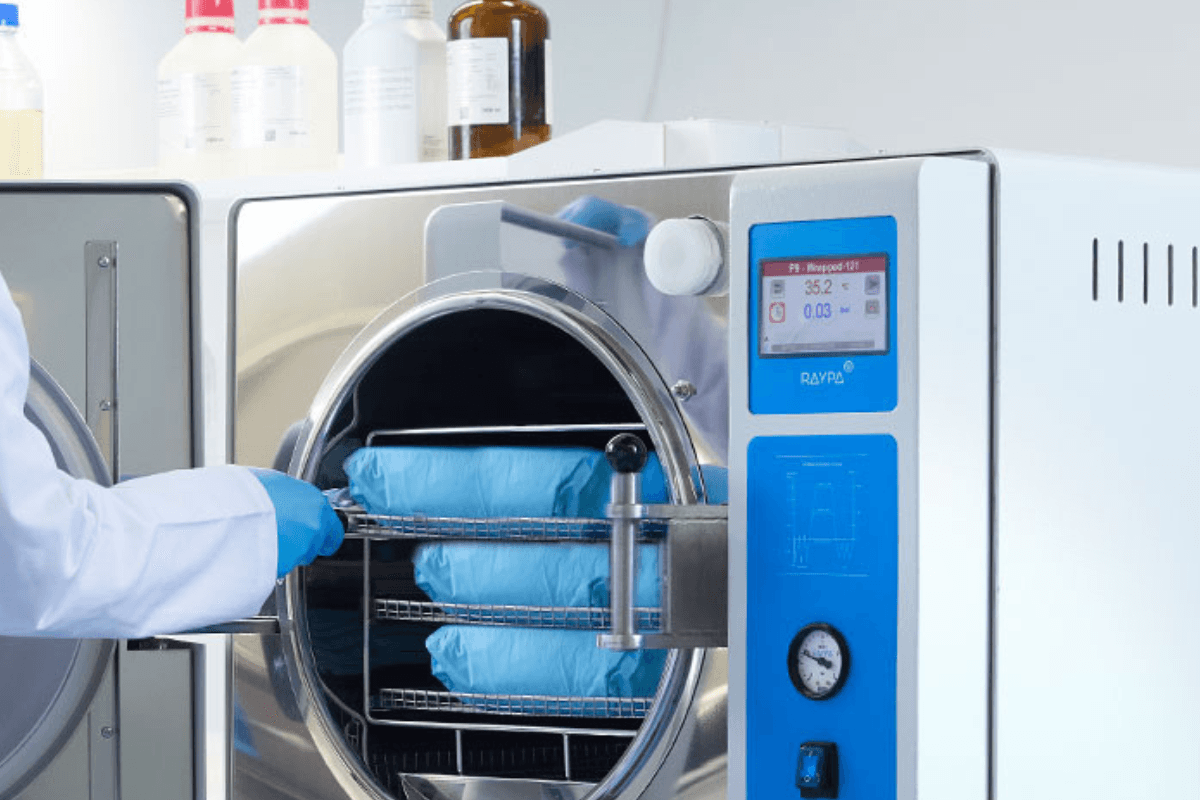
An autoclave is one of the most essential pieces of pathology lab equipment. Designed to perform high-temperature, high-pressure steam sterilisation, an autoclave machine maintains sterile conditions for lab tools, culture media, glassware, and even medical waste. But with multiple options available, each with varying specifications, selecting the most suitable unit requires a deliberation of operational needs.
Let us give you a comprehensive overview that explains what an autoclave is herein. You can also learn about different types of autoclaves and how to match features with specific laboratory workflows.
What Is an Autoclave?
An autoclave is a steam steriliser that uses high pressure and temperature to eliminate bacteria, viruses, fungi, and spores. Commonly found in microbiology, pathology, and hospital settings, autoclave steam sterilisers ensure reusable equipment is safe for repeated use. The process typically involves heating steam to 121–134°C inside a sealed chamber for a set period, depending on the load type.
The term "autoclave" can apply to small benchtop units for basic sterilisation tasks or large industrial machines used in hospital CSSDs (Central Sterile Services Departments).
Uses of an Autoclave Machine
Autoclave machines are widely used across various sectors.
Hospitals and Clinics: For sterilising surgical instruments and medical waste.
Research and Diagnostic Labs: For sterilising glassware, culture media, and lab tools
Pharmaceutical Facilities: To maintain aseptic production environments.
Biotech and Microbiology Units: For preparing sterile culture media and inactivation of biohazards.
If you're planning to set up a new diagnostic centre, here's a step-by-step guide on how to open a pathology lab.
Types of Autoclave Machines
There are several types of autoclave machines available based on size, shape, and sterilisation mechanism.
| Autoclave Type | Description | Best For |
|---|---|---|
| Top-Loading Autoclave | Loads from the top; accommodates tall vertical items | Tall flasks, bioreactors, and long instruments |
| Front-Loading Autoclave | Loads like an oven; easier horizontal access | Bulk items, trays, labware |
| Gravity Displacement Autoclave | Uses steam to displace air naturally | Dry, non-porous items (e.g., metal tools) |
| Pre-Vacuum Autoclave | Removes air via vacuum before steam entry | Porous loads like fabric, wrapped items |
| Combination Systems | Includes multiple sterilisation modes in one unit | Versatile labs with varied sterilisation needs |
Hospitals often prefer front loading autoclaves due to ease of access and cycle versatility. For high-throughput needs, lab managers may opt for units with automatic doors and programmable sterilisation cycles.
Choosing the Right Autoclave for Your Laboratory
Choosing the right autoclave machine is not a straightforward task. It involves evaluating your laboratory’s workflow, the types of materials to be sterilised, throughput needs, and matching these with the autoclave’s technical specifications.
1. Volume and Types of Instruments
First, consider what instruments you need to sterilise. How many do you use per day? Do they require special cycles? Some instruments, such as handpieces or those with lumens, require vacuum sterilisation.
2. Autoclave Bin Sizes and Internal Capacity
Size plays a major role in autoclave selection. Autoclave bin sizes are measured in litres, indicating the internal chamber volume. However, the usable space is less than the total capacity due to racks and chamber configuration. Before choosing, assess your largest item for sterilisation and check if the machine accommodates it comfortably.
Labs with frequent tall flasks, fermenters, or bioreactors may benefit from top-loading models. They allow vertical placement and easier stacking of odd-shaped items.
3. Sterilisation Media Type
Different autoclaves are designed to process various types of sterilisation media. Consider the materials you’ll be sterilising most often:
- Glassware and metal tools: Compatible with gravity displacement sterilisation.
- Textiles, wrapped packs, or porous loads: Better suited for pre-vacuum autoclave sterilisation
- Biological waste: Requires specific cycle programming and higher temperature hold times.
Each autoclave machine for hospital or lab use must match the material's sterilisation requirements for effective performance.
Be aware of local regulations. In some countries, vacuum autoclaves are required for handpieces or packaged loads.
4. Throughput and Cycle Frequency
How much material do you need to sterilise in a day? Throughput capacity refers to the autoclave’s ability to handle repeated loads efficiently. A mismatch between your laboratory’s throughput needs and the autoclave’s cycle time can create workflow bottlenecks.
Look for autoclaves with:
- Fast warm-up and cooldown periods
- Built-in fans or cooling systems
- Multi-cycle programming
- Shorter overall cycle durations
For labs with time-sensitive sterilisation demands, throughput efficiency is just as important as capacity.
5. Autoclave Technical Specifications
When choosing an autoclave, check the following technical specifications:
- Temperature and pressure ratings
- Cycle duration options
- Control interface and programmability
- Power requirements
- Water source and drainage system compatibility
- Safety certifications. For example, ensure the model aligns with NABL accreditation requirements for medical labs.
Autoclave technical specifications determine how adaptable the equipment is for different use cases. Whether it complies with your facility’s infrastructure and regulatory needs.
6. Loading Configuration
The layout and daily operations of your lab should determine your choice between a front-loading autoclave and a top-loading model.
- Top-loading autoclaves: Space-saving, suitable for vertical items.
- Front-loading autoclaves: Easier for quick horizontal loading, especially for larger batches.
Some models combine both configurations to provide maximum flexibility for labs with changing needs.
7. Available Space and Layout
Plan for your sterilisation area layout. Will one large autoclave fit better, or two smaller ones? Dual systems provide backup, use less energy, and can stagger loads.
8. Manual vs Automated Autoclaves
Manual autoclaves are more affordable but require attention. On the other hand, automated ones come with pre-programmed cycles, auto door locks and water fills, and digital logs and easier tracking.
9. Accessories and Sterilisation Logs
Check if the machine has useful accessories like racks and trays for spacing and built-in printers or USB ports. Digital logging can help meet compliance standards and save time.
10. Maintenance, Support & Cost
Check for maintenance frequency, warranty coverage, cost of consumables (gaskets, filters), and availability of technical support. Autoclaves are long-term investments. Factor in initial and recurring costs. Consider scalable systems if expecting a higher future load.
Operational Considerations
Even the best autoclave steam steriliser will fail to perform if not cleaned, calibrated, and maintained regularly. Select models that:
- Come with accessible maintenance panels.
- Have self-diagnostic features.
- Offer clear error reporting and user guidance.
- Include water quality monitoring (especially in steam sterilisation).
Routine checks, descaling, and filter replacements ensure long-term operational consistency.
Autoclave in Medical Settings
Autoclave machines for hospitals need to handle large daily loads and meet high standards of sterilisation. These machines must be validated to meet healthcare sterilisation protocols and include features like,
- Pre-programmed CSSD cycles.
- Barcode or digital tracking of sterilised loads.
- Compliance with medical-grade safety standards.
Selecting an autoclave medical steriliser for hospital use requires coordination with infection control teams and biomedical engineers to ensure the equipment meets institutional standards.
Conclusion
From research labs to clinical facilities, choosing the right autoclave machine is an important decision. It impacts productivity, safety and compliance. Assessing your lab’s layout, sterilisation needs and media type will help narrow down the right size and style, be it a front-loading autoclave or a vertical steam steriliser. Matching features such as sterilisation media compatibility, autoclave bin sizes, and throughput capacity ensure that your lab’s sterilisation process is both effective and scalable.
By focusing on performance specifications and operational fit, healthcare professionals and lab managers can select an autoclave that meets day-to-day demands and supports broader infection control goals.
Get Started at ₹1!
Try Flabs for a full month for just ₹1.
Follow us on