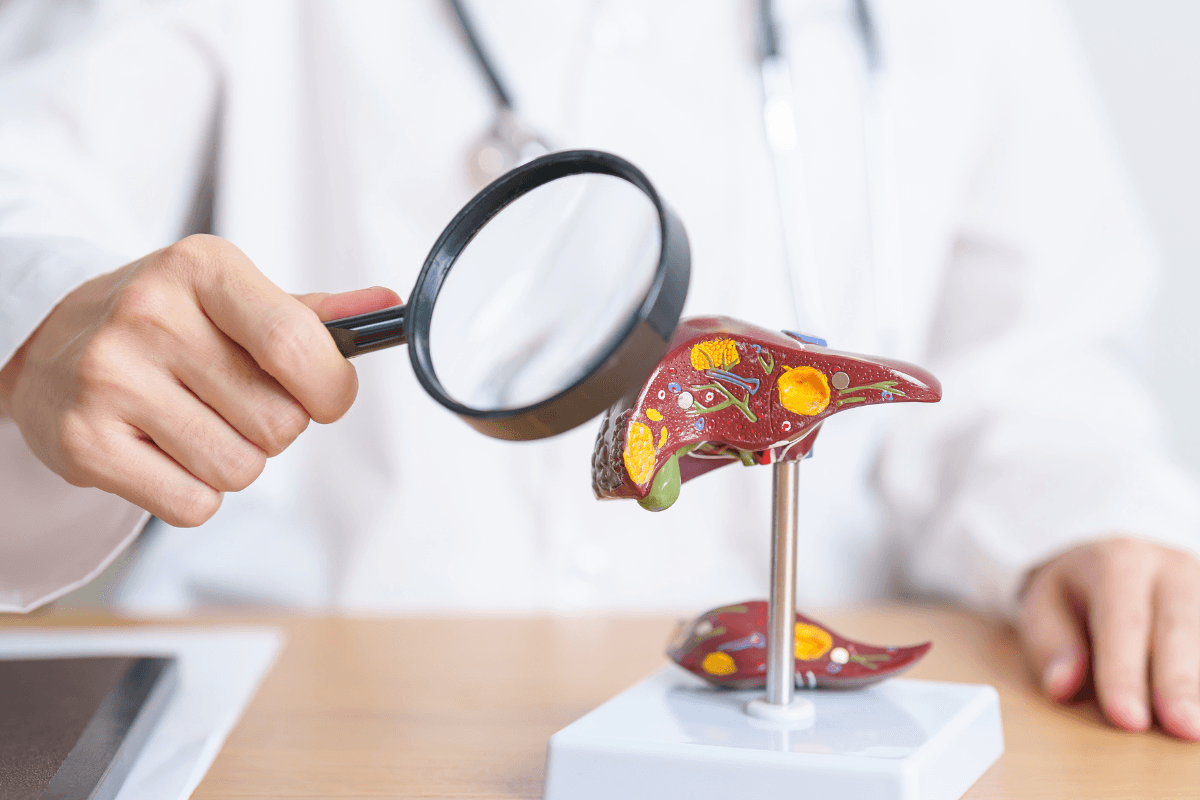
Bilirubin is an orange-yellow pigment produced mainly when haemoglobin from aging red blood cells is broken down. The liver takes up bilirubin from the blood, conjugates it to make it more water-soluble, and excretes it through bile. Bilirubin testing can help evaluate jaundice, liver and biliary disorders, and conditions involving increased breakdown of red blood cells.
There are two main forms of bilirubin reported in clinical testing: conjugated (direct) bilirubin and unconjugated (indirect) bilirubin. Understanding the difference between conjugated and unconjugated bilirubin can help clinicians identify whether an elevated bilirubin pattern is more consistent with increased bilirubin production, impaired uptake or conjugation, or impaired biliary excretion.
What is Conjugated Bilirubin?
Conjugated bilirubin is also called direct bilirubin. It is bilirubin that has been processed by the liver through conjugation, making it more water-soluble. It is then transported through the biliary system into the intestine for elimination.
An increase in conjugated bilirubin may occur when bile formation or excretion is impaired. Possible causes include hepatocellular disease, cholestasis, and bile duct obstruction. The finding should be interpreted together with other liver tests and the patient's clinical presentation rather than being treated as a diagnosis by itself.
Because conjugated bilirubin is water-soluble, it can be excreted in urine. Increased bilirubin in the blood may therefore be associated with dark urine, particularly when conjugated bilirubin is elevated.
What is Unconjugated Bilirubin?
Unconjugated bilirubin is also called indirect bilirubin. It is produced during the breakdown of haemoglobin and is not yet conjugated by the liver. Because it is water-insoluble, it circulates in the blood largely bound to albumin and is not normally excreted directly into urine.
An increase in unconjugated bilirubin can occur when bilirubin production increases, such as with haemolysis, or when the liver's uptake or conjugation of bilirubin is reduced. Examples include Gilbert syndrome and some other inherited or acquired conditions affecting bilirubin metabolism.
In newborns, unconjugated bilirubin can rise because the liver's ability to process bilirubin is still developing. Significant neonatal hyperbilirubinemia requires appropriate clinical assessment because very high unconjugated bilirubin can cause bilirubin-related neurological injury.
Difference Between Conjugated and Unconjugated Bilirubin
| Aspect | Unconjugated Bilirubin | Conjugated Bilirubin |
|---|---|---|
| Other Name | Indirect bilirubin | Direct bilirubin |
| Processing | Not yet conjugated by the liver | Processed and conjugated by the liver |
| Water Solubility | Water-insoluble | More water-soluble |
| Blood Transport | Primarily transported bound to albumin | Circulates in a water-soluble form |
| Urine | Normally not excreted in urine | Can be excreted in urine |
| Possible Causes of Elevation | Increased red blood cell breakdown, reduced hepatic uptake or impaired conjugation | Hepatocellular disease, cholestasis or impaired bile excretion |
| Examples of Associated Conditions | Haemolysis, Gilbert syndrome and other disorders of bilirubin metabolism | Hepatitis, cholestasis and biliary obstruction |
| Clinical Interpretation | Interpret with haemolysis markers, liver tests and clinical history | Interpret with liver enzymes, alkaline phosphatase and other hepatobiliary findings |
The two forms should not be considered simply “normal” and “abnormal.” Both are normal components of bilirubin metabolism, and their clinical significance depends on their concentration and the overall clinical picture.
Conjugated and Unconjugated Bilirubin Normal Range
There is no single universal reference range for direct, indirect or total bilirubin. Reference intervals can vary between laboratories, testing methods, patient age and clinical settings. Patients should therefore compare their results with the reference interval printed on their own laboratory report.
For general adult interpretation, MedlinePlus lists a total bilirubin reference range of approximately 0.1–1.2 mg/dL and direct bilirubin of less than 0.3 mg/dL, while noting that ranges can vary between laboratories.
| Parameter | General Reference Information | Important Note |
|---|---|---|
| Total Bilirubin | Approximately 0.1–1.2 mg/dL in adults in some laboratory references | Use the reference interval provided by the testing laboratory |
| Direct/Conjugated Bilirubin | Often less than 0.3 mg/dL in adult reference ranges | Laboratory-specific ranges may differ |
| Indirect/Unconjugated Bilirubin | Usually calculated from total and direct bilirubin | Interpret alongside total and direct bilirubin |
| Newborn Bilirubin | Requires age-specific interpretation | Do not apply adult reference ranges to newborns |
For newborns, bilirubin levels must be interpreted according to the baby's age in hours, gestational age and clinical risk factors, rather than using one fixed “normal” or “critical” value.
How to Interpret Conjugated and Unconjugated Bilirubin
The proportion of direct and indirect bilirubin can provide an important clue when total bilirubin is elevated.
A predominantly unconjugated pattern may occur when bilirubin production increases or when hepatic uptake or conjugation is impaired. Haemolysis and Gilbert syndrome are examples of conditions that may produce this pattern.
A predominantly conjugated pattern may occur when bile formation or excretion is impaired. Hepatocellular disease and cholestatic or obstructive disorders are possible causes.
| Bilirubin Pattern | Possible Direction of Evaluation | Examples |
|---|---|---|
| Predominantly unconjugated | Increased bilirubin production or impaired uptake/conjugation | Haemolysis, Gilbert syndrome |
| Predominantly conjugated | Hepatocellular or cholestatic/biliary dysfunction | Hepatitis, cholestasis, biliary obstruction |
| Mixed elevation | Requires assessment of the complete liver and clinical profile | Several liver and systemic disorders can produce mixed patterns |
Merck Manual notes that fractionation is particularly useful when evaluating elevated bilirubin and can help distinguish predominantly unconjugated from predominantly conjugated hyperbilirubinemia.
Causes of High Bilirubin Levels
Elevated bilirubin levels, whether conjugated or unconjugated, should be interpreted according to the pattern of elevation and other clinical findings.
Indirect or unconjugated hyperbilirubinemia may occur because of increased red blood cell breakdown, reduced hepatic uptake, or impaired bilirubin conjugation. Examples include haemolysis and Gilbert syndrome.
Direct or conjugated hyperbilirubinemia may occur when bilirubin excretion through the liver or biliary tract is impaired. Possible causes include hepatitis, cholestasis and bile duct obstruction.
A bilirubin result should not be interpreted in isolation. In adults with jaundice, current clinical guidance recommends considering total and fractionated bilirubin together with CBC, ALT, AST, alkaline phosphatase, GGT, albumin, PT/INR and the patient's clinical history. Imaging may also be required when biliary obstruction or another structural cause is suspected.
When High Bilirubin May Need Further Evaluation
High bilirubin may be associated with symptoms such as:
- Yellowing of the skin or eyes
- Dark urine
- Pale or clay-coloured stools
- Abdominal discomfort
- Fatigue
- Nausea or other symptoms associated with liver or biliary disease
- Jaundice can have many causes, including liver disease, blood disorders, infections, medications and bile duct obstruction.
Bilirubin Testing and Liver Function Tests
Bilirubin is commonly included in a liver function test (LFT) or liver panel along with other markers used to assess liver and biliary health. These may include ALT, AST, alkaline phosphatase, GGT, albumin and total protein.
The bilirubin result provides only one part of the clinical picture. A healthcare professional may order additional blood tests, urine tests or imaging depending on the suspected cause of the abnormal result.
For laboratories, accurate reporting of total, direct and indirect bilirubin values is important for clear communication with clinicians.
Explore Flabs bilirubin report format to understand how bilirubin results, reference values, methodology and patient information can be structured in a pathology report.
You can also review the Liver Function Test report format, which includes bilirubin alongside other commonly reported liver parameters.
Conclusion
Assessing bilirubin levels can provide useful information about liver, biliary and red blood cell-related conditions, but interpretation requires more than looking at a single number.
The difference between conjugated and unconjugated bilirubin helps clinicians understand whether an elevated bilirubin pattern may be related to increased bilirubin production, impaired uptake or conjugation, or impaired biliary excretion.
Bilirubin results should be interpreted using the laboratory's own reference range and alongside other liver tests, blood counts, symptoms and medical history. When jaundice or abnormal bilirubin persists, further laboratory testing and, when appropriate, imaging may be needed to identify the underlying cause.
Suggested Reads
Get Started at ₹1!
Try Flabs for a full month for just ₹1.
Follow us on