Pneumonia is one of the major health crises in India. It accounts for nearly 23% of the global burden among children, recording around 43-50 million cases annually. As the disease burden increases and patient volumes bulge, an accurate understanding of the pathology of pneumonia is important for pathologists and healthcare professionals.
Bacterial pneumonia is more severe than viral pneumonia. While it can affect people of all ages, children, pregnant women, and those above 65 are more at risk. Similarly, the treatment and management of pneumonia pathology depend on the stage of the condition. Let us know more here in the article.
What is the Pathology of Pneumonia
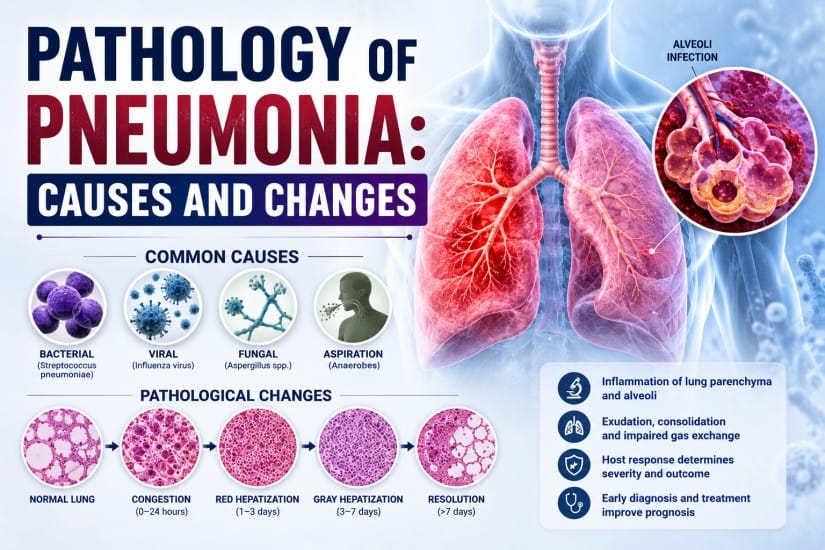
Pneumonia is a pathological condition of the lungs caused by viruses, bacteria, fungi, and other factors. It causes inflammation of your lung tissue and can result in pus or fluid in your lungs. It can affect one or both lungs. In the latter case, it is a double pneumonia. Also, bacterial pneumonia is more severe than viral pneumonia. Viral pneumonia can even resolve on its own.
The pathology of pneumonia is similar to that of the common cold or flu. Only your physician can establish the real diagnosis. That is why, if you have symptoms as listed below, seek medical attention for early intervention, as pneumonia can be life-threatening.
Symptoms of Pneumonia
The symptoms of pneumonia can range from mild to severe, depending on the type of infection, a person’s age, and their overall health condition. In many cases, early symptoms may resemble a cold or flu, but they usually persist longer and gradually worsen.
- Persistent cough, which may produce mucus or phlegm.
- Shortness of breath or difficulty breathing during daily activities.
- Chest discomfort or pain, especially while coughing or taking deep breaths.
- High fever (102F or higher) accompanied by sweating or chills.
- Extreme fatigue or weakness, making routine tasks difficult.
- Nausea, vomiting, or diarrhoea in some cases.
- Confusion or sudden changes in mental alertness, particularly in adults over 65.
- Lower-than-normal body temperature is often seen in older adults or people with weakened immunity.
Infants and Newborns
Pneumonia symptoms in babies may not always be obvious. Some infants may show very mild or unusual signs, such as:
- Vomiting or poor feeding.
- Fever or cough.
- Restlessness or unusual irritability.
- Low energy or excessive sleepiness.
- Difficulty breathing or rapid breathing.
Because symptoms can vary widely, early medical evaluation is important if pneumonia is suspected.
Types of Pneumonia in Pathology
| Type | Common Causes | Notes |
|---|---|---|
| Community-Acquired Pneumonia (CAP) | Streptococcus pneumoniae, Mycoplasma pneumoniae, Haemophilus influenzae, viruses (influenza, COVID-19, RSV), fungi | Most common type occurring in the general population outside healthcare settings. |
| Hospital-Acquired Pneumonia (HAP) | Antibiotic-resistant bacteria such as MRSA or Pseudomonas aeruginosa | Usually more severe and harder to treat than community-acquired infections. |
| Healthcare-Associated Pneumonia (HCAP) | Drug-resistant bacteria similar to those causing hospital-acquired infections | Often seen in people living in nursing homes or long-term care facilities. |
| Ventilator-Associated Pneumonia (VAP) | MRSA, Pseudomonas, and other hospital bacteria | Occurs in patients using ventilators in intensive care units. |
| Aspiration Pneumonia | Bacteria from food, saliva, or stomach contents entering the lungs | Happens when substances like food or vomit are inhaled into the lungs. |
| Atypical Pneumonia (Walking Pneumonia) | Mycoplasma pneumoniae, Chlamydia pneumoniae, Legionella | Usually milder symptoms but may last longer. |
| Lobar Pneumonia | Often Streptococcus pneumoniae | Infection affects a large section or lobe of the lung. |
| Bronchopneumonia | Multiple bacteria or viruses | Patchy infection affecting the bronchi and the surrounding lung tissue. |
Diagnosis of Pneumonia: How is it Done?
To determine the pathology of pneumonia, a healthcare provider usually begins by reviewing your medical history and performing a physical examination. During the exam, they listen to your lungs using a stethoscope to detect unusual sounds that may indicate infection or fluid buildup. If pneumonia is suspected, additional tests may be recommended to confirm the diagnosis.
Blood Tests
- A blood sample may be taken to check for signs of infection.
- It can also help determine whether the pneumonia is caused by bacteria, viruses, or other organisms.
Sputum Tests
- In the sputum test, you may be asked to cough and spit mucus (sputum) into a sterile container.
- The sample is examined in a laboratory to identify bacteria or other pathogens causing the infection.
Imaging
- A chest X-ray or CT scan may be performed to capture detailed images of the lungs.
- These scans help identify areas of inflammation, fluid accumulation, or infection.
Pulse Oximetry
- A small sensor is placed on your finger or ear to measure oxygen levels in your blood.
- It helps determine how effectively your lungs are delivering oxygen to the body.
Pleural Fluid Culture
- A thin needle is used to collect fluid from the space surrounding the lungs.
- The sample is analysed in a lab to identify infectious organisms.
Arterial Blood Gas (ABG)
Blood is drawn from an artery in the wrist, arm, or groin.
The test measures oxygen and carbon dioxide levels to evaluate how well the lungs are functioning.
Bronchoscopy
- In certain situations, a doctor may insert a thin, flexible tube with a camera (bronchoscope) into the airways.
- It allows direct visualisation of the lungs and enables the collection of tissue or fluid samples for laboratory testing.
Pathological Stages of Pneumonia
- For the sake of diagnosis and treatment, healthcare providers identify four pathological stages of pneumonia. While the condition goes through these stages, the experience is different for each individual. Even the timeline and symptoms can be different.
Stage 1: Congestion Stage
- The congestion stage is the earliest phase of pneumonia, usually occurring within the first 24 hours after infection begins. During this period, bacteria, viruses, or fungi invade the lungs and trigger inflammation. The tiny air sacs in the lungs (alveoli) become swollen and fluid begins to accumulate. It makes the lungs feel heavy and congested.
- At this point in the pathology of pneumonia, the body’s immune response is just beginning to react to the infection. Common symptoms may include fever, fatigue, chest discomfort, and a productive cough with mucus. Early medical care, rest, hydration, and appropriate medications can help control the infection before it progresses.
Stage 2: Red Hepatisation
- The red hepatisation stage usually develops two to three days after the infection starts and may last several days. In this phase of the pathology of pneumonia, immune cells and red blood cells move into the lung tissues to fight the infection. As a result, the lungs become firm, inflamed, and filled with fluid. It gives them a reddish appearance similar to the liver.
- This process reduces the amount of air in the alveoli, making breathing more difficult. People may experience increasing fatigue, shortness of breath, and reduced mucus production during coughing.
Stage 3: Grey Hepatisation
- The grey hepatisation stage generally occurs around the fourth to sixth day of infection. Many red blood cells within the affected lung tissue begin to break down, causing the lungs to take on a greyish colour. Immune cells called macrophages enter the lungs to remove debris, dead cells, and infectious organisms.
- Symptoms may worsen temporarily, and individuals might experience severe breathlessness, weakness, or confusion in more serious cases. If oxygen levels drop significantly, urgent medical care may be required.
Stage 4: Resolution
- The resolution stage is the recovery phase of pneumonia. It usually begins about a week after the infection starts. During this stage, the immune system gradually clears the infection from the lungs. Macrophages remove pus, fluid, and cellular debris from the alveoli, allowing the lungs to regain normal function.
- As healing progresses, symptoms such as fever and fatigue begin to improve. Coughing may temporarily increase as the lungs clear remaining mucus. It is important to continue the full course of prescribed medications, even if symptoms improve.
Who is at more Risk
- People with weakened immune systems, such as those undergoing chemotherapy, living with HIV/AIDS, taking immunosuppressive medications, or recovering from an organ transplant.
- Individuals with chronic lung or heart conditions, including asthma, cystic fibrosis, chronic obstructive pulmonary disease (COPD), emphysema, pulmonary fibrosis, or sarcoidosis.
- Adults over 65 and children under 2.
- People with neurological conditions that affect swallowing, such as Parkinson’s disease, dementia, or a history of stroke, which can increase the risk of aspiration pneumonia.
- Those who smoke.
- Pregnant individuals.
- People staying in hospitals or long-term care facilities.
Treatment and Prevention of Pneumonia
The treatment of the pathology of pneumonia depends largely on its underlying cause and the severity of the infection. When pneumonia is caused by bacteria, doctors usually prescribe antibiotics to eliminate the infection. In cases linked to fungal infections, antifungal medications may be used.
As mentioned, viral pneumonia often improves on its own. Still, doctors may sometimes recommend antiviral medicines to shorten the illness.
For patients experiencing breathing difficulties, oxygen therapy may be provided to maintain adequate oxygen levels. Additional supportive care, such as intravenous (IV) fluids, can help prevent dehydration, while procedures may be performed to remove excess fluid around the lungs if necessary.
Prevention
Of course, prevention is better than a cure. There are ways you can prevent pneumonia as well.
Preventing pneumonia mainly involves vaccination and healthy lifestyle practices. Vaccines against pneumococcal bacteria, influenza, and COVID-19 significantly reduce the risk of severe infection.
Maintaining good hygiene, washing hands regularly, avoiding smoking and excessive alcohol, eating a balanced diet, exercising regularly, and managing existing health conditions can also help strengthen the immune system. It lowers the chances of developing pneumonia.
Improve Your Pathology Lab Workflow with Flabs
Looking to streamline pathology reporting? Flabs is an AI-powered Pathology Lab Software (LIS) that helps diagnostic laboratories automate reporting, manage samples, and improve workflow efficiency. You can also explore pathology report formats and free sample reports to standardise your laboratory reporting process. Pathology Report Format
Start your ₹1 trial or book a free demo to experience smarter pathology reporting.
Get Started at ₹1!
Try Flabs for a full month for just ₹1.
Follow us on