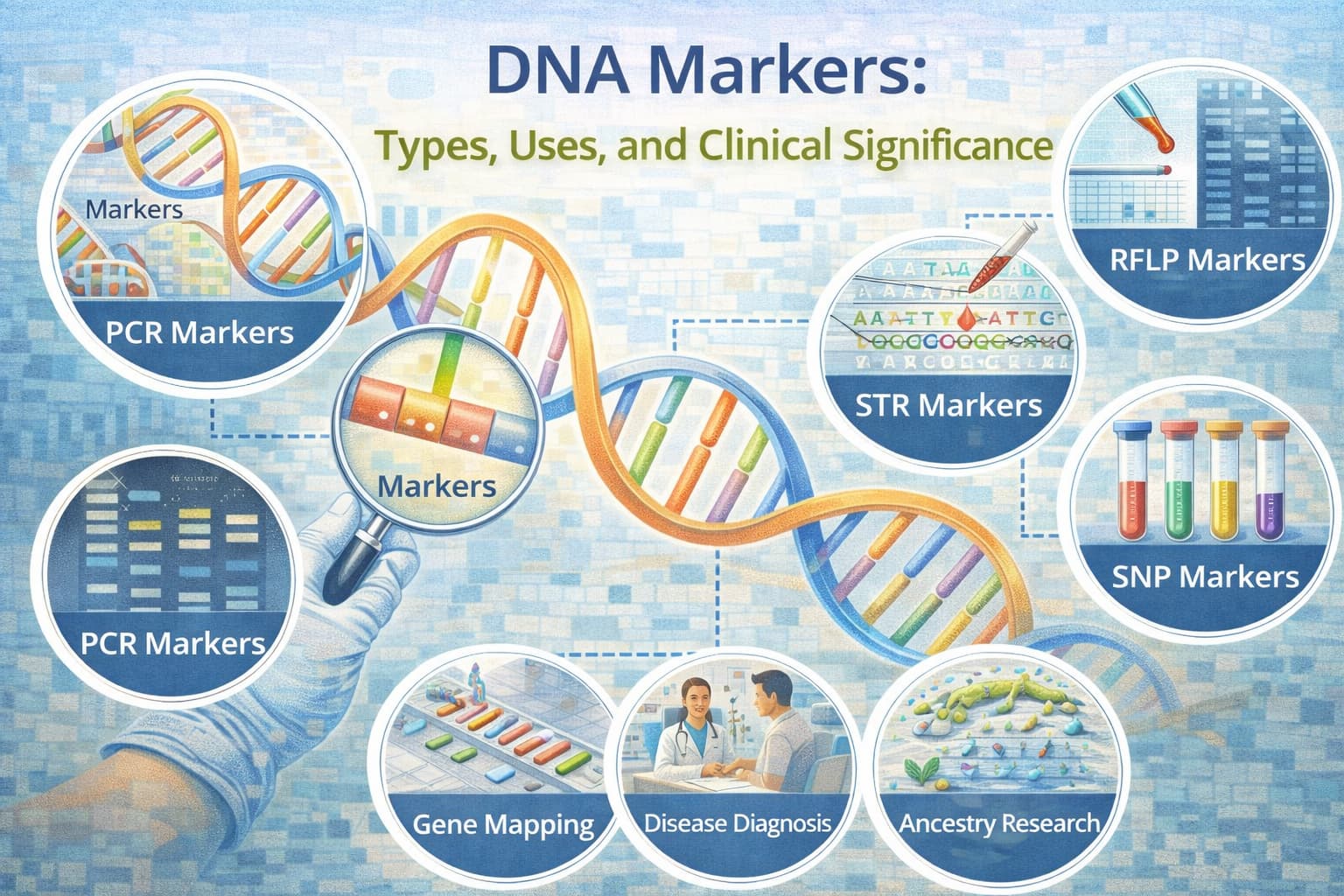
In molecular diagnostics, genetic variation is at the centre of modern pathology. Laboratories now rely on genomic indications to interpret diseases, confirm diagnoses, and support targeted treatment. Among those indications, DNA markers have a major role in laboratory medicine.
Pathologists encounter DNA markers across oncology, the study of inherited and infectious diseases, and forensics. When you interpret genomic data, these markers serve as identifiable reference points within the genome.
DNA Markers in Modern Pathology
In molecular pathology, DNA markers refer to identifiable DNA sequences located at specific genomic positions. Each marker is a measurable genetic landmark. When you compare patient DNA with reference sequences, these landmarks allow detection of variation, mutation, or patterns of inheritance.
A simple explanation addresses the common question: What are DNA markers?
They are short segments of DNA that vary between individuals and are stable enough for reliable detection during laboratory testing.
You may also encounter a formal DNA marker definition in genetic literature: a DNA sequence with a known location on a chromosome used to identify individuals, genes, or genetic variation.
Pathologists use DNA markers to track genetic traits, link diseases with chromosomal regions, and confirm the presence of specific mutations. When paired with sequencing platforms and modern pathology lab equipment, these markers enable high-resolution genomic analysis.
Within diagnostics, DNA markers allow you to detect variation without sequencing an entire genome. A selected marker panel can provide targeted insight into disease-associated genetic regions.
Core Characteristics
| Characteristic | Description | Diagnostic Relevance |
|---|---|---|
| Known chromosomal location | Each marker sits at a mapped genomic position | Enables gene mapping and mutation tracking |
| Detectable variation | Sequence or length differences appear among individuals | Supports disease association studies |
| Stable inheritance | Marker passes from parent to offspring | Allows pedigree and hereditary disease analysis |
| Laboratory detectability | PCR, sequencing, or hybridisation can detect the marker | Integrates with modern molecular testing systems |
Role Of Genetic Markers in Pathology
In clinical genetics, you use DNA markers to monitor gene linkage, mutation, and inheritance. Instead of scanning an entire chromosome, you analyse selected markers located near genes associated with a disease.
For example, oncology testing uses DNA markers to identify mutations linked with tumour development. Haematology labs apply them to detect inherited blood disorders. Infectious disease labs examine microbial genomic markers to confirm pathogen identity.
Another concept you encounter involves molecular DNA markers. The term refers to genetic markers detected through molecular biology techniques such as PCR, restriction analysis, or sequencing. These markers form the backbone of modern genomic diagnostics.
A major laboratory concept also involves the function of a DNA marker. The marker does not cause disease; rather, it indicates the presence of genetic variation near or within disease-associated regions.
Types of DNA Markers
Genomic markers appear in several categories depending on structure and detection method. Each category provides distinct diagnostic advantages.
When you examine the types of DNA markers, four major groups appear in laboratory practice.
| Marker Type | Structural Feature | Detection Method | Laboratory Application |
|---|---|---|---|
| RFLP (Restriction Fragment Length Polymorphism) | Variation in restriction enzyme cutting sites | Restriction digestion and gel electrophoresis | Early genetic mapping and mutation analysis |
| SSR / Microsatellites | Short repeating DNA sequences | PCR amplification and fragment analysis | Forensic identification and population genetics |
| SNP (Single Nucleotide Polymorphism) | Single base pair variation | Sequencing or SNP arrays | Disease association and pharmacogenomics |
| AFLP (Amplified Fragment Length Polymorphism) | Genomic fragments amplified after restriction digestion | PCR-based fragment detection | Genetic diversity and microbial studies |
Laboratory Principles Behind Marker Detection
When you analyse genetic markers, laboratory procedures follow established principles of DNA molecular markers.
- Genomic Localisation: Each marker occupies a defined chromosomal position.
- Detection of Polymorphism: Genetic variation becomes measurable through molecular techniques.
- Analysis Linkage: Markers located near disease genes indicate inheritance.
- Reliability of Amplification: PCR methods must consistently reproduce marker fragments.
- Assessment of Population Variation: Marker frequency differs among populations.
Clinical And Research Applications
| Clinical Area | Marker Usage | Outcome |
|---|---|---|
| Oncology | Detect mutation-linked genomic regions | Supports tumor classification |
| Genetic diseases | Identify inherited mutations | Enables early diagnosis |
| Pharmacogenomics | Detect variants affecting drug metabolism | Guides treatment selection |
| Infectious diseases | Identify microbial genetic signatures | Confirms pathogen presence |
| Forensic medicine | Establish genetic identity | Supports legal investigations |
Each application of DNA markers provides measurable genetic evidence that complements histopathology and biochemical testing.
In cancer diagnostics, laboratories use DNA markers to locate mutations associated with tumour growth. Genetic panels containing selected markers reveal mutation clusters linked with breast, colorectal, or lung cancers.
Inherited disease screening also relies on DNA markers. When you analyse markers near genes associated with cystic fibrosis or thalassemia, linkage analysis reveals carrier status or disease risk.
Pharmacogenomic testing is another dimension. Drug metabolism genes contain polymorphisms detectable through marker analysis. Such information supports personalised therapy.
Integration With Laboratory Infrastructure
Genomic diagnostics relies on advanced lab equipment designed for high-precision molecular analysis. The equipment related to marker detection integrates with the following technologies.
- PCR amplification systems.
- Capillary electrophoresis instruments.
- Next-generation sequencing platforms,
- Automated DNA extraction units.
- Hybridisation-based genomic arrays.
Interpreting Marker Data In Lab Reports
Marker analysis produces genetic data requiring careful interpretation. When reviewing results, you examine:
- Marker position relative to known disease genes.
- Detected sequence variation.
- Population frequency of the variant.
- Correlation with the patient's clinical presentation.
Diagnostic reports may also include genotype descriptions, mutation annotations, and clinical correlation notes. Pathologists also document assay methodology and marker reference ranges.
Final thoughts
Modern pathology integrates genomic insight with traditional diagnostic practice. Through targeted genetic analysis, DNA markers serve as identifiable reference points that link molecular variation to disease biology.
When you apply marker-based testing in clinical diagnostics, you gain measurable genomic evidence supporting diagnosis, genetic screening, and treatment planning. For pathologists and molecular laboratory professionals, DNA markers represent an essential component of contemporary genomic medicine.
Related - DNA Fragmentation Test: How It Impacts Fertility and Sperm Health
Get Started at ₹1!
Try Flabs for a full month for just ₹1.
Follow us on