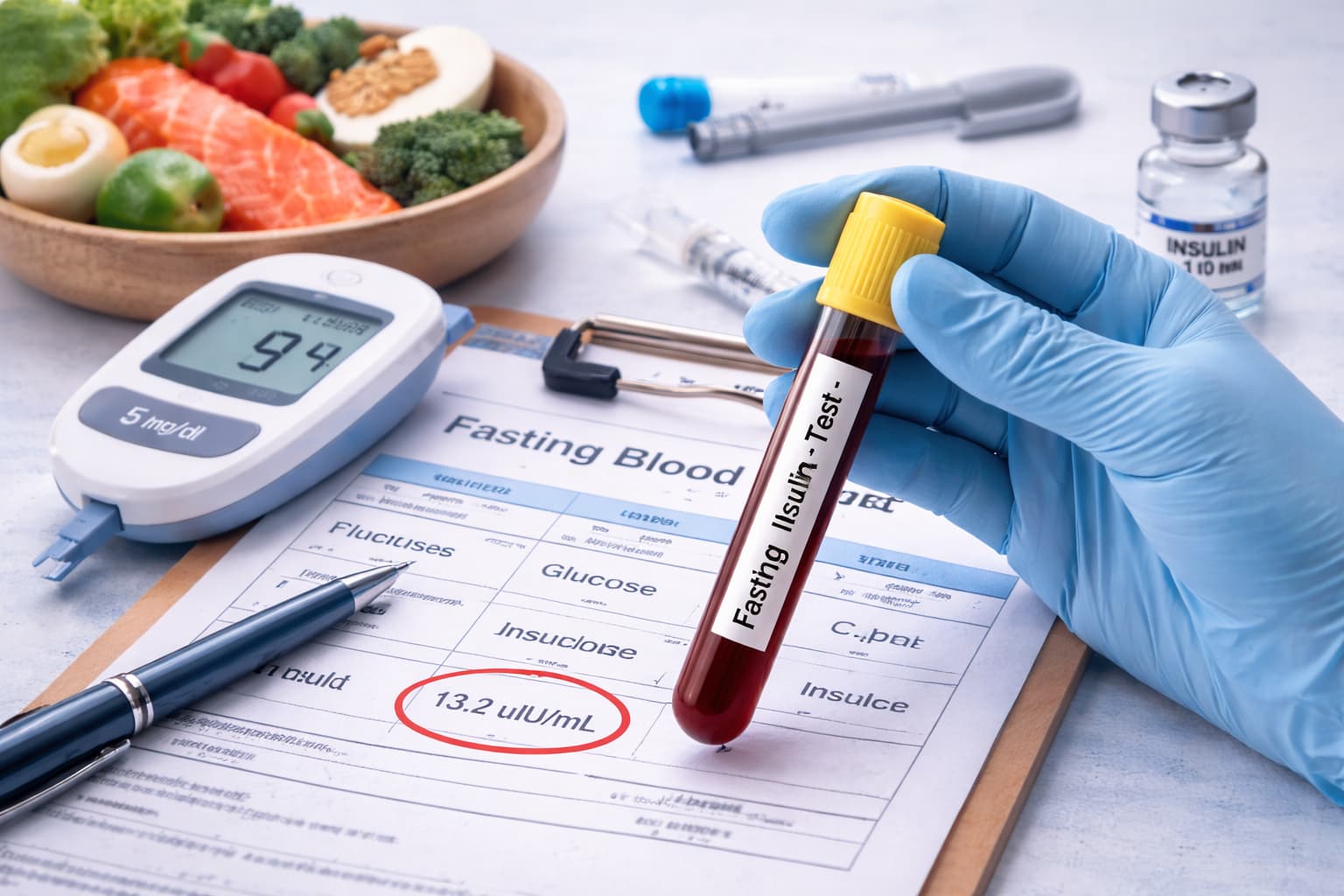
Insulin dynamics reveal far more about metabolic status than glucose alone. You see this every day in your practice: two patients may present with identical fasting glucose values, yet their long-term metabolic trajectories diverge dramatically.
The missing layer is circulating insulin. The fasting insulin test provides that clarity and has quickly become a cornerstone investigation for metabolic assessment, insulin resistance evaluation, and early detection of pancreatic dysfunction.
As demand increases in pathology labs in India, questions arise around the fasting insulin test method, reporting standards, cost considerations, and interpretation frameworks. Your role as a healthcare professional places you right at the intersection of diagnostic precision and clinical action— so precision in testing, workflow, and reporting matters.
Let’s walk through what you need to know to evaluate and report fasting insulin test results confidently and consistently.
Why Fasting Insulin Matters
Insulin is at the core of glucose regulation, energy utilisation, lipid modulation, and adipocyte signalling. You assess glycemia routinely through fasting glucose and HbA1c, yet those values alone do not uncover the early compensatory stages of metabolic load.
Pairing HbA1c and fasting insulin test parameters gives a wider lens into cardiometabolic risk.
Your interpretation gains depth when you establish:
- Basal insulin release.
- Beta-cell adaptability.
- Hidden insulin resistance.
- Deviations from expected insulin–glucose relationships.
- Early pancreatic strain before glucose begins to drift upward.
Clinicians increasingly rely on you to provide these insights because the insulin fasting test means more than just quantifying a hormone.
When Fasting Insulin Should Be Ordered
- Recurrent fatigue with unexplained glycemic swings.
- Elevated fasting glucose or borderline values.
- A family pattern of metabolic disease.
- Hormonal imbalances such as PCOS.
- Unexplained weight gain with normal glucose.
- Suspected hypoglycemia episodes.
- Monitoring requirements for diabetes care.
- Metabolic screening during pregnancy.
The fasting insulin test can detect pancreatic stress long before glucose abnormalities present themselves. That makes timely ordering and accurate reporting especially valuable.
Pre-Analytical Aspects
Your expertise begins long before the sample reaches the analyser. Even minor pre-analytical deviations influence the fasting insulin test range and data reliability.
Patient Preparation
- An 8–12 hour fasting state.
- Water intake allowed.
- Moderate activity; strenuous exercise avoided.
- Clear disclosure regarding steroids, insulin therapy, or glucose-altering drugs.
Blood Collection Procedure
Draw from a peripheral vein into a serum separator tube. Advise your phlebotomy team to,
- Minimise tourniquet time.
- Process samples without delay.
- Avoid hemolysis.
- Maintain a stable temperature before centrifugation.
The Fasting Insulin Test Name and Method
While the test is widely recognised as the fasting insulin test, lab request forms may list variations, such as Insulin (Fasting), Serum Insulin, Insulin– Basal.
The fasting insulin test method varies across platforms— most LIS and analysers use chemiluminescent immunoassays due to their sensitivity and specificity.
When integrating instruments through systems like Flabs LIS, automated data capture reduces transcription errors and preserves numerical integrity.
Normal Range and Interpretation
Laboratories may establish internal ranges based on assay platforms, yet reference intervals tend to follow similar patterns. A general fasting insulin test normal range is given below.
| Parameter | General Range | Notes |
|---|---|---|
| Fasting Insulin | 2–25 mU/L | Age, BMI, and assay variation influence results |
| Post-glucose (30 min) | 30–230 mU/L | Used in extended tolerance studies |
| Post-glucose (1 hr) | 18–276 mU/L | Depends on insulin sensitivity |
| Post-glucose (2 hrs) | 16–166 mU/L | Decline expected |
| Return to baseline | <25 mU/L by 3 hours | Persistent elevation suggests resistance |
These ranges illustrate broad physiological patterns. Your facility’s calibration and analyser configuration may warrant customised intervals.
How to Interpret Fasting Insulin
Insulin alone rarely tells the full story; your report commentary should integrate glucose, anthropometric data, and clinical suspicion. When you review fasting glucose and insulin test data, patterns begin to form.
High Levels
- Insulin resistance.
- Compensatory secretion preceding type 2 diabetes.
- Early metabolic syndrome.
- Cushing-related dysregulation.
- Insulin-secreting tumours (rare).
Low Levels
- Type 1 diabetes.
- Late-stage type 2 diabetes with beta-cell exhaustion.
- Chronic pancreatitis.
- Significant pancreatic impairment.
Your report summary can highlight how the patient’s fasting insulin relates to glucose. For example, a normal glucose level with an elevated insulin value indicates impending metabolic issues even before HbA1c rises.
The Role of HOMA-IR in Interpretation
Many clinicians rely on indices like HOMA-IR to quantify insulin resistance. You can enhance your report value by including a calculated interpretation when requested. Since fasting insulin test for insulin resistance is a common use-case, pairing insulin with glucose creates more actionable information.
Workflow, Reporting, and Turnaround Time
Clinicians depend on your turnaround time to make timely metabolic decisions. With modern equipment integrations, real-time data transmission reduces delays.
Most labs have the turnaround time anywhere between a few hours and the next working day, depending on analyser load, day-end batching, reflex testing needs, and quality control events.
Clear communication around availability and reporting windows prevents misinterpretation of delayed values.
Practical Scenarios You Encounter Daily
Scenario 1: Early metabolic load with normal glucose
A patient shows a fasting insulin of 22 mU/L with a glucose of 82 mg/dL.
Interpretation: strong suggestion of compensatory hyperinsulinemia.
Scenario 2: Low insulin with moderate hyperglycemia
Insulin at 3 mU/L, glucose at 140 mg/dL.
Interpretation: evolving beta-cell insufficiency, not resistance.
Scenario 3: Elevated insulin and elevated glucose
Insulin at 30 mU/L, glucose at 110 mg/dL.
Interpretation: insulin resistance with inadequate metabolic clearance.
Your commentary empowers clinicians to track progression and personalise treatment.
Precision Through Digital Lab Infrastructure
Modern diagnostic environments rely heavily on automation. Integrating instruments with advanced systems such as Flabs LIS streamlines your operations through:
- Automated data capture prevents transcription mismatches.
- Real-time transmission from the analyser to the LIS.
- Consistent formatting for metabolic test reports.
- Faster turnaround for fasting insulin and related profiles.
- Robust QC traceability and audit trails.
Building a More Insightful Insulin Report
Your role goes beyond producing a number. You translate complex biochemistry into actionable interpretation. When you integrate fasting insulin with glucose, HbA1c, and patient context, the clinician receives a metabolic roadmap rather than a single snapshot.
Accuracy in the insulin blood test fasting stage, precision in reporting, thoughtful commentary, and reliable turnaround collectively elevate the clinical value of the test. In healthcare, where metabolic disorders are rising rapidly, your contribution becomes central to early detection and long-term intervention.
Also check - IGRA Test: Tuberculosis Detection Explained
Get Started at ₹1!
Try Flabs for a full month for just ₹1.
Follow us on