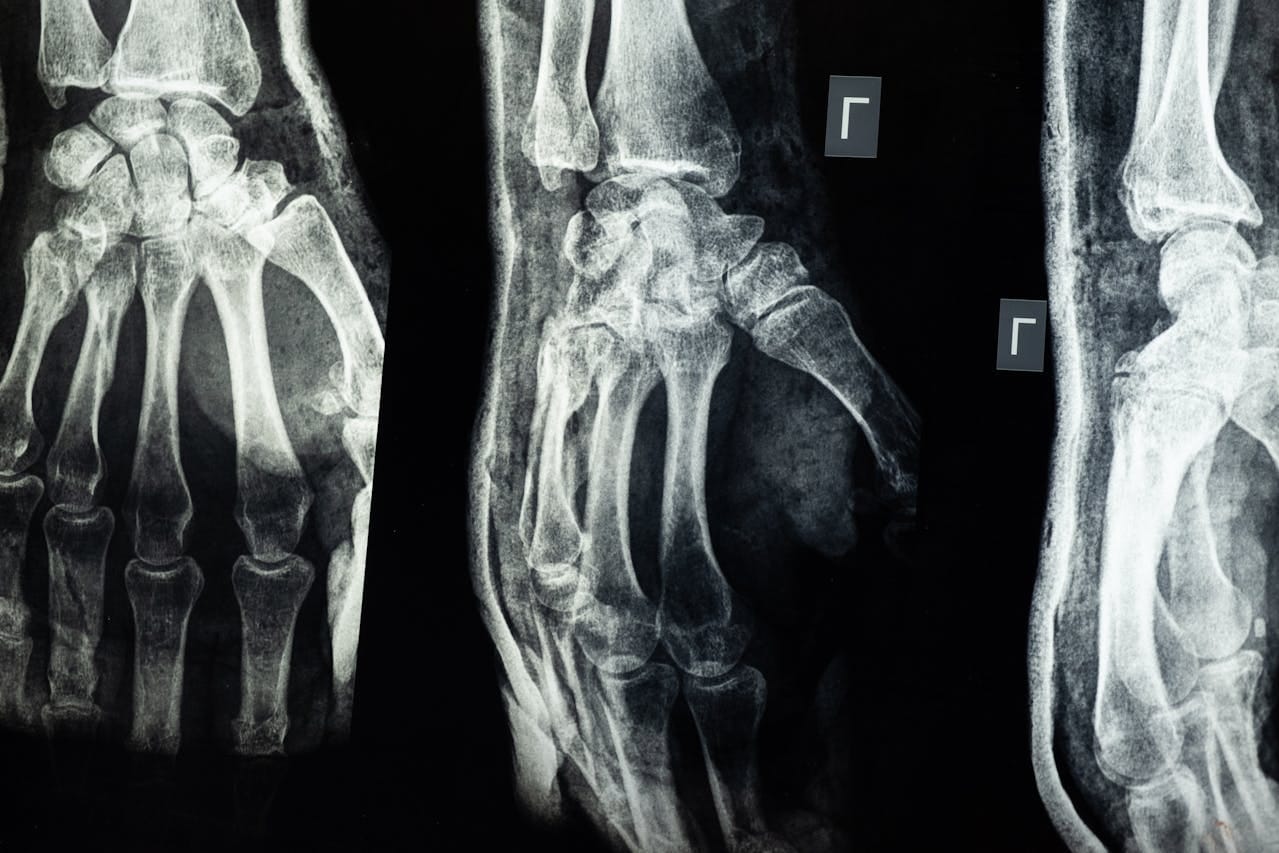
The ossification test is a diagnostic method used to evaluate bone development and skeletal maturity. It has a major role in assessing growth disorders, estimating age in medico-legal cases and diagnosing endocrine or metabolic abnormalities. For pathologists and healthcare professionals, ossification and its clinical applications have major implications in guiding diagnosis and treatment. They may even have to support legal evaluations of patients regarding their pathological state.
What is Ossification?
Ossification, or osteogenesis, is the process of bone formation. It occurs primarily through two mechanisms:
Intramembranous ossification – seen in flat bones like the skull.
Endochondral ossification – seen in long bones like the femur and humerus.
Bone development begins in the fetus and continues through adolescence, influenced by hormonal, genetic, and nutritional factors. Tracking ossification helps determine skeletal maturity and detect abnormalities in growth patterns.
Due to the predictable nature of ossification, clinicians and forensic experts have developed reliable methods to estimate age based on bone development stages. It is especially true for the bone ossification test.
What is the Ossification Test?
The ossification test is also known as the epiphyseal fusion test. It involves radiological examination. The test primarily uses X-rays to assess the development of ossification centres in bones. The most common areas evaluated are the hand, wrist, elbow, shoulder, pelvis and knee.
However, it can also include the examination of other bones:
- The clavicle connects the shoulder blade to the sternum and undergoes complex ossification, involving multiple growth plate fusions.
- The sternum, composed of several sternebrae, fuses progressively over time
- The pelvis changes structurally with age, particularly in regions like the iliac crest.
Purpose of the Ossification Test
- Assess Skeletal Maturity: Helps evaluate if a child’s bone age corresponds with their chronological age.
- Diagnose Growth Disorders: Useful in conditions like growth hormone deficiency, precocious puberty or constitutional growth delay.
- Age Estimation: Applied in legal and forensic contexts to estimate the age of unidentified individuals or verify age claims.
- Surgical Planning: Important for timing interventions in pediatric orthopaedic cases.
- Juvenile Justice Review: Supports courts in classifying offenders as juveniles or adults in criminal cases using the ossification test in law.
In legal applications, especially those governed by the Juvenile Justice Act, an ossification test for age determines if an individual qualifies as a minor.
Ossification Techniques
The Greulich and Pyle Atlas Method is the most commonly used technique. It involves comparing a patient’s hand and wrist X-ray to a series of standardised images in an atlas. Each image corresponds to a specific age and sex, allowing clinicians to estimate bone age quickly and with relative ease. While the method is widely accepted, it relies heavily on the skill of the evaluator.
The Tanner-Whitehouse (TW2 and TW3) Method provides a more detailed analysis. It assigns scores to the maturity of individual bones, and the sum of these scores is used to calculate an overall bone age. It is more precise but also more time-consuming.The Sauvegrain Method focuses on the elbow and is particularly useful during puberty when hand and wrist methods become less reliable. It examines the ossification centres in the elbow. The test provides higher accuracy in adolescents.
In selected cases, MRI and CT scans may be used. These are usually reserved for detailed imaging or when X-rays are inconclusive. MRI can detect early ossification changes and identify underlying pathologies, while CT scans may be used for forensic reconstructions or in complex orthopaedic assessments.
A forensic anthropologist or radiologist conducts the ossification test procedure. They obtain X-rays of the relevant bones and assess signs of ossification, such as growth plate fusion. However, ossification rates can vary due to malnutrition, illness or injury. Results should be interpreted within a clinical context.
Normal Ossification Timelines
Ossification centres appear in a predictable sequence, allowing clinicians to match bone age with chronological age:
- At birth – many ossification centres are already visible (e.g., femoral head, humeral head).
- By age 2–4 – carpal bones begin to ossify.
- By age 10–12 – most epiphyseal growth plates are visible.
- By age 16–18 – closure of epiphyseal plates in long bones typically occurs, signalling the end of linear growth.
Use in Legal Frameworks
In legal proceedings, particularly those involving the Juvenile Justice (Care and Protection of Children) Act, 2015, the ossification test is often used to determine the age of the accused or victim. Age classification can directly affect how a case is tried, especially if the person is potentially a juvenile. It highlights the role of the ossification test in law, especially where documentary proof of age is unavailable.
A notable case is Pawan Kumar v. State of UP, where the Supreme Court judgment on the ossification test acknowledged the test’s limitations. The appellant’s test indicated he was around 19 at the time of the offence. The Court noted that bone ossification is not entirely accurate, and a one-year reduction might be considered when age is unclear.
In Vinod Katara v. State of UP (2022), the Court reiterated that the ossification test for age is not an exact science, urging caution in relying solely on this method. These rulings provide important ossification test questions for legal practitioners and clinicians alike.
Interpretation & Results
| Bone Age vs. Chronological Age | Interpretation | Possible Causes/Considerations |
|---|---|---|
| Bone Age = Chronological Age | Indicates normal growth and development. | Normal development; no significant concerns. |
| Bone Age < Chronological Age | Suggests delayed skeletal maturity. | Constitutional delay, endocrine disorders (e.g., hypothyroidism), or chronic illness. |
| Bone Age > Chronological Age | It may indicate accelerated skeletal maturation. | Early puberty (precocious puberty), hormonal excess (e.g., hyperthyroidism, adrenal disorders). |
Limitations of Ossification Tests
- Population and Ethnic Variability: Ossification standards may not accurately reflect all populations.
- Interobserver Variability: Different clinicians may interpret X-rays slightly differently.
- Not Definitive: It should be combined with clinical findings and other diagnostic tools.
- Less Useful After Growth Plate Closure: Once ossification is complete, the test is less informative for age estimation.
- External Factors: Conditions such as malnutrition, chronic illness, or bone disorders can alter ossification timelines.
- Limited Legal Certainty: Courts recognise its imprecision, especially when juvenile status is disputed. It prompts frequent ossification test questions in courtrooms.
Recent Advances
- AI-Powered Bone Age Assessment: Automated software tools now assist in bone age estimation, improving accuracy and reducing interpretation time.
- Digital Radiographic Standards: Some hospitals and labs are moving towards digital databases, which allow for faster and more standardised reporting.
Closing Remarks
Lately, advancements in molecular biology and genetics are opening new pathways in knowing about bone development. Research on growth plate biology and gene expression patterns may soon complement radiographic ossification tests, especially in complex cases.
Though not yet standard in practice, these advancements highlight how the field is evolving. For those involved in diagnosis or medico-legal evaluation, awareness of these ongoing studies can provide a broader context when interpreting ossification-related findings.
Alos check - [ESR Test for Cancer](https://flabslis.com/blogs/esr-test-for-cancer
Get Started at ₹1!
Try Flabs for a full month for just ₹1.
Follow us on