
Tests
Serum Electrolytes Test Report Format – Free PDF Download

When patients complain of dehydration, weakness or loss of energy, physicians resort to serum electrolyte tests to determine the pH levels and loss of essential salts and minerals. Disproportion in mineral levels can be fatal. The serum electrolytes test report format comes to the fore for pathology laboratories to conduct accurate diagnoses. It is directly connected to the correctness of the test and patient safety. Any deviations not only result in wrong diagnosis, but they also make it difficult for physicians to understand and progress forward.
As per the suggestions of ICMR (Indian Council of Medical Research), there is a set of rules for the format of serum electrolyte test reports. Pathology laboratories focusing on quality healthcare must follow these rules when designing the format for the electrolyte blood test.
What is Serum Electrolytes Test
Salts and minerals play a crucial role in keeping the body's health balanced. A Serum electrolyte test is used to determine the imbalances in salt and mineral levels in the blood. The test finds the levels of sodium, potassium, calcium, magnesium, chloride, and bicarbonate salts in the blood. It can be conducted as a regular physical examination or as part of a comprehensive set of tests. Serum electrolytes test price is around INR 350 in India, on average.
Physicians may suggest the electrolyte blood test when patients show nausea, weakness, irregular or fast heartbeat (arrhythmia), diarrhoea or constipation, fatigue, headaches, muscle weakness, cramps, spasms, etc. The test helps determine health conditions like kidney disease, heart disease, diabetes, malabsorption, liver diseases, etc. A simple dehydration can also result in electrolyte imbalances. In addition, certain medications can also cause pH imbalances in the body.
Outline of Serum Electrolytes Test Report Format
At the core, a serum electrolytes test report follows the standard structure for pathology reports involving details related to patients, tests, and laboratories. A well-structured serum electrolytes test report must have the below details.
Laboratory Letterhead: A serum electrolytes test report must start with the laboratory letter-header containing the logo.
Patient Information: Record personal and contact details for accurate tracking and privacy. This includes the patient's name, age, gender, and contact number.
Referring Doctor: Note the doctor's details on official letterhead for professional communication.
Specimen Details: Document the sample type, size, collection time and protocol for quality assurance.
Test and Methodology: Outline the serum electrolytes test and its process in simple terms for effective serum electrolytes test report formatting.
Results: For easy review, display the electrolyte levels with units (e.g., mmol/L) and reference ranges, as reference ranges vary by laboratory.
Normal Values: List the serum electrolytes test normal range, noting any demographic-specific variations in the serum electrolytes test report.
Interpretation: Provide detailed test result interpretation to ensure the transferability of the report between different healthcare professionals.
Equipment Calibration: Mention the information about calibration and maintenance of instruments used in the test and correlate it to the accuracy of the serum electrolytes test procedure.
Signature and Date: Ensure the signatures of concerned lab technicians, doctors and report date for accountability.
Security: Use QR codes and barcodes to validate secure, traceable serum electrolyte test reports.
Lab Info: Present the lab's certifications and contact details (Email, phone number and website) to confirm the test standards and credibility.
Download the Serum Electrolytes Test Report Format PDF
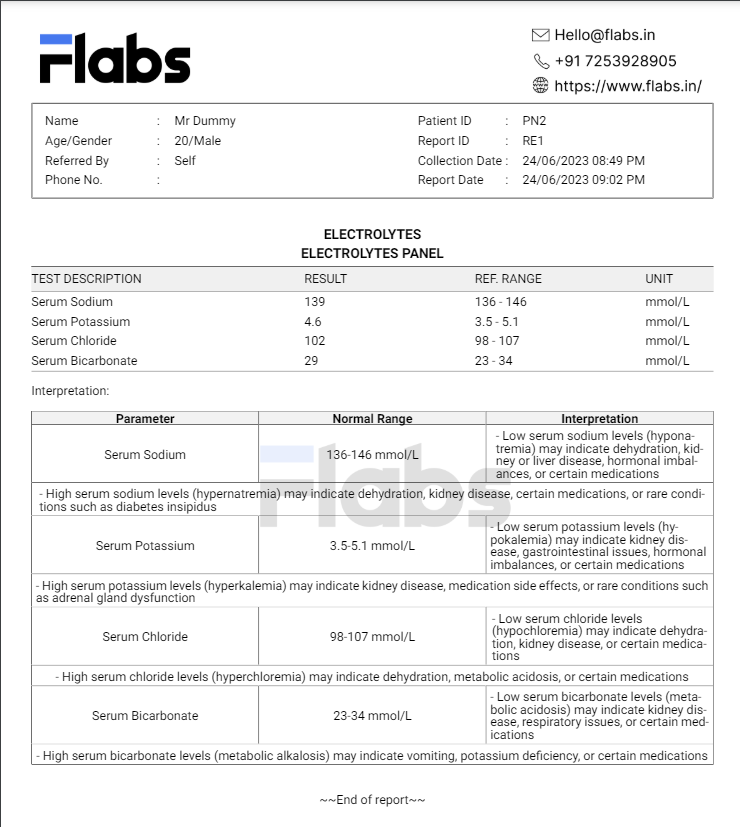
Download the free version of the sr electrolyte test report which plays a crucial role in pathology laboratories and disease diagnosis.

Serum Electrolytes Test Report Format PDF
Serum Electrolytes Test Report Results
While the underlying cause for electrolyte imbalance can differ, the imbalances in different electrolytes are associated with certain conditions. They must be in the normal ranges for a healthy individual. They are mentioned below for reference.
- Sodium: 136 to 144 mmol/L.
- Potassium: 3.7 to 5.1 mmol/L.
- Calcium: In adults, 8.5 to 10.2 mg/dL.
- Chloride: 97 to 105 mmol/L.
- Magnesium: 1.7 to 2.2 mg/dL.
- Phosphate: 2.5 to 4.8 mg/dL.
- Bicarbonate: 22 to 30 mmol/L.
Conclusion
In conclusion, serum electrolyte tests are significant in the pathological diagnosis of various health conditions like diabetes and kidney malfunctioning. Serum electrolyte test reports form a crucial link to understanding the test findings and help doctors suggest further tests or appropriate treatments. A standardised structure for serum electrolyte profile tests ensures transferability, interoperability and accuracy of diagnosis and patient healthcare.
Get Started at ₹1!
Try Flabs for a full month for just ₹1.
Follow us on