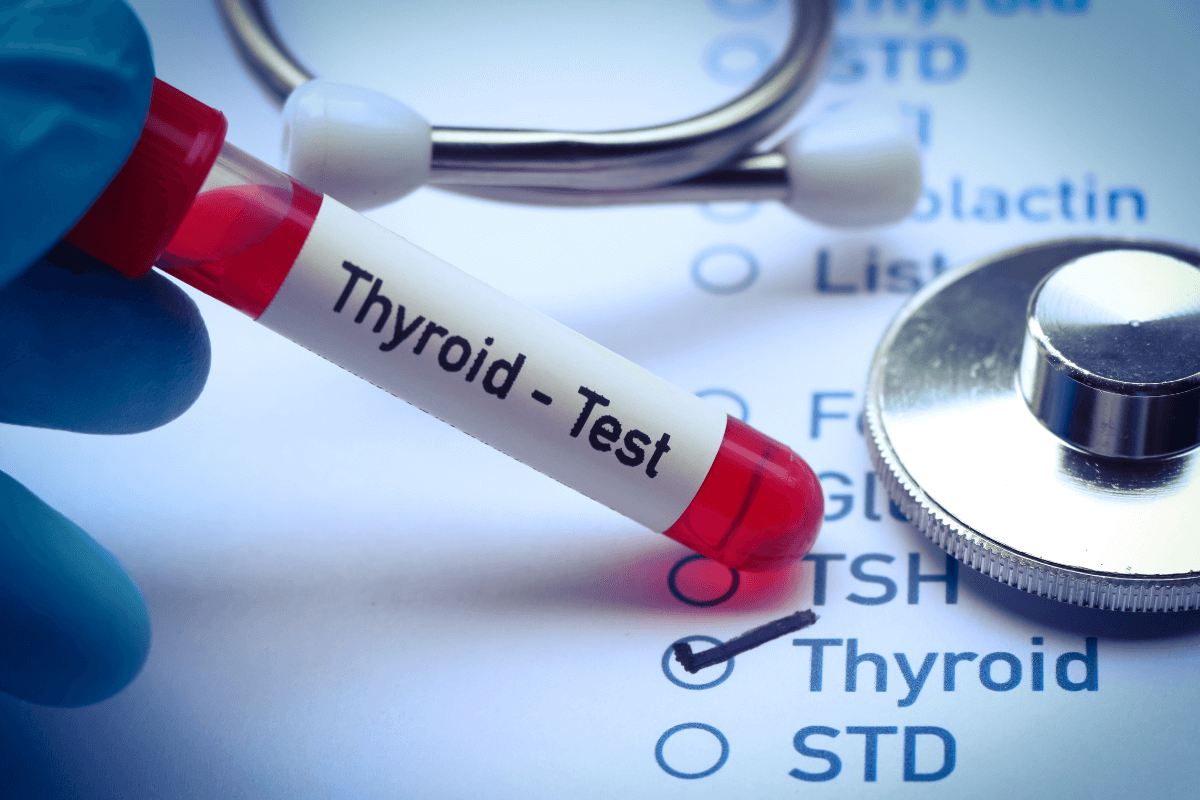
The thyroid gland, situated in the neck of the human body, plays a significant role in regulating and overseeing many functions, including metabolism, energy usage, immune function, bone strength, cardiac health, and many more. When determining thyroid hormone levels with blood tests, reporting them in a structured format plays a crucial role in diagnosing a health condition. The accurate Thyroid test report format forms a crucial communication link between healthcare professionals and enables precise and timely treatment.
Thyroid test report formats must follow the standards set by global and local medical regulatory bodies. They typically contain patient information, details of the test, actual and reference values for hormone levels, and laboratory details. It is also known as (T3, T4 TSH) test report format. Let's look at the nuances of thyroid test report formatting in this article.
Structure of a Thyroid Test Report Format
| Section | Key Points |
|---|---|
| Patient Information | Accurate patient identification, demographics for context, age-related interpretations, secure records. |
| Reference Doctor | Contact point, professional validation, communication details, report credibility. |
| Specimen Information | Sample type and method, quantity, timing relevance, integrity and quality standards. |
| Test Name & Methodology | Standardised terminology, laboratory techniques, diagnostic objectives, related assessments. |
| Test Result | Laboratory findings (TSH, T4, T3), metrics, summary, normal range flags, previous comparisons. |
| Normal Value Reference | Demographic-specific values, medical guidelines alignment, significance. |
| Quality Control | Instrument accuracy, result consistency, external audits, calibration regularity, staff competency. |
| Signature and Date | Accountability, timeliness, traceability, legal adherence, result confirmation. |
| QR Code & Barcode | Secure coding, quick retrieval, data entry accuracy, tampering prevention, integration. |
| Laboratory Details | Brand identity, certifications, contact information, accessibility, online resources. |
Download Thyroid Test Report PDF

Download the standardised test report to see the thyroid test report format PDF below.

How to Read Thyroid Test Results
A standard thyroid test report format will contain normal and reference values for the parameters below. Healthcare professionals will judge any of the following conditions based on the comparison with T3, T4, and TSH in the normal range. The results will also help doctors diagnose the underlying health condition or suggest further tests and treatments.
TSH (Thyroid Stimulating Hormone):
- The primary screening test for thyroid health.
- High TSH levels may indicate hypothyroidism (underactive thyroid).
- Low TSH levels may suggest hyperthyroidism (overactive thyroid).
Free T4 (Thyroxine):
- Measures the free, unbound levels of T4 in the blood.
- Low levels can indicate hypothyroidism.
- High levels can suggest hyperthyroidism.
Free T3 (Triiodothyronine):
- Reflects the active thyroid hormone level in the bloodstream.
- Low levels can also suggest hypothyroidism.
- Elevated levels often indicate hyperthyroidism.
Thyroid Antibodies:
- Checks for autoimmune thyroid disease.
- High levels can indicate Hashimoto's thyroiditis or Graves' disease.
Thyroid Test Results Chart for Adults (TSH)
| Gender | Age | Normal | Low | High |
|---|---|---|---|---|
| Male | 18-30 | 0.5-4.15 mIU/L | <0.5 mIU/L | >4.5 mIU/L |
| Male | 31-50 | 0.5-4.15 mIU/L | <0.5 mIU/L | >4.15 mIU/L |
| Male | 51-70 | 0.5-4.59 mIU/L | <0.5 mIU/L | >4.6 mIU/L |
| Male | 71-90 | 0.4-5.49 mIU/L | <0.4 mIU/L | >5.5 mIU/L |
| Female | 18-29 | 0.4-2.34 mIU/L | <0.4 mIU/L | >4.5 mIU/L |
| Female | 30-49 | 0.4-4.0 mIU/L | <0.4 mIU/L | >4.1 mIU/L |
| Female | 50-79 | 0.46-4.68 mIU/L | <0.46 mIU/L | 4.7-7.0 mIU/L |
What Can Affect Thyroid Test Results?
Age: TSH levels tend to increase with age naturally.
Time of Sample: TSH levels become high in the evenings.
Gender: Men and women can have slightly different thyroid reference values.
Stress or Health History: Any of these conditions can temporarily lower the values of all thyroid tests. Both physical and psychological stresses can influence the results.
Fasting: It leads to higher TSH values depending on the fasting period and how recent it is.
Diet: Iodine intake can influence thyroid test results.
Pregnancy: Thyroid test results vary throughout the pregnancy period. In fact, different reference levels are recommended every three months to account for these changes.
Medications: Medicines like heparin, phenytoin, and amiodarone can impact thyroid test results. Oestrogen supplements typically found in birth control pills can falsely increase T3 and T4 levels.
Biotin Supplements: Biotin is often consumed to enhance skin and hair health but can inaccurately lower TSH levels in thyroid tests. Although biotin is a common component in multivitamins, the concentration in these supplements typically isn't sufficient to affect thyroid test outcomes.
Conclusion
Following the Thyroid test report format standards is crucial for correct diagnosis and patient treatment. A uniform report format helps doctors communicate better and highlights the importance of thyroid tests in dealing with thyroid issues, leading to better health outcomes for patients.
Suggested read: Antithyroid Antibodies Test
Get Started at ₹1!
Try Flabs for a full month for just ₹1.
Follow us on