Diagnostic testing for SARS-CoV-2 has shaped clinical practice, laboratory workflows, and public health decision-making worldwide. For pathologists and healthcare professionals, it is essential to distinguish between the different types of COVID tests—not only for patient management but also for interpreting data in research and population-level studies.
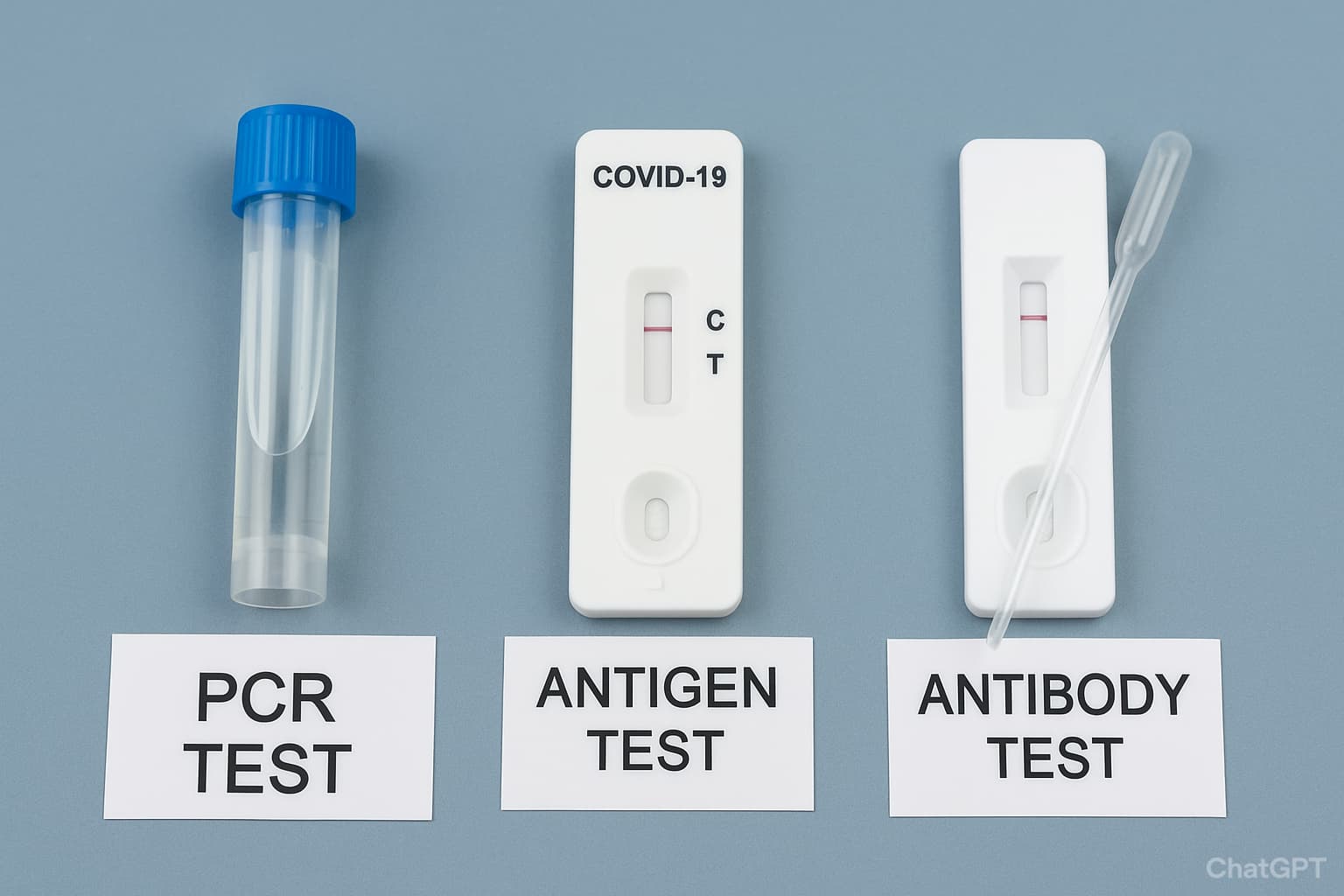
Let us explore the types of COVID test currently in use: PCR, antigen, and antibody, highlighting methodologies, sensitivity profiles, and clinical applications. The foregoing discussion incorporates nuances around COVID-19 test reports, result interpretation, and variations in practice, including the availability of types of COVID tests in India and other regions.
Three Types of COVID Tests
| Type | Methodology | Insights |
|---|---|---|
| PCR (Molecular Test) | Detects viral RNA using reverse transcription polymerase chain reaction (RT-PCR); often performed in a lab. | High sensitivity and specificity; gold standard for diagnosis; longer turnaround time. |
| Antigen (Rapid Test) | Detects viral proteins (antigens) from nasal or throat swabs; often point-of-care or self-administered. | Faster results; less sensitive, especially in asymptomatic cases; requires repeat testing for reliability. |
| Antibody (Serology Test) | Detects host antibodies (IgM, IgG) produced after infection or vaccination, using blood samples. | Not for acute diagnosis; used for surveillance, epidemiology, and post-infection assessment. |
Molecular Testing: PCR and Related Platforms
The polymerase chain reaction (PCR) remains the benchmark for detecting active SARS-CoV-2 infection. More specifically, RT-PCR (reverse transcription PCR) targets viral RNA, amplifying sequences to detectable levels. This assay belongs to the broader category of nucleic acid amplification tests (NAATs).
- Specimen types: Nasopharyngeal swab, oropharyngeal swab, mid-turbinate swab, and increasingly, saliva.
- Turnaround time: Ranges from several hours to a few days.
- Accuracy: RT-PCR is more sensitive than antigen testing, especially in asymptomatic or early-stage infections.
Some platforms integrate multiplex detection. For example, assays such as the Flu SC2 Multiplex simultaneously screen for influenza A, influenza B, and SARS-CoV-2 from a single swab.
The assay’s sensitivity and specificity remain the highest among available tests, though testing too early in infection may yield false negatives. Moreover, only NABL-accredited laboratories approved by ICMR are authorised to conduct these tests.
If an RT-PCR test result is positive, clinicians advise isolation and supportive management based on symptom severity. A negative result, especially when collected early, may require repeat testing if symptoms emerge after several days.
While highly accurate, PCR is resource-intensive. Pathologists managing COVID-19 test procedures must account for reagent supply chains, biosafety measures, and laboratory throughput. For clinicians, PCR-based COVID-19 test results remain the reference standard, particularly when confirming infection in patients with ambiguous antigen test findings.
Antigen Testing: Rapid and Accessible
Antigen tests detect viral surface proteins rather than genetic material. Commercial COVID rapid test kits are now widely available, with formats designed for both professional use and self-testing.
Speed: results in 15–30 minutes.
Accessibility: available at pharmacies, clinics, and even online retailers.
Accuracy: specificity is strong, but sensitivity is lower compared to PCR. False negatives are more common, particularly in asymptomatic individuals or those tested outside the optimal viral load window.
Clinical Use
Antigen testing is most useful for symptomatic patients in acute care, community-level surveillance where rapid turnaround outweighs sensitivity, and repeat testing strategies, where a negative result is re-checked after 48 hours.
A negative antigen test in a symptomatic patient may require confirmatory PCR. Laboratories and clinics issuing a COVID-19 test report must state the method used, as the implications for accuracy and patient counselling differ significantly.
Antibody Testing
Unlike PCR and antigen tests, which diagnose current infection, antibody tests (serological assays) detect immune response to past SARS-CoV-2 exposure. These tests measure IgM, IgG, or both in blood samples.
Indication: identifying prior infection, estimating population exposure, and in some cases, evaluating vaccine response.
Not for diagnosis: antibody testing is not suitable for acute COVID-19 diagnosis due to delayed seroconversion (usually 1–3 weeks post-infection).
Interpretation of Results
| Result | Interpretation | Notes |
|---|---|---|
| Positive | Indicates prior exposure to the virus or immunisation | Waning antibodies over time may reduce detection accuracy |
| Negative | Suggests no prior infection, very recent infection before antibody development, or declining antibody levels | Timing of the test affects reliability |
In research contexts, seroprevalence studies rely on antibody testing to quantify community spread. For clinicians, it is important to distinguish between diagnostic and epidemiological roles when reviewing a COVID-19 test report based on serology.
COVID-19 Test Procedure and Reporting
PCR: requires swabs or saliva with RNA stabilisation, transported under biosafety conditions.
Antigen: swabs performed at point-of-care or home setting with simplified processing reagents.
Antibody: venipuncture or finger-prick with subsequent ELISA or rapid cassette testing.
Accurate COVID-19 test reports should specify:
- Type of assay used.
- Sampling method.
- Date and time of collection.
- Interpretation caveats (e.g., antigen test negatives may need retesting).
Final Thoughts
The types of COVID-19 tests available today are not interchangeable but rather complementary. PCR anchors molecular diagnosis, antigen testing delivers rapid decision support, and antibody testing informs retrospective and population-level analyses.
For healthcare professionals, the emphasis lies in selecting the appropriate modality based on clinical context, patient history, and public health priorities. Transparent reporting and patient communication remain essential in maintaining trust and accuracy across all levels of care.
Also check - Types of PCR: Exploring Different Techniques in Molecular Biology
Get Started at ₹1!
Try Flabs for a full month for just ₹1.
Follow us on