Acquired diseases are conditions that develop after birth due to external factors such as infections, lifestyle choices, or environmental influences. They have a significant share in the high global mortality rate every year.
What is an acquired disease? Unlike congenital diseases, acquired diseases can affect individuals at any age. They encompass a wide range of conditions. Communicable diseases like tuberculosis and malaria and non-communicable ones like diabetes and hypertension, their causes and impacts vary significantly.
This blog explores the definitions, types, and causes of acquired diseases, including healthcare-associated infections (HAIs) and sexually transmitted infections (STIs). An awareness of what an acquired disease is aids its prevention, management, and impact on global health.
How Many Types of Diseases are there?
What is an Acquired Disease?
An acquired disease develops after birth due to external factors such as infections, lifestyle choices, environmental conditions, or ageing. Unlike congenital diseases, which are present at birth, acquired diseases arise over time and can affect individuals at any age.
These diseases may arise from infections caused by bacteria, viruses, or other pathogens, as well as from unhealthy lifestyle choices like poor diet, lack of exercise, or smoking.
Environmental factors like pollution or occupational hazards can also contribute to their development. Some acquired diseases like diabetes and arthritis are chronic and require long-term management, while small infections may be treated and resolved.
Types of Acquired Diseases
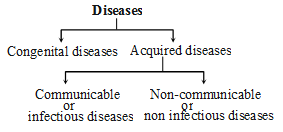
When discussing “what is acquired disease”, we need to look at the types of acquired diseases for better understanding. There are two types: Communicable/Infectious diseases and Non-Communicable/Non-Infectious diseases.
Communicable diseases transfer from one person to another through media like air, water, touch, etc. They are caused by pathogens like bacteria, viruses, fungi, protozoans, and worms. These spread through air, water, food, insects, or direct contact. For example, tuberculosis (TB), malaria, and diarrhoea.
Non-communicable diseases (NCDs) can’t spread from one person to another. They result from genetic, lifestyle, or environmental factors. Examples include diabetes, hypertension, cancer, and cardiovascular diseases. According to WHO, Noncommunicable diseases (NCDs) account for 41 million deaths annually, representing 74% of global mortality.
Difference Between Congenital Disease and Acquired Disease
| Aspect | Congenital Disease | Acquired Disease |
|---|---|---|
| Definition | Present at birth due to genetic or developmental issues. | Develops after birth due to external factors or infections. |
| Cause | Genetic mutations, developmental abnormalities, or prenatal factors. | Infections, lifestyle, environmental factors, or ageing. |
| Time of Occurrence | Exists from birth. | Appears at any point after birth. |
| Transmission | May be hereditary or caused during fetal development. | Generally not hereditary; caused by external factors. |
| Prevention | Difficult to prevent as they occur during fetal development. | Often preventable through healthy habits, vaccination, or avoiding risk factors. |
| Treatment | It may involve lifelong management or surgical correction. | Can often be treated, managed, or cured depending on the condition. |
| Examples | Down syndrome, congenital heart defects, cleft palate. | Diabetes, tuberculosis, arthritis, hypertension. |
Causes of Acquired Diseases
Acquired diseases develop after birth and are influenced by various external factors. Understanding these causes is perceived as important in prevention and early management, besides reducing the burden of acquired diseases in individuals and communities. The causes can be broadly categorised into the following:
Infections
- Pathogens: Bacteria, viruses, fungi, protozoans, and worms can invade the body and cause diseases. For example, Tuberculosis (caused by bacteria), influenza (caused by viruses), ringworm (caused by fungi), and malaria (caused by protozoans).
- Transmission: Spread through air, water, contaminated food, physical contact, or insect bites.
Lifestyle Choices
- Unhealthy Diet: Poor nutrition can lead to conditions like obesity, diabetes, and cardiovascular diseases.
- Physical Inactivity: Sedentary lifestyles contribute to hypertension, heart disease, and osteoporosis.
- Substance Use: Smoking, alcohol consumption, and drug abuse increase the risk of cancer, liver disease, and respiratory disorders.
Environmental Factors
- Pollution: Air pollution can cause respiratory diseases like asthma and bronchitis. Water contamination can lead to diseases like cholera. Ambient and household air pollution together contribute to 6.7 million premature deaths each year.
- Occupational Hazards: Exposure to harmful chemicals, radiation, or repetitive strain in workplaces may result in conditions like asbestosis, skin diseases, or musculoskeletal disorders.
Ageing
- Aging increases susceptibility to degenerative diseases like arthritis, Alzheimer’s disease, and osteoporosis due to the natural decline in body functions.
Nutritional Deficiencies
- Inadequate intake of essential nutrients can cause diseases such as scurvy (vitamin C deficiency), rickets (vitamin D deficiency), and anaemia (iron deficiency).
Genetic Predisposition
- While genetic factors are associated with congenital diseases, some acquired diseases have a genetic predisposition. For instance, individuals with a family history of diabetes or hypertension are at a higher risk of developing these conditions.
- As per WHO, around 10,000 single-gene diseases affect 70–80 million people worldwide, impacting 10 in every 1,000 individuals.
Mental Health Factors
- WHO estimates that 1 in every 8 people in the world has a mental disorder due to stress, anxiety, and depression. They are often triggered by environmental or personal challenges and can lead to mental health disorders like clinical depression and chronic fatigue syndrome.
Trauma and Injuries
- Physical injuries or trauma can lead to acquired conditions such as infections, post-traumatic stress disorder (PTSD), or chronic pain syndromes.
HAIs and STIs
Acquired diseases come in various forms, including those arising from healthcare settings or through direct human contact. Two significant types are healthcare-associated infections (HAIs) and sexually transmitted infections (STIs).
**Healthcare-associated infections (HAIs) **occur in medical settings such as hospitals, surgical centres, or clinics. According to the CDC, about 1 in 10 patients in healthcare settings experience an HAI.
Patients undergoing treatment, particularly invasive procedures like catheterization, are at risk. These infections often result from improper hygiene or contaminated medical equipment. Common HAIs include bloodstream infections, pneumonia, and urinary tract infections.
Sexually transmitted infections (STIs) are caused by bacteria, viruses, or parasites and primarily spread through sexual contact. Some, like HIV and syphilis, can also transfer from mother to child during pregnancy or childbirth. Safe sex, regular screenings, and vaccinations are essential for managing STIs.
Conclusion
Understanding what is an acquired disease goes beyond its causes and types; it also involves recognising the importance of early detection and proactive healthcare. Regular health check-ups, public health initiatives, and community education play pivotal roles in reducing their impact.
Governments must also address socio-economic disparities. They must improve access to healthcare and bring awareness of preventive measures to lead healthier lives. Tackling these challenges collectively can reduce the global burden of acquired diseases.
Get Started at ₹1!
Try Flabs for a full month for just ₹1.
Follow us on