Antibiotic resistance is a critical global health issue, contributing to over one million deaths annually since 1990. Projections indicate that more than 39 million lives will be lost by 2050 without urgent policy action. In this context, the Antibiotic Sensitivity Test becomes indispensable, guiding effective treatment for resistant infections like tuberculosis and pneumonia.
The test is a boon to fight the growing antibiotic resistance but to address the controlled usage of the drugs. This article delves into the importance, types, procedures, and results of antibiotic sensitivity testing, providing a short guide on how it aids in fighting infections.
What is an Antibiotic Sensitivity Test
Antibiotic sensitivity test is a procedure to determine the effectiveness of a drug against certain pathogens, e.g. bacteria or fungi. Certain infections like Tuberculosis, Typhoid, Pneumonia etc., show decreased response to medications over time, when your healthcare provider will intervene to suggest new drugs.
The decreased response is due to the resistance of pathogens to medications. However, before the step, the antibiotic sensitivity test is ordered to determine the level of resistance shown by respective pathogens, so appropriate drugs, in the right level of dosage can be suggested. The test is accomplished using various methods.
Why do You Need an Antibiotic Sensitivity Test
An antibiotic sensitivity test is necessary when you have a bacterial or fungal infection that shows resistance to antibiotics. It means that certain pathogens can counter the impact of drugs and they can grow successfully and multiply. If the infection you have is not showing any response to the antibiotics you use, then your physician may order the test to determine the cause.
If pathogens are shown to be resistant, then new drugs may be suggested to manage your infection. The infections where the test may be required are Tuberculosis, Methicillin-resistant Staphylococcus aureus (MRSA), Clostridioides difficile or C. diff, Pneumonia, or Salmonella typhi or typhoid fever. The antibiotic sensitivity test can also be used to manage these infections over time, essentially helping you fight better.
When do You Need the Test
An antibiotic sensitivity test is needed when a bacterial infection is suspected and determining the most effective treatment is essential. Doctors order this test if symptoms don't improve with standard antibiotics or if the infection is severe.
It's also suggested for recurrent infections, immunocompromised patients, or when drug resistance is a concern. The test helps select the right antibiotic to fight infections, ensuring effective treatment and preventing resistance development.
Types of Antibiotic Sensitivity Tests
There are different ways to test antibiotic sensitivity as mentioned below. The most common method is the Kirby-Bauer Disk Diffusion test.
- Kirby-Bauer Disk Diffusion Test
- E-test (Epsilometer Test)
- Broth Dilution Test (including MIC determination)
- Agar Dilution Test
- Automated Methods (e.g., VITEK, Phoenix systems)
- Genotypic Methods (e.g., PCR-based detection of resistance genes)
- Time-Kill Assay
- High-Throughput Screening Methods
Antibiotic Sensitivity Test Principle and Procedure
The principle of the Antibiotic Sensitivity Test is to determine the effectiveness of specific antibiotics against bacteria or fungi causing an infection. It involves exposing the microorganism to antibiotics and observing growth inhibition. Techniques like disk diffusion (Kirby-Bauer), broth dilution, or automated methods are used for precise assessment of antibiotic effectiveness for optimal clinical outcomes.
How is the Test Performed?
The most used method for the test is Kirby-Bauer (Disc diffusion). Antibiotic sensitivity test by disc diffusion method involves collecting and analysing a sample from the infected site. The sample may be blood, urine, wound swab, sputum, throat swab, cervix, or other areas.
Sample Collection
In the case of Blood, venipuncture may be used to collect the blood sample. Urine is collected in a sterile cup as per instructions. For collecting samples from a wound site, a special swab is used. In the case of the throat, sample collection is done from the back of the throat and tonsils.
For sputum, mucus (phlegm) from the lungs is collected by coughing into a sterile container or via a nasal swab. The cervix and other areas may also be used if there are pus-filled wounds.
Laboratory Culturing
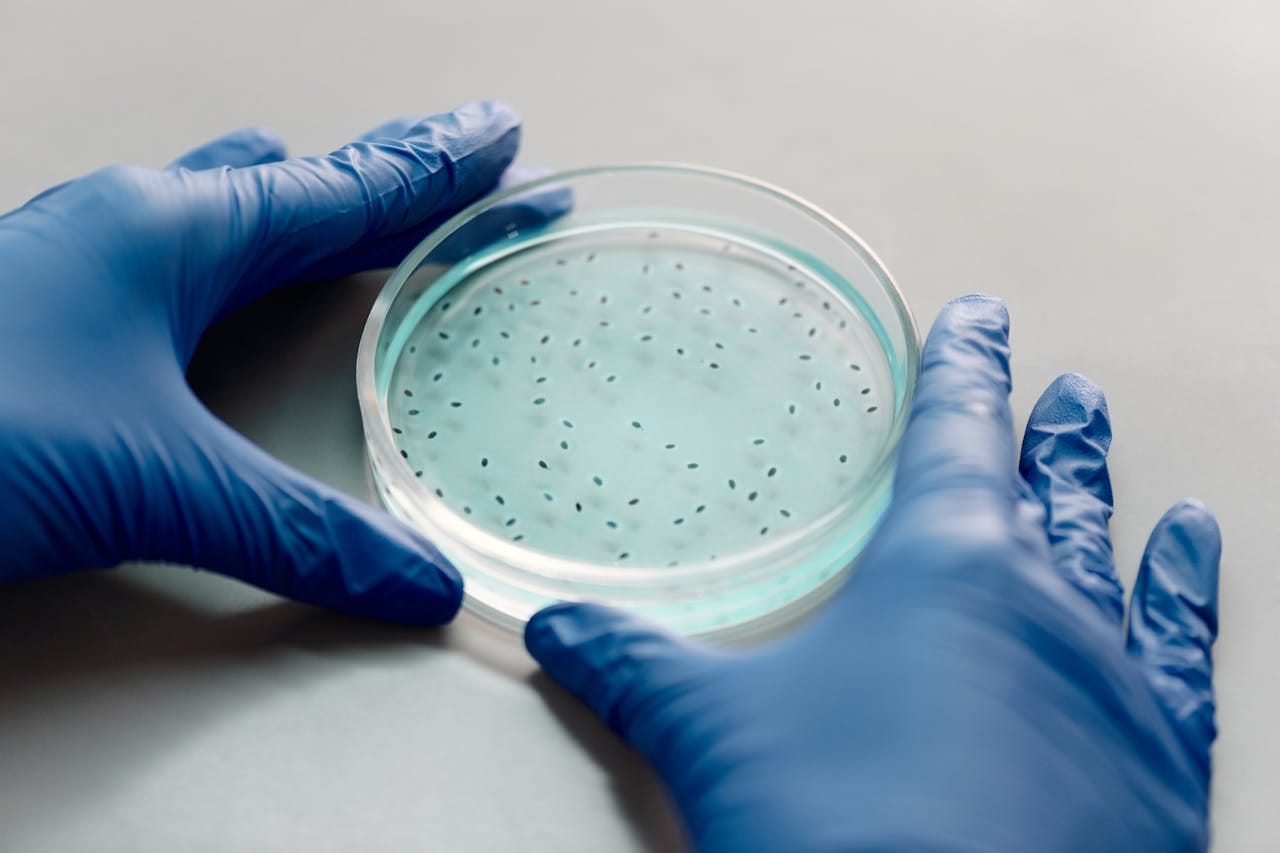
The collected sample is sent to a pathology laboratory for the growth of the pathogens. The sample is spread on a special growth medium to promote growth. The pathogens will form colonies, which is known as culture.
Exposure
Now the pathogen culture is exposed to different antibiotics to test their effectiveness. Based on the reactions, the culture may be reported as being susceptible, intermediate, or resistant.
Antibiotic Sensitivity Test Results
The results of the antibiotic sensitivity test reveal how effective antibiotics are in killing the bacteria or fungus causing your infection. An antibiotic sensitivity test report will be issued containing one of the following interpretations.
| Result | Meaning |
|---|---|
| Susceptible | The antibiotic stopped the growth or killed the bacteria/fungus. It may be a good choice for treatment. |
| Intermediate | The antibiotic may work at a higher dose or require more frequent dosing. |
| Resistant | The antibiotic did not stop the growth or kill the bacteria/fungus. It’s not a good treatment choice. |
| Resistant to all | Multiple medicines might need to be combined for effective treatment. |
Antibiotic sensitivity test Results are based on the minimum inhibitory concentration (MIC), showing the lowest amount needed to stop bacteria. Results are reported as susceptible, intermediate, or resistant.
Doctors choose a "susceptible" drug first. If none are available or the patient is allergic, an "intermediate" drug may be used but might need higher doses and longer treatment.
If bacteria are resistant to all common drugs, a combination of antibiotics may be necessary, often requiring intravenous treatment. Resistant infections can be harder to treat and may need extended care.
Antibiotic Sensitivity Test Chart
What More to Know
The pattern of increasing resistance in microbes towards antibiotics is not just about a natural phenomenon. But incorrect usage of the drugs also has contributed to it. To fight infections in this regard,
- Take antibiotics exactly as prescribed by your healthcare provider. Complete the full course, even if you feel better.
- Avoid using antibiotics for viral infections like colds or flu; they are ineffective against viruses.
- Dispose of leftover antibiotics safely—consult your pharmacist for proper disposal methods.
- Never share antibiotics or use those prescribed for someone else.
- Avoid pressuring your doctor for antibiotics if they’re not needed.
- Store antibiotics properly, away from heat and moisture, to maintain their effectiveness.
- Inform your doctor of any previous reactions to antibiotics.
- Practice good hygiene, like handwashing, to prevent infections and reduce the need for antibiotics.
Also read - Epstein-Barr Virus Test: What It Detects and How It Works
Closure
The importance of antibiotic sensitivity tests also lies in preventing the misuse of antibiotics, a major driver of resistance. By identifying the most effective treatments, it minimises unnecessary exposure to broad-spectrum antibiotics, preserving their efficacy for future use.
Patients should also focus on completing prescribed antibiotic courses and maintaining open communication with healthcare providers about their treatment, ensuring better health outcomes and contributing to global efforts against antibiotic resistance.
Also check - KOH Test Procedure
Get Started at ₹1!
Try Flabs for a full month for just ₹1.
Follow us on