In dermatopathology, distinguishing fungal infections from other skin conditions is essential for timely and appropriate treatment. The KOH test procedure remains a quick, cost-effective tool to identify superficial fungal infections of the skin. It is a microscopic examination commonly referred to as the KOH skin test. It helps pathologists and clinicians determine the presence of fungal elements using potassium hydroxide (KOH) to dissolve non-fungal tissue components.
What Is the KOH Test?
The KOH test full form stands for Potassium Hydroxide test. It is a type of skin scraping test to detect fungal infections on the skin, nails or hair. The test involves treating a specimen with a 10–20% KOH solution to break down keratin and cellular debris. The process further helps isolate fungal elements for microscopic examination.
Because fungi have cell walls composed of chitin, they remain intact while other skin cells dissolve in the alkaline solution. It provides a clearer view under the microscope, improving detection accuracy.
Also known as a potassium hydroxide preparation or KOH prep, the smear test helps differentiate dermatophyte and Candida albicans infections from other skin disorders like psoriasis and eczema.
Other names: Potassium hydroxide examination of skin lesion, KOH smear test, KOH mount test, Fungal wet mount test.
Why Is the KOH Test for Fungus?
The KOH test procedure is suggested when a patient presents with skin lesions that may be caused by dermatophytes, yeast, or other superficial fungi. Clinical signs include redness, itching, scaling, ring-shaped lesions, or thickened, discoloured nails.
It helps differentiate fungal infections from other skin disorders, such as eczema, psoriasis, or bacterial infections.
The KOH test procedure may be performed by physicians, nurse practitioners, physician associates, medical assistants, nurses, midwives, and medical laboratory technicians. If fungal cultures are required, the test is performed by a technologist who specialises in microbiology.
Fungal Infections Detected by KOH Test
The KOH test is commonly used to identify dermatophyte and Candida infections affecting skin, nails, hair and mucous membranes.
Dermatophyte Infections
Dermatophytes are a type of fungus that invades the top layer of the skin, hair, or nails. There are three genera commonly implicated:
- Trichophyton: Found in skin, nail, and hair infections
- Epidermophyton: Generally causes skin and nail infections
- Microsporum: Primarily affects skin and hair
These fungi produce infections collectively known as ringworm or tinea, which appear in different body locations:
- Tinea corporis (ringworm of the body)
- Tinea pedis (athlete's foot)
- Tinea cruris (jock itch)
- Tinea capitis (scalp infection)
- Tinea unguium (onychomycosis/nail infection)
- Tinea versicolor: Caused by Malassezia furfur, appearing as red or grey, scaly patches of itchy skin
Candida Infections
A Candida yeast infection can also be identified by the KOH test by taking scrapings from:
- The mouth (oral thrush)
- Vagina (vaginitis)
- Skin (cutaneous candidiasis)
Of over 40 different fungal species known to cause disease in humans, Candida albicans is the most common and most frequently tested for.
KOH Test Procedure for Fungi: Step-by-Step
Each step in the KOH test is designed to isolate and visualise fungal elements by breaking down non-fungal material. However, the sample collection is non-invasive for patients.
1. Sample Collection – Skin Scraping
The healthcare provider uses a sterile scalpel blade, the edge of a glass slide or a needle to gently scrape the affected area, e.g., skin, nail or hair area. Hence, it is also known as the skin scraping test. The provider collects epidermal cells and fungal elements from the lesion margin, where active fungal growth is most likely.
For hair samples, forceps are used to remove hair shafts and follicles from the infected site. If the test is being sent to a laboratory, the scrapings are placed in a sterile container.
2. Slide Preparation and KOH Application
The collected sample is transferred to a clean glass microscope slide. A drop of potassium hydroxide (KOH) solution (10% for skin and 20% for nails) is added. It serves as a KOH stain, dissolving keratin and other cellular components that might obscure fungal hyphae or spores.
In some labs, a coverslip is placed over the slide to flatten the preparation and facilitate even distribution of the solution.
3. Incubation (Optional)
In certain cases, mild heating or incubation for 5–15 minutes is done to speed up keratin digestion and improve visibility. However, many modern preparations can act quickly without additional heating.
- To improve clearing, dimethyl sulfoxide (DMSO) can be added to the slide.
- Lactophenol cotton blue stain can be added to make fungi easier to see.
- Adding calcofluor-white stain will cause fungi to become fluorescent. It becomes easier to identify under a fluorescence microscope.
4. Microscopic Examination
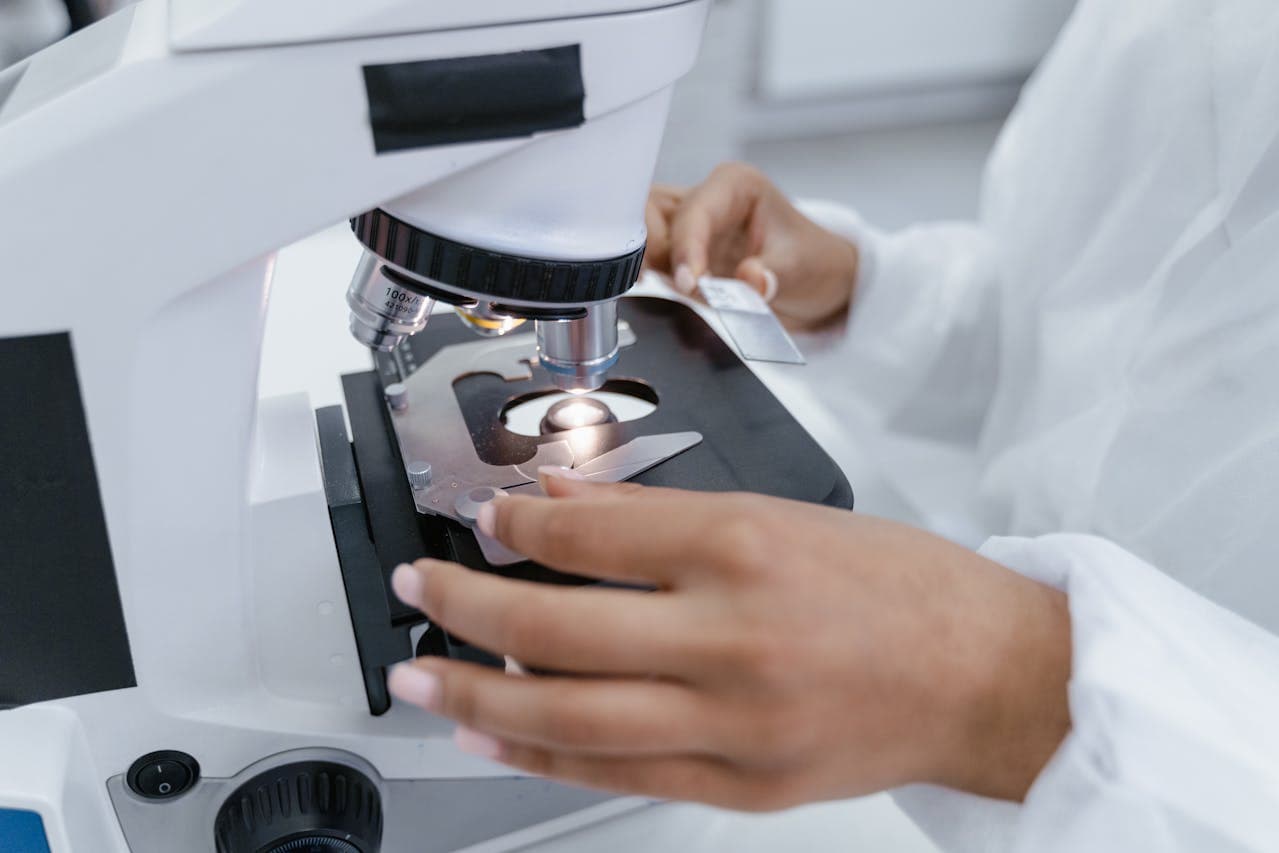
The slide is then examined under a light microscope by a trained professional. The focus is on identifying fungal elements such as branching hyphae, pseudohyphae, or spores. These structures confirm the presence of a fungal infection.
How the Test Feels
For the patient, the KOH test procedure is minimally invasive. The KOH skin test may cause a mild scratching sensation during sample collection, but it usually does not cause much discomfort. Slight redness or pinpoint bleeding may occur, especially in cases of fragile or inflamed skin.
KOH Test Preparation
One of the advantages of the KOH preparation is its simplicity. There are no dietary restrictions or special patient preparations required before the test. However, patients should avoid using antifungal creams or powders for at least 48 hours prior.
KOH Test Results
KOH test results are expressed as positive or negative, each having a direct interpretation regarding diagnosis.
KOH Test Positive Result
A positive KOH test indicates the presence of fungal elements. The type of fungus cannot be identified from the KOH test alone. But it supports the diagnosis of a superficial fungal infection and guides immediate treatment.
KOH Test Negative Result
A negative result means no fungal elements were observed in the specimen. However, it does not entirely rule out fungal infection. Sampling errors, prior antifungal use or deep tissue involvement may lead to false negatives. If clinical suspicion remains high, a skin biopsy, fungal culture, or molecular testing may be warranted.
Limitations and Follow-Up Testing
Although the KOH smear is rapid and widely used, it is primarily a screening test. It lacks the ability to identify the exact fungal species or differentiate between viable and non-viable organisms. So, a follow-up testing such as fungal culture, periodic acid–Schiff (PAS) staining or PCR may be required in certain cases.
Risks
The KOH fungal test is generally safe with minimal risk. It can rarely produce,
- Minor bleeding at the scraping site
- Mild irritation or discomfort
- Low risk of secondary infection
Proper technique and sterile instruments reduce these risks.
Conclusion
The KOH test procedure remains a reliable frontline method to detect fungal infections of the skin, hair, and nails. By dissolving keratin and isolating fungal elements for microscopic evaluation, this simple test provides actionable information within minutes. While limited in species identification, it can guiding early antifungal treatment and reduce diagnostic delays.
Healthcare professionals should continue to use the KOH skin test as part of a broader diagnostic strategy, particularly when managing patients with ambiguous dermatologic symptoms.
Also read - Antibiotic Sensitivity Test: How It Helps Fight Infections
Get Started at ₹1!
Try Flabs for a full month for just ₹1.
Follow us on