Biopsy plays a central role across oncology, immunology, nephrology and dermatology. It is a definitive test for cancer identification, which also calls for accurate procedure. Especially, for pathologists and healthcare teams, clear communication about the biopsy procedure builds confidence in patients while maintaining high clinical standards.
The purpose of biopsy is straightforward: remove tissue or cells for microscopic examination to establish a diagnosis, confirm disease progression or inform treatment planning.
Below is a detailed exploration of biopsy procedure steps, preparation and assistance in biopsy workflows, instrument selection, specimen handling and patient-centred care. The content aligns with current medical practice requirements without diluting the scientific narrative.
Biopsy Procedure: What Healthcare Professionals Communicate to Patients
Before scheduling a biopsy test procedure, clinicians provide essential context regarding the following aspects.
Why biopsy test is being recommended: Diagnostic clarification, staging, monitoring and treatment evaluation frequently fall under biopsy-related decisions.
Where the tissue will be retrieved: Skin, liver, breast, bone marrow, kidney, cervix, gastrointestinal tract or other anatomical targets.
Anaesthetic needs: Local anaesthesia applied for minor or superficial removal. General anaesthesia reserved for deeper anatomical access or excisional interventions.
Use of imaging: Ultrasound, CT or stereotactic x-ray technology enhances precision while performing needle biopsy procedure or stereotactic biopsy.
By establishing clarity, anxiety lowers and patients enter the procedural suite with readiness.
Biopsy Procedure Steps: One-by-One
While biopsy test procedure varies depending on the type of diagnosis and site, the following steps are generally discussed.
1. Positioning and Skin Preparation
The body area is exposed while privacy remains protected. Antiseptic cleansing prevents microbial contamination.
2. Anaesthesia Administration
Local anaesthetic reduces discomfort. General anaesthesia considered during excisional procedures or invasive endoscopic access.
3. Imaging Guidance if Needed
Real-time ultrasound, CT or stereotactic direction ensures precise trajectory toward suspicious tissue.
4. Tissue Removal
- The retrieval technique varies.
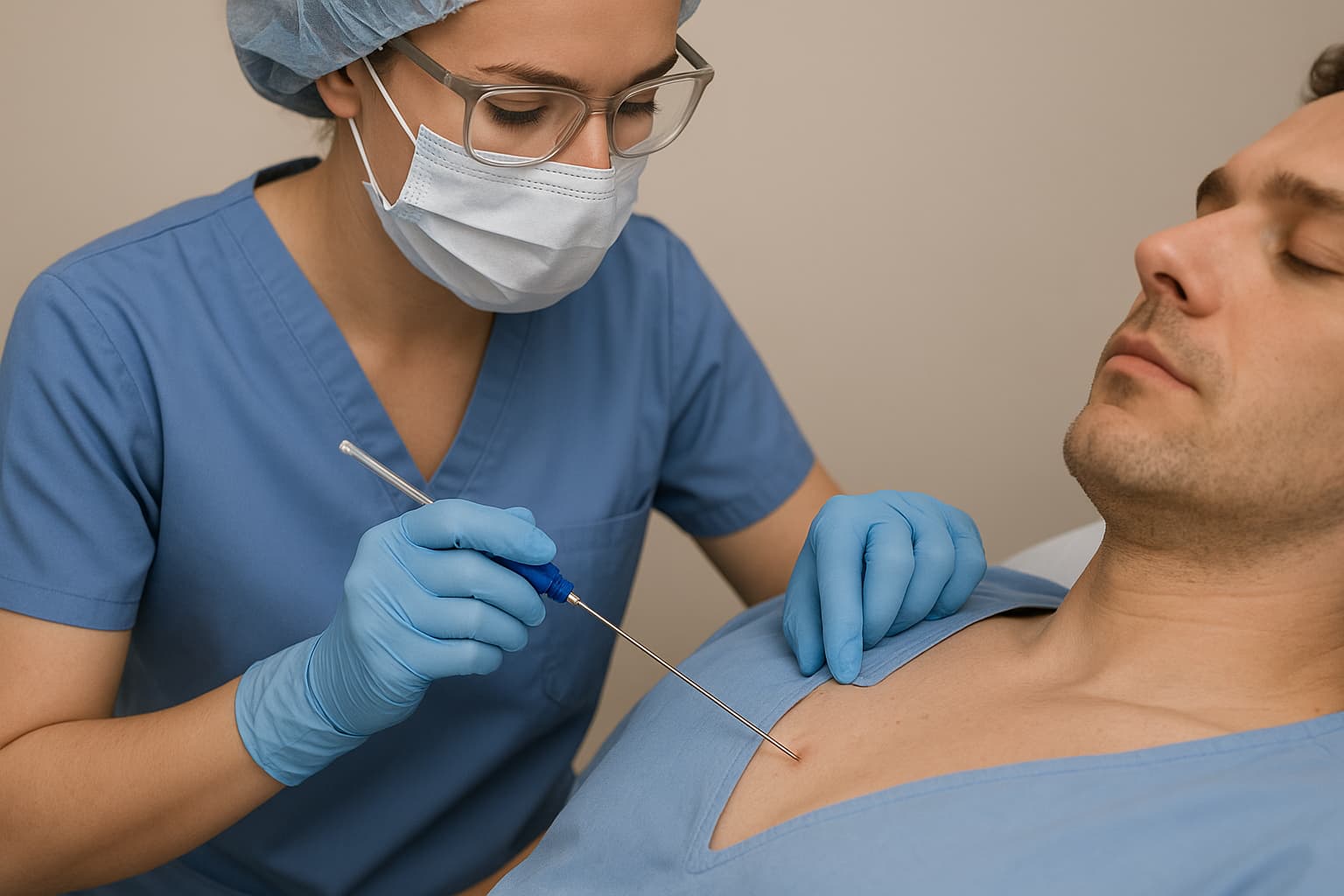
- Needle biopsy procedure uses core or fine needle insertion.
- Incisional and excisional approaches involve scalpel incision.
- Endoscopic tools pass through luminal pathways.
- The primary objective is adequate tissue capture with minimal trauma.
5. Haemostasis and Dressing
Pressure applied or sutures placed. Dressings reduce exposure and provide comfort.
6. Specimen Labelling and Transport
Containers pre-labelled with exact patient identifiers. Immediate fixation in formalin, or fresh delivery for marrow and immunohistochemistry applications.
7. Recovery Monitoring
Patients stay under observation. Ambulation resumes once stable.
Pathology teams then begin microscopic and molecular evaluation to provide diagnostic clarity.
Types of Biopsy Procedures
| Biopsy Type | Technique | Primary Use |
|---|---|---|
| Needle Biopsy | Hollow needle removes core or fine sample | Liver, thyroid, breast, kidney |
| Punch Biopsy | Cylindrical tool removes skin tissue | Dermatology diagnostics |
| Incisional Biopsy | Small part of mass removed | Sarcoma, connective tissue disorders |
| Excisional Biopsy | Entire lesion excised | Breast nodules and accessible tumours |
| Endoscopic Biopsy | Endoscope with channel for retrieval | GI tract, bronchial tree |
| Bone Marrow Biopsy | Aspiration plus core retrieval from hip | Leukaemia and marrow disorders |
| Stereotactic Biopsy | X-ray guidance directs sample | Non-palpable breast lesions |
| Colposcopy-Directed Biopsy | Cervical tissue removal using colposcope | Abnormal Pap results |
| Biopsy Procedure for Kidney | Needle sampling under ultrasound | Glomerular disease assessment |
Preparation and Assist in Biopsy
- Review of blood work, medication list and allergy history.
- Adjusting anticoagulation schedules if bleeding risk increases.
- Hydration instructions or fasting for sedation.
- Consent process with detailed explanation of the process of biopsy examination.
- For kidney or bone marrow biopsy, positioning rehearsed beforehand.
- For colposcopy-directed biopsy, pelvic comfort measures are addressed.
During the procedure, a circulating nurse supports equipment readiness and patient monitoring. Surgical technologists assist with instruments, passing biopsy forceps, punch tools or aspiration devices. Pathologists may guide sampling adequacy, especially during tumour-targeted biopsies.
Biopsy Recovery Time and Care
- Skin biopsy: Short rest and topical care.
- Bone marrow: Soreness at hip for a few days.
- Kidney biopsy: Monitoring for urine blood traces and limited exertion.
- Breast lesions: Mild swelling contained by supportive garments.
Biopsy recovery time usually spans a brief window. Written instructions detail wound care, medication use and red-flag symptoms, particularly if biopsy side effects such as bleeding or infection appear.
Biopsy Examination in the Lab
Once a tissue sample enters the pathology workflow, a detailed system unfolds.
- Macroscopic examination and measurement.
- Fixation for tissue structure preservation.
- Sectioning and staining under microtomy.
- Light microscopy review by pathologists.
- Immunohistochemistry or molecular tests if required.
Report turnaround depends on analysis complexity. Anticipation should be managed through clear communication without making speculative statements.
Risks, Side Effects and Precautions
- Minor bleeding at the site.
- Pain controlled with analgesics.
- Rare infection requiring medical attention.
- For lung biopsy, chance of pneumothorax.
- For kidney biopsy procedure, monitoring vital for bleeding control.
Biopsy Price in India
Healthcare professionals address cost queries with transparency. Variation exists due to facility type, sample complexity and imaging requirements.
| Biopsy Category | Approximate Cost Range in India* |
|---|---|
| Skin | ₹1,000 – ₹6,000 |
| Breast Needle | ₹5,000 – ₹20,000 |
| Bone Marrow | ₹8,000 – ₹25,000 |
| Kidney | ₹10,000 – ₹35,000 |
| Endoscopic | ₹15,000 – ₹50,000 |
*Estimates rather than fixed values and not inclusive of advanced molecular testing.
Patient Communication
Delivering biopsy information in a calm tone increases patient collaboration:
- Provide straightforward descriptions instead of technical overload
- Encourage questions throughout scheduling phase
- Display procedural steps visually where possible
- Coordinate discharge guidance across nursing and pathology teams
Every participant in the biopsy test procedure contributes toward a unified care experience.
Why it Matters for Pathology Teams
Biopsy forms the foundation of disease diagnosis and treatment planning. When clinicians explain the process of biopsy examination with transparency, specimen quality and patient comfort both improve. Precision in sampling leads to accurate histopathologic reports. Confidence in the pathway builds trust in pathology-led care decisions.
Conclusion
Biopsy procedures shape actionable diagnosis and guide clinical management across many domains. They are a reliable method to detect any malignancy. Hence, for pathologists and healthcare staff, integration of best practices ensures both scientific validity and patient reassurance. Keeping biopsy procedure steps transparent supports better outcomes and smoother care experiences.
Suggested read - Biopsy Types: A Complete Overview of Common Methods
Get Started at ₹1!
Try Flabs for a full month for just ₹1.
Follow us on