Cancer diagnosis demands precision. And biopsy remains the definitive method for identifying malignancy. According to the WHO, a biopsy is essential for definitive diagnosis and staging of cancer.
While imaging and blood markers indicate potential abnormalities, the biopsy test for cancer confirms the presence, type, and stage through direct tissue assessment.
Used across multiple cancer types, it directs treatment pathways and enables accurate prognostic evaluation. For pathologists and healthcare professionals, biopsies are central to disease characterisation, guiding therapy and decision-making. Knowing about specimen acquisition, handling, and analysis ensures reliability and improves outcomes through targeted interventions.
Biopsy Test for Cancer: Purpose and Significance
A biopsy test for cancer involves collecting cells or tissues from a suspected site to determine malignancy under a microscope. Unlike imaging modalities that identify structural changes, biopsy establishes histopathological confirmation. The sample can reveal tumour grade, cellular morphology, receptor status, and molecular alterations.
Healthcare providers establish tumour grade on a scale of 1-4, indicating the aggressiveness of the cancer. Low-grade (Scale 1) cancers are the least aggressive, while high-grade (Scale 4) cancers are the most aggressive.
The test also allows differentiation between benign and malignant growths, subtyping of neoplasms, and assessment of invasion. For personalised medicine, tissue-based assays also identify biomarkers guiding immunotherapy.
Biopsy Techniques and Applications
Cancer manifests in diverse anatomical locations, demanding distinct biopsy techniques. They mainly vary in invasiveness, sample yield, and intent.
| Biopsy Type | Technique Description | Common Applications |
|---|---|---|
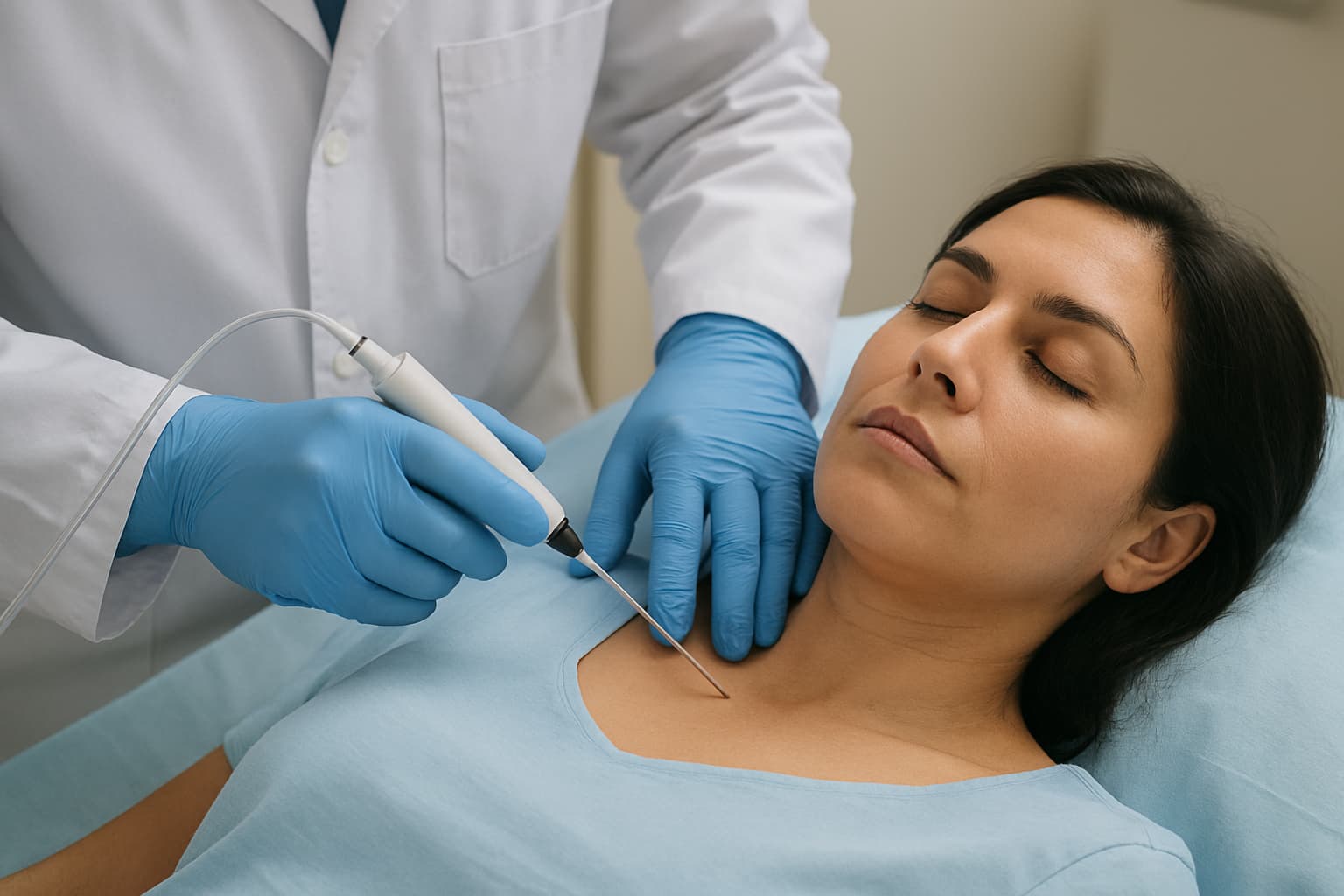
| Fine-Needle Aspiration (FNA) | Uses a thin needle to extract cells | Thyroid, lymph nodes, breast |
| Core Needle Biopsy | Removes small tissue cores | Breast, liver, prostate |
| Incisional Biopsy | Excises part of the lesion | Soft tissue tumours, oral cavity |
| Excisional Biopsy | Removes the entire lesion | Skin lesions, lymph nodes |
| Endoscopic Biopsy | Uses scopes to access internal organs | Gastrointestinal tract, lung |
| Liquid Biopsy | Analyses circulating tumour DNA or cells | Prostate, lung, and blood cancers |
In solid tumours, image-guided techniques like CT or ultrasound ensure precision. For haematologic malignancies, bone marrow biopsy remains standard. Liquid biopsy test for prostate cancer and other sites represents a minimally invasive approach. It captures molecular data without surgical intervention.
Biopsy Test for Specific Cancer Types
A biopsy is a direct and definitive method for cancer detection and confirmation. The single method itself is used for diagnosing types of cancers, indicating its flexibility and adaptability. In all types, the turnaround time for results is usually a few days, though it may take more time.
Biopsy Test for Cervical Cancer
Performed during colposcopy, a cervical biopsy evaluates abnormal epithelial changes. Punch biopsy, cone biopsy, or endocervical curettage may be used based on lesion visibility. Histology confirms dysplasia or carcinoma in situ. Early detection enables local excision and fertility preservation where appropriate.
Biopsy Test for Breast Cancer
Core needle biopsy is preferred for breast lesions detected on mammography or ultrasound. It distinguishes invasive ductal carcinoma from lobular or benign pathology. Hormone receptor and HER2 testing are performed on the same specimen. Vacuum-assisted biopsy increases sampling adequacy for microcalcifications.
Biopsy Test for Lung Cancer
Bronchoscopic, transthoracic, or endoscopic ultrasound-guided biopsies obtain tissue from nodules or lymph nodes. Molecular profiling for EGFR, ALK, and PD-L1 is integral to treatment planning. Cytology from bronchial washings or pleural effusion complements histological diagnosis when surgical access is limited.
Biopsy Test for Blood Cancer
Bone marrow aspiration and trephine biopsy assess cellularity, morphology, and blast percentage. Immunophenotyping and cytogenetic analysis confirm leukaemia or lymphoma subtype. It guides chemotherapy regimens and monitors remission status.
Biopsy Test for Mouth Cancer
Incisional biopsy under local anaesthesia targets visible oral mucosal lesions. Tissue orientation and margin integrity must be maintained for accurate evaluation. Pathology determines epithelial dysplasia or squamous cell carcinoma. For extensive disease, frozen section biopsy during surgery assesses margin clearance.
Liquid Biopsy
Liquid biopsy represents a transformative method for detecting circulating tumour DNA, RNA, or cells from blood or other fluids. Unlike conventional tissue biopsies, it enables real-time disease monitoring without invasive procedures.
A liquid biopsy test for prostate cancer, for instance, captures genomic alterations such as AR-V7 expression associated with therapy resistance. Similarly, in lung and breast cancers, it aids early detection of relapse or MRD.
Liquid biopsy complements histological methods, especially when tumour sites are inaccessible or the patient's condition limits surgery.
Specimen Handling
Accurate diagnosis begins with specimen integrity. Pre-analytical factors significantly affect results. Formalin fixation should occur promptly to prevent autolysis. For molecular testing, part of the specimen may be snap-frozen to preserve nucleic acid quality. Pathologists must record site, technique, and clinical details for contextual interpretation.
Turnaround time varies by cancer type, laboratory workflow, and testing complexity. Core histopathology reports may be issued within 3-5 days. Ancillary molecular or immunohistochemistry testing can extend processing to seven or more days. Clear communication between clinicians and laboratories ensures timely reporting, influencing treatment initiation.
Cost and Accessibility
In India, the biopsy test for cancer varies based on technique, body site, and facility type. The price range begins near ₹1,000 and may reach ₹45,000 for advanced or image-guided procedures.
Simpler methods like fine-needle aspiration remain less expensive, while surgical or complex biopsies incur higher charges due to anaesthesia and equipment needs. Accessibility has improved through diagnostic centres in both urban and regional areas. Now, diverse options are available across budgets.
| Type of Biopsy | Approximate Cost (INR) |
|---|---|
| Fine-Needle Aspiration | 1,000 – 5,000 |
| Image-Guided/Core Biopsy | 4,000 – 15,000 |
| Surgical Biopsy | 10,000 – 45,000 |
Preparation and Procedure
- Patients are briefed on the biopsy purpose and possible outcomes.
- Medical history and medications are reviewed before scheduling.
- Anticoagulants are paused to reduce bleeding risk.
- Fasting is required for procedures involving anaesthesia.
- Informed consent is obtained prior to the procedure.
- The biopsy site is cleaned and marked under sterile conditions.
- Local or general anaesthesia is administered as appropriate.
- Image guidance ensures accurate tissue sampling.
- Collected specimens are labelled and preserved in fixatives.
- Pressure is applied to control bleeding, and dressings are placed.
- A short observation follows to monitor for pain or swelling.
- Patients receive aftercare instructions and follow-up timelines.
Histopathological Examination
Tissue sections are processed, stained, and examined under the microscope. Pathologists evaluate architecture, cytological features, and stromal response. Special stains and immunohistochemistry confirm tumour origin and differentiate metastases from primary malignancies.
For instance, CK7, CK20, and TTF-1 panels assist in identifying primary lung or gastrointestinal tumours. Molecular pathology adds precision through mutation analysis, influencing therapy selection.
Complications and Follow-Up
Most biopsies are safe when performed with sterile technique and imaging assistance. Minor pain or bruising may occur at the puncture site. Rare complications include infection, bleeding, or organ injury.
For lung biopsies, pneumothorax risk exists but is minimised through careful technique. Patients are advised to rest and follow-up evaluation to monitor healing. Pathologists should correlate histological findings with radiologic and clinical data for comprehensive diagnosis.
Conclusion
A biopsy test for cancer remains the definitive diagnostic procedure for malignancy confirmation. From cervical to pancreatic applications, its scope extends across anatomical systems and molecular dimensions. For pathologists and healthcare professionals, precision in collection, processing, and interpretation defines diagnostic accuracy and therapeutic relevance. Continuous advancements in liquid biopsy and digital pathology promise an expanded horizon for minimally invasive, data-rich cancer evaluation.
Also check - Blood Cancer Report Format: Key Components Explained
Get Started at ₹1!
Try Flabs for a full month for just ₹1.
Follow us on