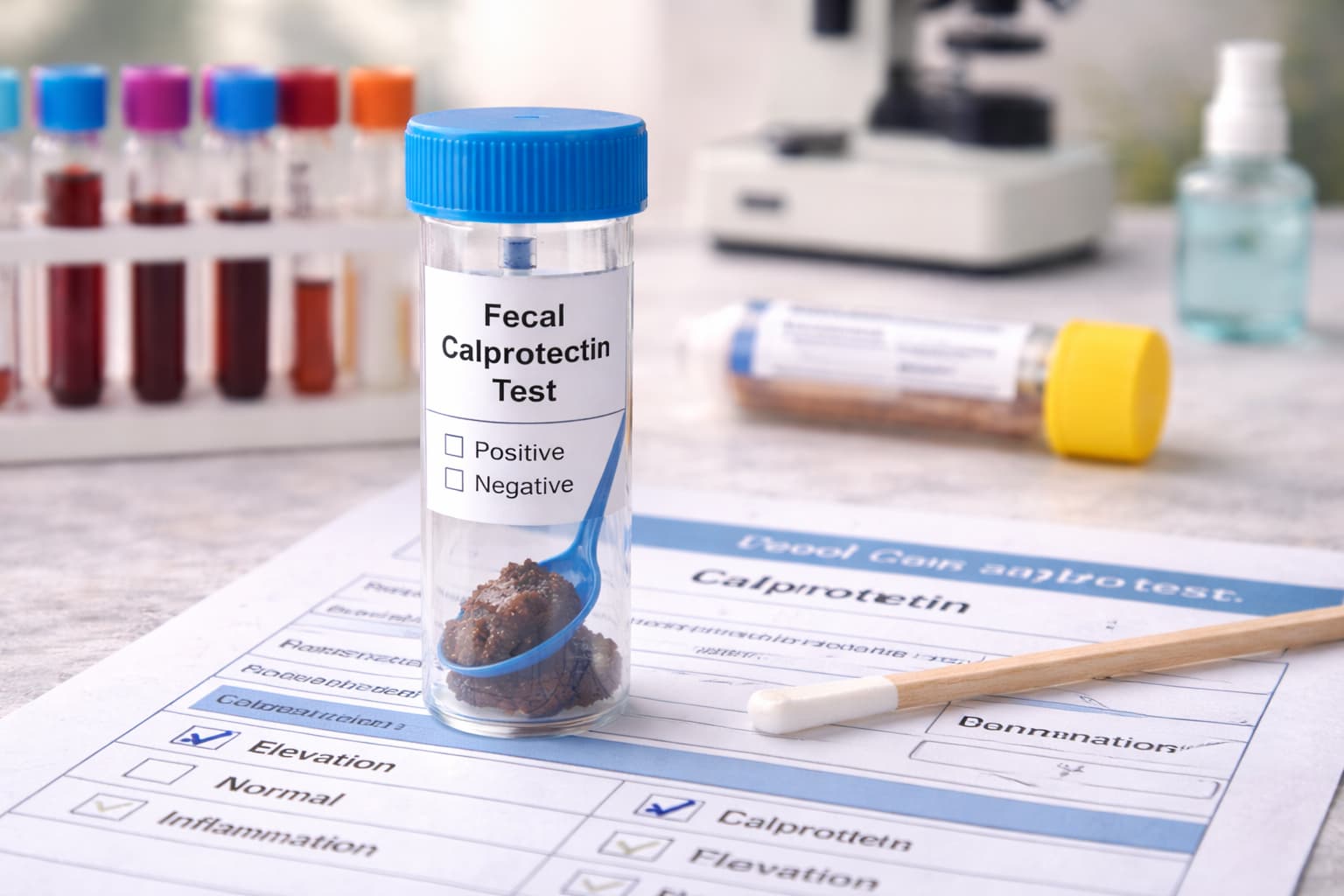
Inflammation inside the bowel behaves quietly at times, yet its biochemical footprint stays behind. The fecal calprotectin test has become a dependable way for pathology labs and abroad to track that footprint with precision. For pathologists and gastroenterology-focused clinicians, calprotectin is among the most informative stool markers for differentiating inflammatory disease from functional disorders.
What Fecal Calprotectin Reflects
Calprotectin is a stable neutrophil-derived protein. When the intestinal lining becomes inflamed, neutrophils infiltrate the mucosa and release calprotectin into the lumen. The protein remains intact in stool for days, which means the measurement directly mirrors intestinal inflammation across a practical sampling window.
The fecal calprotectin by ELISA test remains the standard approach in labs. It has reproducible quantification with digestible workflow requirements and straightforward interpretation for clinicians.
Why the Test Is Gaining Ground
Why is fecal calprotectin test done in India? Because calprotectin fills a crucial diagnostic gap.
- It differentiates inflammatory bowel disease (IBD) from irritable bowel syndrome without invasive procedures.
- It screens patients with recent-onset lower GI symptoms, aligning with NICE recommendations.
- It reduces the burden of unnecessary colonoscopies in high-volume centres.
- It supports longitudinal monitoring of Crohn’s disease and ulcerative colitis with a non-invasive method.
In India’s growing GI diagnostics segment, where urban labs manage heavy loads and semi-urban labs face staffing constraints, calprotectin is a practical biomarker, that pairs well with modern LIS systems too.
When to Request the Test
The test is usually requested when symptoms last longer or keep coming back
Doctors may suggest it if there is:
- Watery diarrhoea.
- Bloody diarrhoea.
- Abdominal pain or cramps.
- Mucus or pus in the stool.
- Fever when inflammatory bowel disease (IBD) is suspected.
- Frequent bowel movements.
- Unexplained weight loss.
Short-term diarrhoea (like seasonal stomach infections) usually settles on its own and does not need testing.
In infants, calprotectin levels are naturally high:
- Levels decrease gradually as the gut matures
- Some centres use modified guidelines for babies.
Sample Collection and Pre-Test
A clean stool sample, collected at home, is enough. The test does not require fasting. Labs usually advise patients to maintain their usual diet unless a treating doctor instructs otherwise.
Certain medications influence results. NSAIDs and proton-pump inhibitors push readings upward. Adjustments require medical discussion rather than abrupt discontinuation.
What if the faecal calprotectin test is negative, but you find blood in the stool? Mild rectal bleeding from haemorrhoids or fissures may appear without altering calprotectin levels. The marker reflects mucosal inflammation rather than surface injury.
Interpreting the Results
The range varies slightly across kits, yet most fall into clear brackets. A reference grid helps anchor assessment:
| Calprotectin Level | Interpretation | Clinical Direction |
|---|---|---|
| Low / Normal | Inflammation unlikely | IBS or functional bowel patterns are more probable |
| Borderline | Possible mild inflammation | Repeat testing or symptom-linked follow-up |
| High | Intestinal inflammation present | Evaluate for IBD, infections, celiac disease, NSAID-related injury, or neoplasia |
Elevated values correlate with disease burden. Severe flares of Crohn’s disease or ulcerative colitis push the readings substantially upward.
IBD patients repeat tests two to three times a year to track disease activity. Falling numbers signal mucosal improvement. Persistently high values prompt colonoscopic evaluation, stool PCR, or imaging.
Specificity of the Test
Calprotectin stands out for its sensitivity and specificity, around 95% and 93%, respectively, when distinguishing IBD from non-inflammatory presentations. CRP and ESR provide systemic inflammatory clues, though they lack the gut-focused reliability that calprotectin provides.
Pediatric labs rarely observe occasional false negatives in young children.
Common Clinical Scenarios
A few recurring scenarios show up routinely inside reports:
- Infective diarrhoea, including C. difficile infections, yields high readings due to neutrophilic infiltration.
- Celiac disease patients exhibit raised levels when intestinal villi are actively inflamed.
- NSAID-linked mucosal injury may cause elevated values without classic IBD symptoms.
- Colorectal cancer occasionally appears in the differential when levels remain high without another clear explanation.
Labs with structured workflows ensure that clinicians receive consistent result commentary that simplifies downstream decisions.
Turnaround Time and Reporting
Turnaround time hinges on kit availability, batching strategy, and LIS automation. Most pathology labs in India complete the analysis within 24 to 48 hours. High-volume centres often produce reports sooner when ELISA batches run continuously.
A refined report format usually includes:
- Numeric value with unit.
- Reference range.
- Method type (ELISA).
- Comment on the interpretation tier.
- Advisory note regarding medication influence.
- Recommendation regarding re-test or escalation.
Consistency matters here because gastroenterologists compare serial values while monitoring treatment.
Where LIS Automation Improves Calprotectin Testing
Modern SaaS solutions have reshaped the operational rhythm of stool-based tests. Flabs Pathology Software aligns naturally with calprotectin workflows because stool testing demands accurate sample linkage, batch handling, timely reporting, and easy patient access.
The Flabs Advantage
Streamlined lab operations: Patient registration, ELISA batching, and QR-coded report generation proceed without manual overhead. For calprotectin, consistent digital traceability prevents mismatches. Automated WhatsApp notifications relay “sample received,” “processing,” and “report ready” messages without staff intervention.
Enhanced patient experience: Patients log in with their phone number to retrieve reports instantly. For chronic IBD patients who track serial values, easy access reduces call volumes to the lab.
User-friendly interface: Technicians new to calprotectin protocols navigate ELISA panels and result entry without a steep learning curve.
Affordable and scalable solution: Labs running a single ELISA reader or multiple collection centres can scale the system as volumes grow.
Secure data backups: Longitudinal GI-inflammation monitoring demands safe long-term data retention. Flabs stores results with disaster-recovery safeguards that maintain continuity.
The combination of method accuracy and reliable LIS integration provides a smoother experience for clinicians and patients, while laboratories gain time, reduce transcription issues, and produce reproducible reporting.
Looking Ahead
As GI diagnostics in India expand, calprotectin is likely to move from a niche marker into routine screening for chronic bowel complaints. Accessibility is improving as more labs bring ELISA platforms in-house. With structured reporting, automated notifications, and long-term storage through platforms such as Flabs, laboratories can manage growing volumes while maintaining consistency.
Ready to Upgrade Your Calprotectin Workflow?
Flabs LIS Software strengthens operational reliability for ELISA-based stool markers and turns repeat-test workflows into a smooth end-to-end cycle.
Start your 5-day free trial of Flabs Pathology Software today.
Experience streamlined operations, scalable infrastructure, automated communication, and secure data protection built for pathology labs in India.
Also read - Iron Profile Test: Checking for Iron Deficiency or Overload
Get Started at ₹1!
Try Flabs for a full month for just ₹1.
Follow us on