Iron metabolism sits at the centre of haematology, pathology, and internal medicine. From unexplained anaemia to metabolic overload syndromes, iron-related disorders continue to surface across outpatient clinics, tertiary hospitals, and diagnostic networks.
For pathologists and healthcare professionals, the iron profile test allows for an investigation that bridges laboratory data with decision-making.
As testing volumes rise across pathology labs in India, laboratories are also expected to deliver faster turnaround time, standardised report format, and digitally accessible results. Hence, the following discussion around the test discusses the main aspects.
What Is an Iron Profile Test?
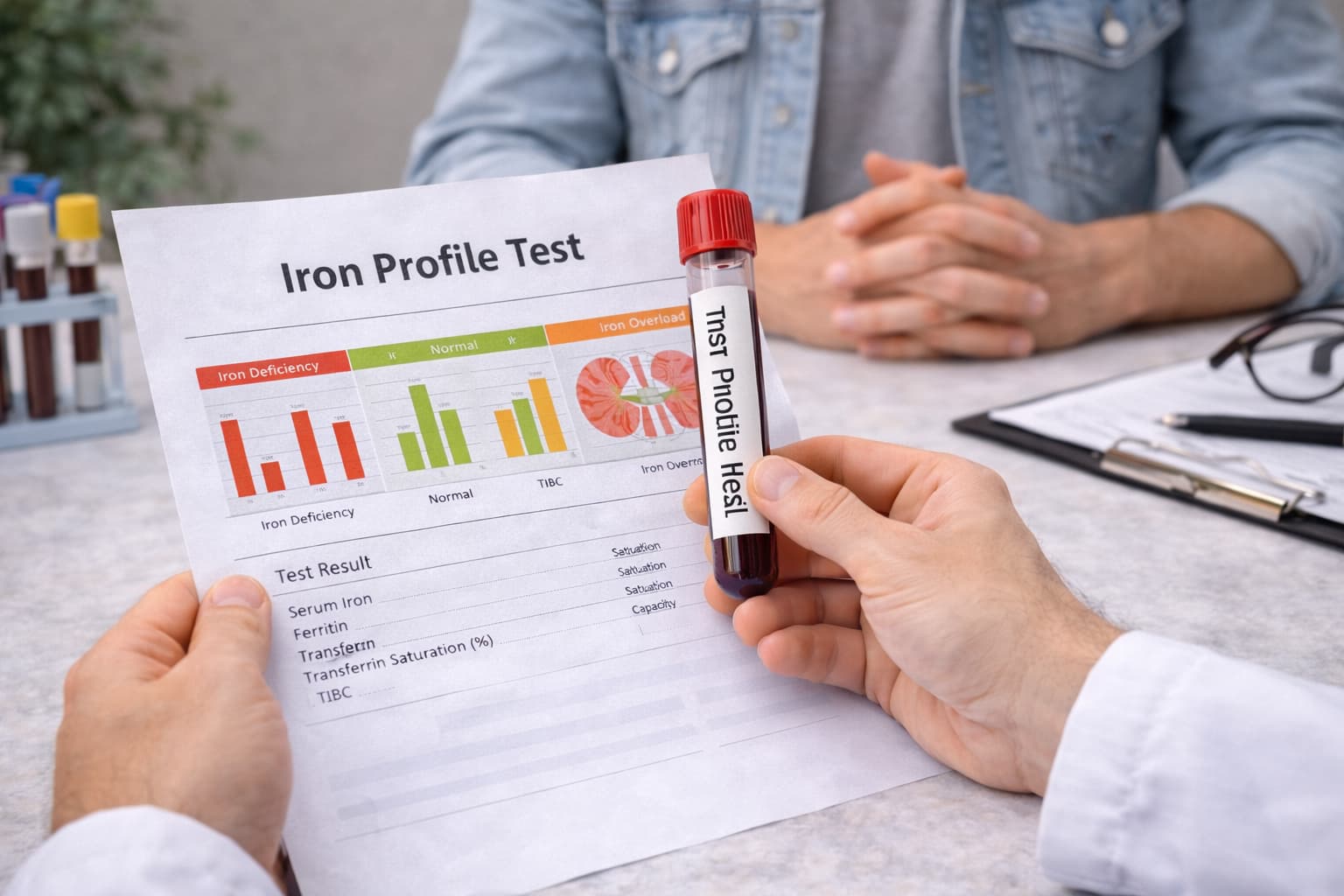
An iron profile blood test evaluates iron status by measuring circulating iron, storage iron, and transport capacity. Rather than relying on a single parameter, clinicians depend on a structured iron profile test list to interpret deficiencies, overload syndromes, and iron imbalance.
The serum iron profile test is frequently ordered alongside haemogram iron profile test panels, renal markers, and inflammatory markers.
Iron Profile Test Markers
A comprehensive iron profile lab test includes multiple biochemical markers. Each parameter has a different clinical signal.
| Parameter | What It Reflects | Clinical Insight |
|---|---|---|
| Serum Iron | Circulating iron bound to transferrin | Immediate iron availability |
| Ferritin | Stored iron reserves | Early depletion or overload |
| TIBC | Iron-binding capacity of transferrin | Transport efficiency |
| Transferrin Saturation | Percentage of transferrin bound to iron | Functional iron balance |
| Reticulocyte Haemoglobin Content | Iron availability in bone marrow | Early deficiency detection |
Iron Profile Test and Uses in Clinical Practice
- Workup of microcytic and normocytic anaemia.
- Monitoring iron therapy.
- Screening for hereditary hemochromatosis.
- Evaluation of chronic kidney disease and inflammatory disorders.
- Pre-operative assessment to mitigate transfusion risk.
Iron Profile Test Normal Values
Reference ranges in the test vary slightly across laboratories. Calibration standards, assay platforms, and population demographics influence reporting.
| Test | Reference Range |
|---|---|
| Serum Iron | Men: 60–170 mcg/dL; Women: 50–170 mcg/dL |
| Ferritin | Men: 20–500 ng/mL; Women: 20–200 ng/mL |
| TIBC | 250–450 mcg/dL |
| Transferrin Saturation | 20–50% |
Pathologists reviewing an iron profile test report must correlate values with inflammatory markers and clinical context. Elevated ferritin does not always equate to iron overload.
Iron Profile Test Procedure
The iron profile test procedure follows standard venipuncture protocols. There’s a pre-analytical discipline for the test.
- Fasting for 8–12 hours.
- Morning sample collection for consistency.
- Temporary suspension of iron supplements is clinically acceptable.
- Medication disclosure prior to testing.
Improper timing or supplementation can skew serum iron values and compromise interpretation accuracy.
High-volume labs benefit from LIS-driven prompts that flag non-compliant samples during accessioning.
Interpreting Iron Profile Test Results
- Iron Deficiency Pattern: Low serum iron, low ferritin, elevated TIBC, reduced transferrin saturation.
- Iron Overload Pattern: High serum iron, elevated ferritin, reduced TIBC, increased transferrin saturation.
- Anaemia of Chronic Disease: Low serum iron, normal or raised ferritin, reduced TIBC.
Such differentiation demands structured reporting and consistent delta checks across follow-up visits.
Iron Profile Test Rate
The iron profile test rate varies across regions and lab settings. Standalone laboratories, hospital-based centres, and reference labs follow different pricing models influenced by reagent cost, analyser throughput, and reporting infrastructure.
For labs with iron profile lab test online booking, transparent pricing and predictable turnaround time improve confidence and patient compliance.
Reporting Format
Apart from testing, providing a standardised report format after the test is important. It improves readability and clinical adoption. Numeric values alone rarely suffice. Interpretive comments, notes, and trend visualisation add depth to the format.
Modern LIS platforms now auto-populate iron profile test report templates with analyser-integrated values. QR-coded access and mobile-friendly layouts align with clinician workflows and patient expectations.
Where Laboratory Software Fits In
Iron studies generate repeat testing, longitudinal data, and high clinician engagement. Manual reporting introduces transcription risk and delays.
Flabs AI-Powered LIS Software aligns directly with iron profile testing demands:
- Automated test mapping for serum iron, ferritin, and TIBC.
- Analyser integration to reduce manual entry.
- Customisable iron profile report format with reference ranges.
- WhatsApp-enabled report delivery for faster communication.
- Secure patient portals using phone number login.
- QR-coded reports for seamless access.
For labs handling large iron panel volumes, streamlined operations translate into improved turnaround times.
The platform scales easily for labs, adding collection centres or expanding test menus.
Data security also remains intact. Patient records stay linked exclusively to the lab.
Encrypted backups and regulatory compliance safeguard longitudinal iron data used for therapy monitoring.
Why Digital Consistency Matters
Iron parameters fluctuate with therapy, inflammation, and physiological states. Accurate trend tracking requires consistent reference ranges, stable report formatting, and reliable data retrieval. LIS-driven automation ensures iron profile lab test reporting stays aligned across time points.
A Practical Step for Growing Diagnostic Labs
Pathology leaders balancing quality, scale, and clinician satisfaction now view software as diagnostic infrastructure rather than administrative overhead.
Start Your 5-Day Free Trial of Flabs Pathology Software Today.
Experience AI-powered reporting, streamlined lab operations, and patient-centric digital access designed for real diagnostic workflows. Enter your name and phone number to activate the trial or request a live demo tailored to iron profile and haematology testing.
Laboratories equipped with the right systems deliver clarity faster. Iron studies demand nothing less.
Also check - ANA Profile Test: Detecting Autoimmune Disorders
Get Started at ₹1!
Try Flabs for a full month for just ₹1.
Follow us on