The HBsAg card test is promising in rapid diagnostics for Hepatitis B virus (HBV) infections. Designed for quick screening at the point of care (PoC), it detects the presence of Hepatitis B surface antigen (HBsAg) in blood samples—an early and direct marker of HBV infection.
In environments where access to full laboratory infrastructure may be limited or when results are needed quickly, this card-based rapid immunoassay is especially useful. Whether you're screening pregnant women, healthcare workers, blood donors, or patients showing hepatic symptoms, the HBsAg rapid card test leads to timely insight.
Let’s explore the method, principle, procedure, interpretation, limitations, and how it compares with more elaborate lab-based tests like ELISA.
What the HBsAg Card Test Means
The HBsAg test card method is a qualitative immunochromatographic assay designed to detect Hepatitis B surface antigen in human serum, plasma, or whole blood. It gives a simple Reactive or Non-Reactive result, usually within 15 to 30 minutes.
HBsAg is the first detectable viral marker to appear after infection. A Reactive result means the antigen has been detected, suggesting an active HBV infection. A Non-Reactive result indicates the absence of HBsAg. But it may not rule out infection during the serological window period.
Who Should Be Tested?
The HBsAg rapid card test is relevant in several clinical and public health scenarios.
- Pregnant women (to prevent vertical transmission).
- Blood and organ donors.
- Healthcare workers.
- Patients with hepatitis symptoms (jaundice, fatigue, elevated liver enzymes).
- High-risk populations (IV drug users, individuals with multiple sexual partners).
- Before immunosuppressive therapy.
- Prison or institutionalised populations.
HBsAg Card Test Principle
The HBsAg card test principle is based on lateral flow immunoassay technology.
- A nitrocellulose membrane with immobilised anti-HBsAg antibodies.
- A conjugate pad with colloidal gold-labelled anti-HBsAg antibodies.
When a sample is applied to the strip, any HBsAg present binds to the gold-labelled antibodies, migrating along the membrane to form a visible line (test line) as it binds to the fixed antibodies.
A control line always appears to confirm that the sample flowed correctly and that the test is valid.
HBsAg Test Procedure
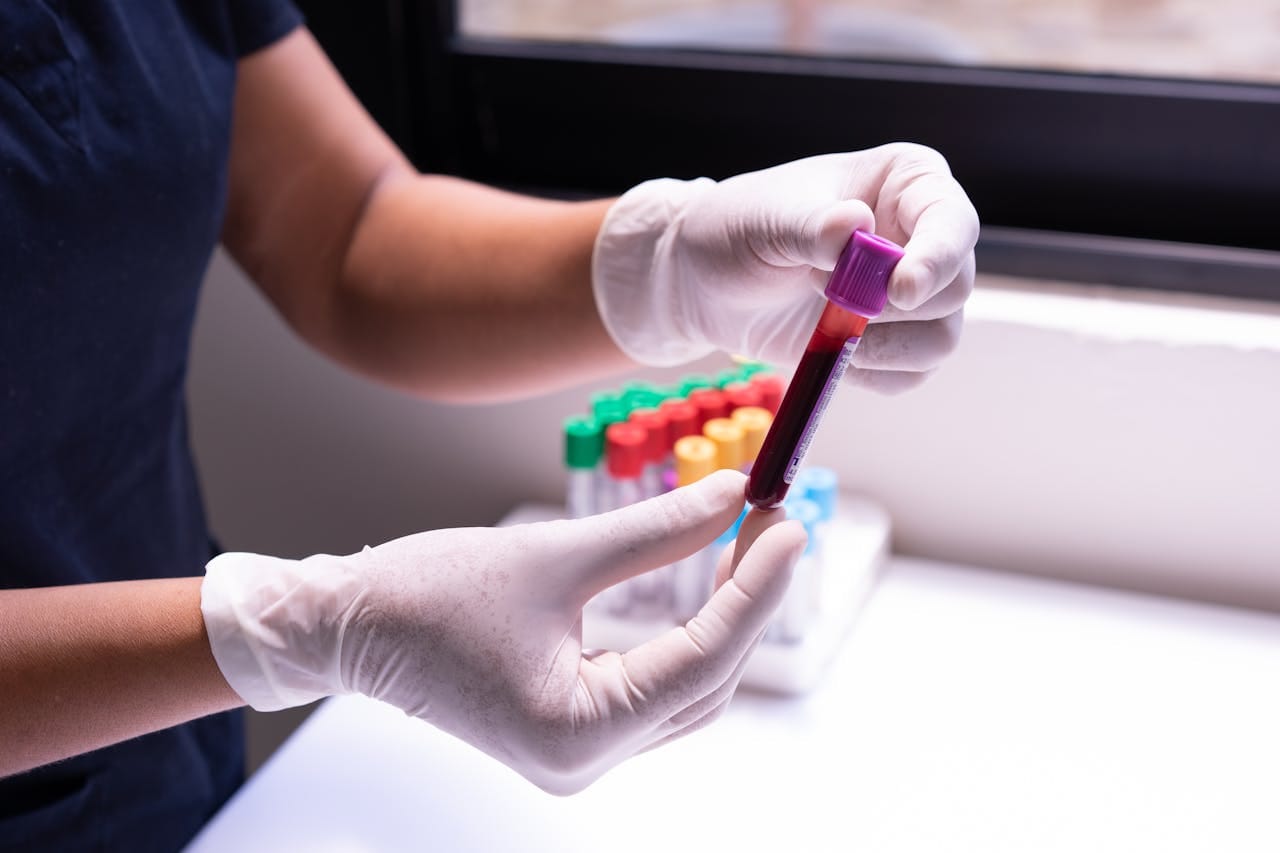
The test procedure uses samples of venous blood, serum, plasma, or capillary blood from a finger prick.
Test Preparation
Usually, preparing for the HBsAg test requires no special preparation. No fasting is required. However, patients must disclose if they have bleeding disorders, are using anticoagulant medications, or have had previous hepatitis vaccination or known infections. The test is suitable for all ages.
Test Setup
- Open a fresh test card from its foil pouch.
- Apply the sample directly to the sample well (usually 2–3 drops).
- Add the buffer (1–2 drops) as per the manufacturer’s instructions.
Wait Time: Allow 15 to 30 minutes for result development.
Reading the Result
- Reactive (Positive): Both control and test lines appear.
- Non-Reactive (Negative): Only the control line appears.
- Invalid: No control line—repeat with a new test card.
Interpretation of HBsAg Card Test Results
| Result | Interpretation | Next Step |
|---|---|---|
| Reactive | HBsAg detected; suggests an active infection (acute or chronic) | Confirm with ELISA or CLIA |
| Non-Reactive | HBsAg not detected; no infection or within the window period | Consider a repeat test if recent exposure |
| Invalid | No control line; the test did not function correctly | Repeat the test with a new card |
An HBsAg card test non-reactive means the surface antigen was not detected in the sample at the time of testing. This might mean no current infection or the test was taken too early in the infection cycle.
Sensitivity and Specificity of HBsAg Card Tests
The HBsAg card test's specificity and sensitivity vary by brand and test conditions. High-quality commercial tests usually offer a sensitivity of 96–99% and a specificity of 98–100%.
While the card test is reliable for initial screening, it's slightly less sensitive than lab-based assays. False negatives can occur during the early phase of infection or in immunosuppressed patients.
HBsAg Rapid Card Test vs Spot ELISA Test
The difference between the HBsAg rapid card test and the spot ELISA test mainly lies in the turnaround time and sensitivity.
| Feature | HBsAg Rapid Card Test | Spot ELISA Test |
|---|---|---|
| Method | Immunochromatographic (lateral flow) | Enzyme-linked immunosorbent assay (ELISA) |
| Turnaround Time | 15–30 minutes | 1–2 hours or more |
| Equipment Required | Minimal | Laboratory setup |
| Sensitivity | Moderate to high | High |
| Use Case | Point-of-care, field screening | Diagnostic labs |
| Result Interpretation | Visual (colored lines) | Quantitative (optical density) |
Limitations of the HBsAg Card Test
Despite being widely used, the HBsAg card test has limitations.
- Window period: Infection may not be detected during early seroconversion.
- False positives: Can occur in individuals with cross-reactive proteins or after recent vaccination.
- False negatives: Especially in immunocompromised patients or low viral load cases.
- No staging: The test does not distinguish between acute and chronic HBV.
Final Words
The HBsAg card test is an efficient way to screen for Hepatitis B surface antigen, especially in resource-limited and emergency settings. While not a replacement for confirmatory laboratory assays, it serves as a frontline tool to identify potentially infectious individuals. For pathologists and healthcare professionals, knowing how to perform, interpret, and follow up on the test ensures timely intervention.
Always pair reactive results with a confirmatory test. Never ignore non-reactive results in high-risk or recently exposed individuals. Screening done right keeps infection under control.
Get Started at ₹1!
Try Flabs for a full month for just ₹1.
Follow us on