The Inhibin B test is a diagnostic blood test that measures levels of the inhibin B hormone, a dimeric glycoprotein secreted by Sertoli cells in males and granulosa cells in females. It plays an essential role in regulating follicle-stimulating hormone (FSH) through negative feedback mechanisms. For pathologists and healthcare professionals, the Inhibin B test provides insight into reproductive function, ovarian reserve, and certain hormone-secreting tumours.
Understanding Inhibin B and Its Role
Inhibins are classified into two types: inhibin A and inhibin B. While inhibin A is primarily associated with pregnancy and luteal phase activity, inhibin B dominates during the early to mid-follicular phase in females and is the primary inhibin type in males.
In females, inhibin B levels reflect the number and function of developing follicles. It is considered a reliable indirect marker for ovarian reserve. In males, the inhibin B blood test is used to assess Sertoli cell function and spermatogenesis.
Clinical Applications in Female Fertility Evaluation
For women undergoing fertility evaluation, the Inhibin B test is one of several biomarkers used to assess ovarian reserve, along with anti-Müllerian hormone (AMH), FSH, and estradiol. Declining inhibin B levels can signal diminished ovarian reserve, particularly in women of advanced reproductive age or those experiencing premature ovarian insufficiency.
It is often measured on day 2 or 3 of the menstrual cycle alongside FSH and estradiol. Together, it gives a comprehensive overview of follicular activity. Inhibin B levels tend to decline with age. They may become undetectable in menopause.
Comparison with Other Markers
While AMH has largely become the primary marker for ovarian reserve, the Inhibin B blood test remains relevant. It may detect subtle changes in ovarian function that AMH or FSH miss. Furthermore, inhibin B can be used to monitor ovarian response during controlled ovarian hyperstimulation in assisted reproductive techniques.
Inhibin B in Male Reproductive Assessment
In male patients, inhibin B levels correlate with spermatogenic activity. Low levels may suggest impaired Sertoli cell function and reduced sperm production. It can be especially relevant in cases of non-obstructive azoospermia.
In paediatric endocrinology, inhibin B measurements are used to assess testicular function in boys with disorders of sexual development or delayed puberty. It is a non-invasive indicator of seminiferous tubule integrity.
Tumour Marker Relevance
Beyond fertility assessment, inhibin B serves as a tumour marker. Granulosa cell tumours of the ovary and Sertoli or granulosa cell tumours of the testis can secrete inhibin B.0
The inhibin B tumour marker is especially relevant in differentiating sex cord-stromal tumours from epithelial ovarian malignancies. Elevated levels, in conjunction with imaging and histopathology, guide treatment and follow-up strategies.
Inhibin B Normal Range and Interpretation
Interpreting Inhibin B results requires context, e.g., patient sex, age, and clinical indication. In reproductive-age females, inhibin B levels range between 45-200 pg/mL in the early follicular phase.
Inhibin B test normal levels in men vary by age and puberty status. But generally range from 80 to 400 pg/mL in adults.
Decreased inhibin B levels in women can point to diminished ovarian reserve, while elevated levels may suggest granulosa cell tumours. In men, significantly low levels are associated with impaired spermatogenesis. They are often seen in primary testicular failure.
Integration with Inhibin A and Other Hormones
Although the Inhibin B blood test is a primary marker in reproductive assessments, combining it with inhibin A, AMH, and FSH offers a broader hormonal profile. Inhibin A levels rise during pregnancy and the luteal phase.
Inhibin A and B together can provide valuable context when investigating fertility issues or monitoring treatment responses in reproductive therapies. Additionally, inhibin A pregnancy-associated elevations support diagnostic differentiation in obstetric pathology.
Inhibin B Levels and Ovarian Cancer
Inhibin B levels in ovarian cancer cases have specific implications. Granulosa cell tumours, a subset of sex cord-stromal tumours, frequently produce inhibin B. Tracking inhibin B levels in ovarian cancer patients over time can detect early signs of recurrence.
However, inhibin B is not elevated in all ovarian malignancies. Its utility increases when used alongside inhibin A and other tumour markers such as CA-125 in patients with complex adnexal masses.
Sample Collection
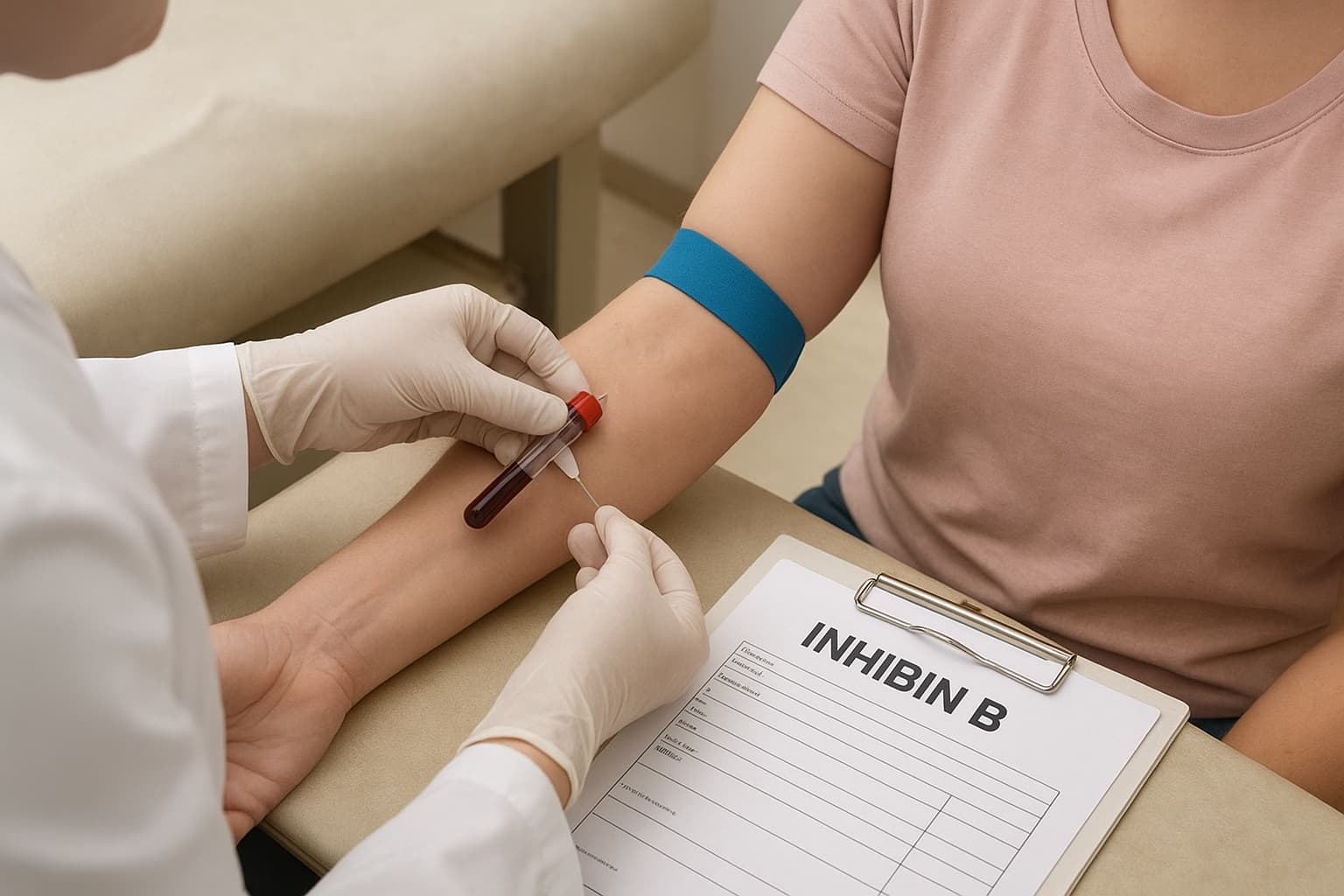
The Inhibin B blood test requires a standard venipuncture. Blood samples are collected in the early follicular phase (days 2-5 of the menstrual cycle) for female fertility evaluation. No fasting is necessary. Assays are most commonly performed via enzyme-linked immunosorbent assay (ELISA) or chemiluminescent methods.
Pre-analytical variables like timing in the menstrual cycle and concurrent medications should be considered when interpreting results. Due to variability in assay standardisation, results should be interpreted within the reference ranges provided by the testing laboratory.
Inhibin B Test Price in India
The cost of an Inhibin B test in India ranges between ₹1,600 and ₹6,000, depending on the location, diagnostic facility and any applicable discounts. On average, most urban diagnostic centres offer the test at prices between ₹2,100 and ₹3,500.
Some providers may also extend special pricing for senior citizens or promotional discounts on online bookings. While the test generally involves a simple blood draw, the price may vary based on additional services such as home collection or faster result delivery.
Conclusion
The Inhibin B test provides important information for evaluating fertility. It diagnoses hormone-secreting tumours and monitors reproductive health. When interpreted in context, it improves diagnosis in both male and female patients. As assay methods improve and reference ranges become more standardised, their integration with other hormonal evaluations will continue to support precision in clinical decision-making.
Also check - DNA Fragmentation Test: How It Impacts Fertility and Sperm Health
Get Started at ₹1!
Try Flabs for a full month for just ₹1.
Follow us on