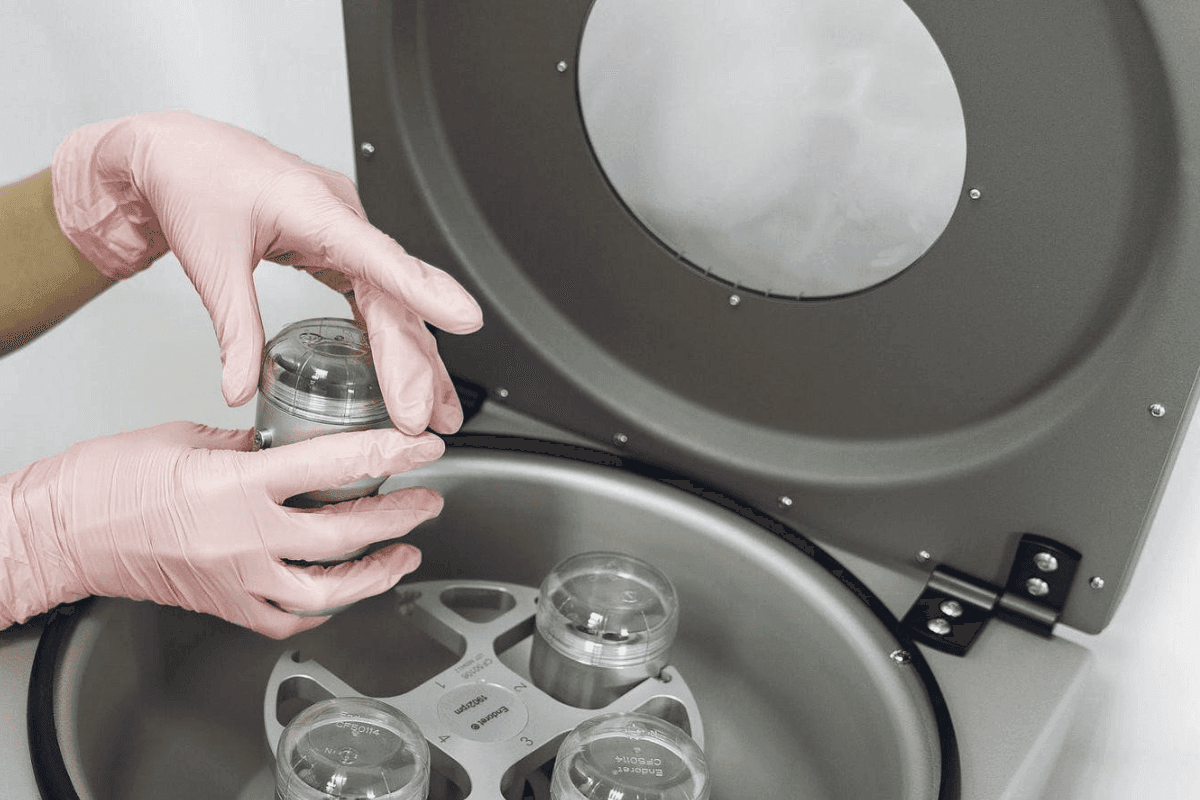
Laboratory centrifuges are fundamental to workflows in pathology labs, where reliable sample separation is required across applications. It is one of the most important pathology lab equipment. The efficiency of any centrifuge machine used in a microbiology lab or pathology setting depends on how well it aligns with the lab's daily throughput, sample types, space availability, and many other factors. With multiple configurations available, it is imperative to select a unit that optimises performance and supports long-term operational reliability.
The Role of a Centrifuge in a Lab
A lab centrifuge machine separates substances of different densities within a solution. The use of centrifuges in a lab is common for blood fractionation, separating plasma or serum, isolating nucleic acids, and preparing samples for further analysis. These machines apply high rotational force to accelerate sedimentation. Applications range from basic hematocrit tests to DNA purification and cellular analysis.
Choosing the right centrifuge depends on the nature of the samples, the desired speed, and workflow demands.
What to Consider When Selecting a Lab Centrifuge
Selecting the right laboratory centrifuge is a task that requires an awareness of the type of samples you process, the required capacity and the level of control needed. Each decision influences how effectively the centrifuge supports routine workflows.
1. Sample Type and Application Fit
Different sample types require specific performance parameters. Blood samples demand low-speed separation, while RNA and DNA isolation might need high-speed centrifugation. If the centrifuge machine is used in a microbiology lab, it should accommodate various biospecimens, including bacterial cultures and cell suspensions.
Centrifuges designed for clinical pathology feature compatibility with test tubes, serum vials, microplates and bottles. Models that can support conical tubes, microplates, and extended-neck rotors are highly suitable for molecular and cell culture applications.
Multi-application capabilities are particularly valuable for laboratories with multiple users with diverse requirements. Such centrifuges are equipped with several functions in a single system. They can operate at different speeds and accommodate various rotors to handle different protocols.
2. Volume Handling and Throughput
Daily sample load and test frequency determine the ideal centrifuge volume. Labs processing a high volume of patient samples may require large-capacity rotors or accommodate multiple vials simultaneously.
For example, some models feature rotors that hold up to 4 x 250 ml bottles. Others focus on the quick processing of small-volume samples. The latter are suited for outpatient labs or point-of-care diagnostics.
Choose a unit that matches the number of samples handled per cycle without compromising time efficiency.
3. Rotor Type and Compatibility
Rotors play a major role in the flexibility and functionality of a centrifuge. There are three primary types:
Fixed-Angle Rotors: Tubes are held at a consistent angle, allowing particles to sediment quickly along the tube wall. These are preferred in high-speed applications like nucleic acid isolation.
Swing-Out Rotors: These can hold buckets that swing out horizontally during spinning. They are suitable for density gradient separation and blood sample processing.
Specialised Rotors: Support niche applications including microplate processing or cell culture work.
Ensure the chosen centrifuge supports rotor interchangeability. Consider systems with trouble-free rotor exchange that enable the removal of the rotor in seconds.
4. Maximum Speed and RCF
Speed, measured in revolutions per minute (RPM), and the resulting relative centrifugal force (RCF), determine how efficiently a centrifuge performs separation. RCF is a more precise measurement. It reflects the force applied to the sample, not just the rotor speed.
High-RPM machines can reach up to 20,000 RPM or more. They are suitable for molecular biology labs needing ultra-rapid separation. Conversely, general pathology labs may benefit from units with moderate RPM but strong RCF settings. They balance speed with sample integrity.
It’s important to check if both RPM and RCF settings are adjustable. Generally, high-speed rotors can reduce spin times and increase the number of applications that can be completed.
5. Refrigeration Capability
For temperature-sensitive samples such as enzymes, proteins, or RNA, refrigerated centrifuges are necessary. Such models can maintain the integrity of samples during extended spin cycles.
Centrifuge machines with temperature controls allow labs to set the chamber to maintain optimal sample conditions, generally ranging from -20°C to +40°C. Non-refrigerated variants are for simpler tasks like routine blood sample processing, where heat is less of a concern.
Additionally, when selecting a refrigerated unit, confirm that it provides temperature uniformity during operation and a reliable compressor system.
6. Imbalance Detection and Safety Features
Operational safety is essential in labs processing infectious or hazardous materials. Imbalance detection prevents accidents by identifying uneven sample distribution before ramping up speed.
Secure lid locking mechanisms and automated brake systems improve such protection during use. Safety-rated centrifuge machines will shut down automatically if vibrations or imbalance are detected, aligning with lab safety rules. These features not only protect users but also prevent equipment damage.
7. Digital Interface and Programming
Simplicity of user interface design is a must for medical labs. Hence, go for machines with touchscreens or digital panels. They simplify programming, especially in multi-user labs.
Pre-set and customisable cycle options make it easier to run standard protocols or adjust settings as needed. Interfaces should also offer quick access to RPM/RCF, temperature, and timer adjustments. Some centrifuges also support LIS software or LIMS integration , enabling data tracking and audit compliance.
Advanced models do support multiple user profiles, password protection and audit trail monitoring these days. In regulated environments, connectivity features allow integration with lab information systems. It enables remote control and compliance with GLP/GMP standards.
8. Size, Design, and Footprint
Centrifuges vary in size, from compact benchtop models to large floor-standing units. Space planning is especially important in smaller pathology labs. Compact models offer performance without occupying excessive bench space.
Consider ventilation requirements and clearance for loading and unloading when evaluating the physical footprint. Some designs also come with stackable features or modular components.
9. Ease of Maintenance and Cleaning
Routine cleaning, filter changes, and part replacements contribute to reliable performance and compliance with lab hygiene standards.
Choose centrifuge machines with easily accessible interiors, removable rotors and splash-proof, corrosion-resistant chambers. Centrifuges also need scheduled upkeep and equipment calibration procedures. Such regular maintenance is easier when systems come with alerts or usage logs.
10. Energy Efficiency and Noise Levels
Energy-efficient motors help reduce operating costs, especially in high-throughput environments. Newer models are designed to consume less power during spin-up and idle phases.
Noise output is another consideration. Go for centrifuge machines with insulated covers and brushless motors that operate quietly.
11. After-Sales Support and Warranty
A good product is not the end when choosing a centrifuge machine. Reliable customer support and access to spare parts are just as important. So, evaluate warranty terms, service availability, and ease of obtaining calibration or repairs when obtaining a new centrifuge.
Manufacturers that provide online technical documentation and remote support tools are the most preferred.
12. Budget and Cost Efficiency
While pricing varies, balancing features with budget constraints is essential. Some labs may benefit from investing in two lower-capacity units to allow parallel processing and reduce downtime during servicing.
Mid-range centrifuge machines provide good value with essential features like swing-out rotors, moderate RCF and digital controls. For higher-end labs, premium models may justify their cost. Premium models feature faster cycle times, greater durability and advanced safety.
Conclusion
When selecting a centrifuge machine for a pathology lab, it’s important to consider all operational factors: sample type, required speed, temperature control, safety features, and available workspace. The use of centrifuges in a lab depends not only on technical specifications but also on how well the equipment integrates into daily routines. It must also allow easy learning for staff.
A well-matched centrifuge improves sample integrity, turnaround times, and overall lab efficiency. From routine blood separation to complex molecular biology workflows, the right model can support both precision and productivity for years to come.
Realted read- How to Choose the Right Autoclave for Your Laboratory Needs
Get Started at ₹1!
Try Flabs for a full month for just ₹1.
Follow us on