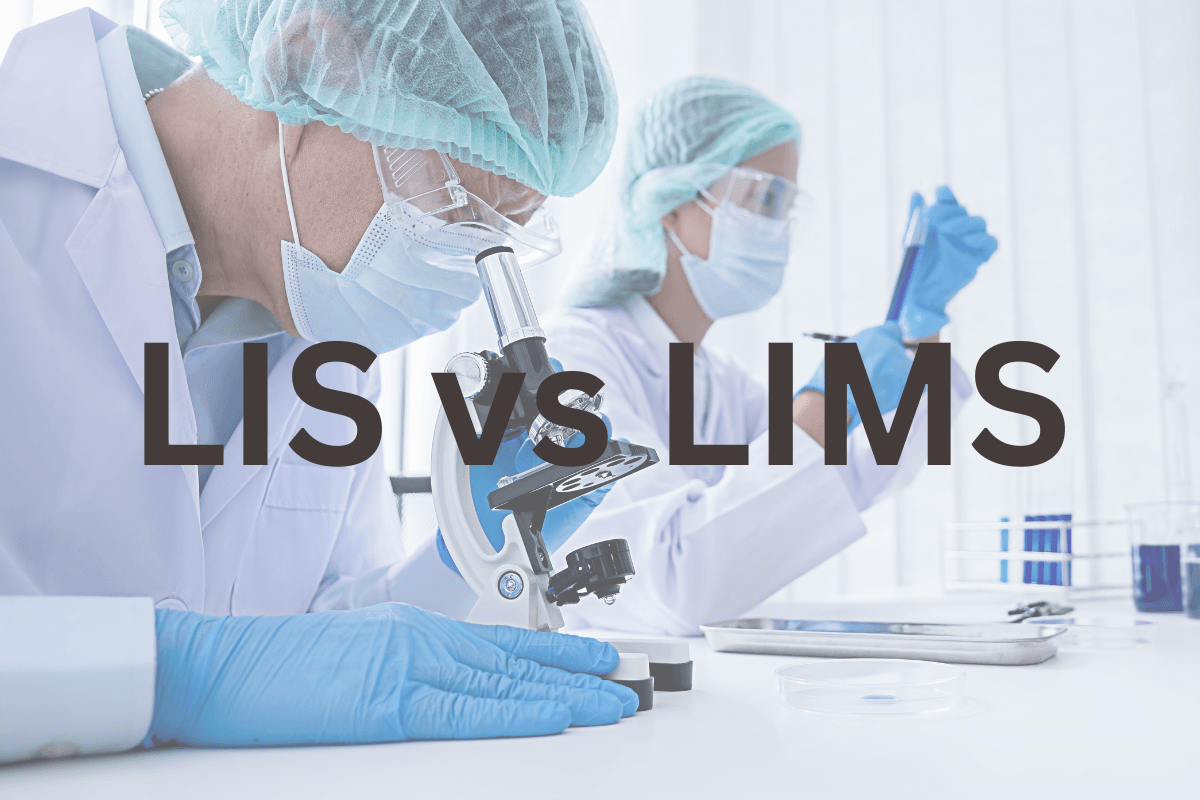
The terms LIMS (Laboratory Information Management System) and LIS (Laboratory Information System) are often used interchangeably. However, the discussion of LIMS vs LIS reveals stark differences, though they overlap in some functionalities. LIS are developed to serve clinical laboratories, while LIMS systems generically serve any research and testing laboratory. Decoding what is LIMS vs LIS is crucial to make the right choice between them. It saves huge costs and handling capacity. Let's discuss the differences and benefits of LIMS vs LIS in this blog post.
Understanding LIMS vs LIS
LIS Full Form: Laboratory Information System
LIMS Full Form: Laboratory Information Management System
LIS's full form is Laboratory Information System. An LIS is primarily built and used in clinical facilities and labs. The workflows are strictly configured to handle sample-centric data efficiently. With operational efficiency, laboratory information systems reduce the time between the request for a medical test and report generation for a doctor's review.
Data privacy and HIPAA or DISHA compliance are highly mandatory for LIS systems to handle patient data.
LIMS software's full form is Laboratory Information Management System. LIMS is a generic laboratory software used in a variety of testing laboratories. They are designed to deliver quality results from defined sample sets in medicine, pathology, manufacturing, cannabis, materials testing, and agriculture.
Compared to LISs, laboratory information management systems come with rich features and services due to an emphasis on quality and batch sample processing. Though LIMS systems should adhere to data privacy-related regulations, they're not bound by strict regulations applicable to clinical laboratories.
LIMS vs LIS: Differences
| Feature | LIMS | LIS |
|---|---|---|
| Purpose | Focuses on sample-centric laboratory data | Focuses on patient-centric laboratory data |
| Design | Full configuration is required which is time and resource intensive | Pre-configured for lab workflows. |
| Primary Use | Research, environmental, and commercial labs | Clinical settings for patient testing |
| Risk Factor | Risk involved is comparatively less when specimens are not related to humans. | Stakes are high as LIS software extensively deals with human patient data. |
| Functions | Sample management, assay data, chain of custody | Test ordering, specimen tracking, patient management |
| Regulatory Bodies | FDA, ISO 17025, GLP | CLIA, CAP, The Joint Commission, COLA, HIPAA (USA), DISHA (India) |
| Customisation | Can be customised to suit the needs of the end users | Heavily regulated allowing for little customisation. |
| Integration | Traditionally lacks integration capabilities with EHRs, medical billing and common analysers. | Traditionally built with integration capabilities with relevant healthcare management software. |
| Lab Types | Primarily for research, industrial, environmental and other research laboratories including medical. | Clinical, hospital, veterinary, pathology, anatomic pathology, toxicology and pain clinics, reference labs, hospitals. |
| Data Management | Handles large volumes of sample data | Focused on individual patient records |
*Though integration capabilities had differences traditionally for LIMS and LIS, modern software systems are almost overlapping in offering integration. As technology advances, LIS and LIMS can become more interchangeable, except for the regulatory part.
Similarities between LIMS and LIS
Though there are differences between LIMS and LIS, the functionalities of LIMS vs LIS overlap in many respects. In fact, there are more similarities than differences. The common aspects are as follows:
- Both have centralised processes.
- Both LIS and LIMS improve collaboration among lab staff by enabling seamless communication.
- The data privacy policies of LIMS vs LIS are the same.
- Both have sample tracking capabilities.
- Both software work based on role-based access.
- They both maintain records of the chain of custody or audit trails.
- The functional analysis and quality control measures of LIMS vs LIS are similar.
- Both LIMS and LIS depend on real-time data access.
Whatever the choice, both LIS and LIMS systems must be able to interact with lab analysers and 3P software used in all standardised and regulatory facilities.
Benefits of LIS and LIMS
Both LIS and LIMS at the basic level are data and process management software in medical laboratories. The LIMS system has broader applicability due to flexible freedom from strict regulation compared to LIS.
Benefits of LIMS
- LIMS software helps laboratories maintain quality standards through quality assurance protocols built into them.
- LIMS is extensively used to automate lab workflows by reducing manual intervention. Lab staff with LIMS can focus on more important tasks.
- LIMS also helps eliminate human errors by maintaining consistent functionality.
- LIMS keeps records of various data, such as patient details and testing details. It allows labs to perform retrospective analysis.
- LIMS software systems take care of resource procurement and reagent tracking, ensuring labs have the right materials at the right time for various functionalities. Thus, LIMS improves diagnostic speed like never before.
- LIMS software-generated data is helpful to restructure SOPs and improve experimental setups.
- A LIMS has applications outside of healthcare due to its similarities with CRM software. For example, LIMS is used in computer applications in pharmacy.
Benefits of LIS
- Laboratory information systems streamline patient data processing through secure sharing and cross-referencing with public and regulatory healthcare facilities.
- By integrating with electronic health records (EHR), LIS software paves the way for accurate patient sample tracking and lab test cross-referencing, both of which are crucial to upholding trust in healthcare.
- Basic LIS software automates data annotation to reduce errors between different labs. They use data encryption models to match the test with the correct specimen.
- LIS software is often integrated with billing capabilities, helping medical labs manage both technical and financial operations.
LIMS vs LIS: Making the Right Choice
For small healthcare facilities, the LIMS vs LIS debate is insignificant. In that case, they need to make the right choice between the two. Even for larger facilities that require patient data management, specimen data records, and assistance in report generation, LIMS vs LIS plays a central role. The following questions should guide the right choice:
- What is the data processing method used in your facility?
- Who can understand and access the data?
- What are the benefits of data to the audience?
There is LIS software that can handle batch testing and specimen management and LIMS software that can handle individual patient data and clinical processes. In that case, the choice between either is fine. However, they come with limitations when it comes to taking the additional responsibility.
In a nutshell, healthcare labs involved with pathology, veterinary, and other diagnostic testing must choose LIS. Facilities that manage large group-centric data and batch processing must go for LIMS.
Choose the Right Laboratory Information System Software for Your Lab
After understanding the differences between LIS and LIMS, selecting the right solution depends on your laboratory’s workflow, testing needs, and operational goals. Flabs Laboratory Information System Software helps diagnostic labs manage samples, reports, patient records, and daily operations efficiently with a streamlined digital workflow.
Explore Flabs Laboratory Information System Software to improve lab efficiency and simplify laboratory management.
Conclusion
We learned from the discussion that LIS is specifically made to work for clinical laboratories in patient data management, sample management, and reporting. LIMS meaning says that it is a more generic lab management software for a wide range of facilities outside of healthcare– pharmaceutical, metal testing, manufacturing, petrochemical, etc.
So, the discussion of LIMS vs LIS is crucial to make the right choice for medical laboratories. The cost factor is also involved here, where LIMS systems are more affordable.
If they're involved with handling sensitive patient data, LIS is the ideal companion over the LIMS software system. Modern LIMS are equipped with the capabilities of LIS software. In such cases, it is fine to get a LIMS that adheres to specific regulations. However, ensuring regulatory compliance is the highest priority.
Also read: LIMS vs. QMS
Get Started at ₹1!
Try Flabs for a full month for just ₹1.
Follow us on