Medical diagnosis has got better with LIMS, Imaging technology and many assisting software for various operations. However, it has become more personalised and accurate with Machine learning. How does it help medical diagnosis using machine learning? We will explore it shortly. While there are potential applications of ML in healthcare, we can’t ignore the associated challenges.
Implementation takes time, with concerns of data privacy, bias, staff training, etc. But embracing the applications of ML in healthcare is recommended by experts across the world. Let’s first understand where ML can help healthcare, specifically, diagnostic labs, for a perspective.
Medical Diagnosis Using Machine Learning: Applications
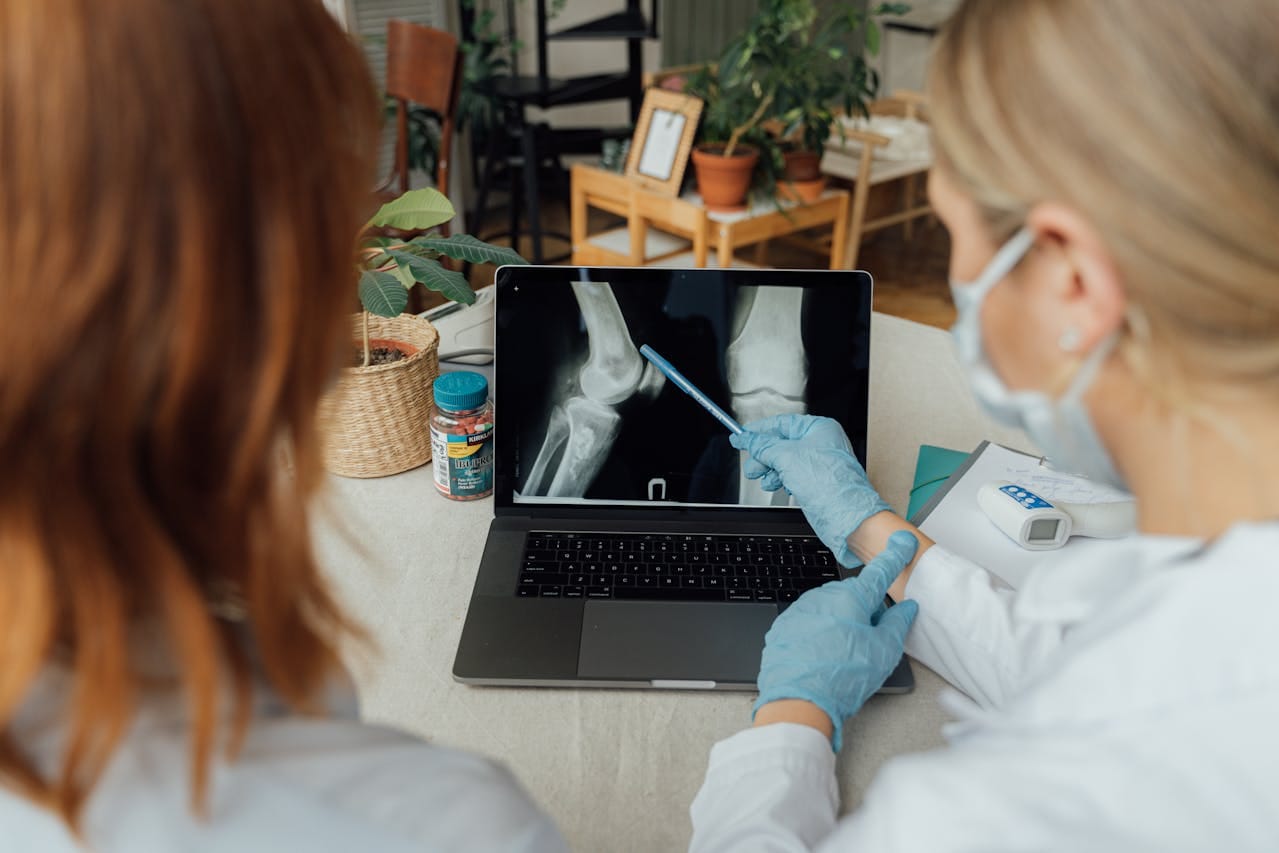
Disease Diagnosis: Diagnostic labs employ AI and machine learning to accurately and swiftly identify diseases. Medical imaging, such as X-rays and MRIs, is particularly enhanced through machine learning algorithms that can detect subtle abnormalities often missed by human eyes. For example, machine learning models analyze mammography images to identify cancerous tumours efficiently.
Predictive Analysis: Machine learning algorithms evaluate patient data to predict the risk of future health issues, enabling timely preventative measures. By analyzing extensive medical records and lifestyle information, ML can identify patients at risk for diabetes and heart disease.
Drug Discovery: Machine learning accelerates drug development by analyzing vast datasets to identify promising drug candidates and predict their efficacy and safety. For instance, ML models assess data from chemical databases and clinical trials to forecast how new drugs might work against diseases like Alzheimer’s.
Fraud Detection: The National Health Care Anti-Fraud Association (NHCAA) estimates that healthcare fraud costs around $300 billion annually, making up 3 to 10% of total healthcare spending. Machine learning can help organizations identify fraudulent insurance claims before they are paid, ensuring quicker processing of valid claims and protecting patient data.
Disease Surveillance: ML is critical in monitoring disease outbreaks by analyzing various data sources, including social media and electronic health records. For example, algorithms track flu activity through social media trends, allowing for timely public health responses.
Medical Device Development: Machine learning is enhancing the design and functionality of medical devices, enabling improved diagnostics and patient monitoring. By analyzing health data, ML helps refine devices and can support wearable technology for tracking health metrics.
Predicting Outbreaks: AI and machine learning are increasingly used to monitor and predict epidemics globally. Scientists leverage vast amounts of data from satellites, social media, and websites to forecast outbreaks of diseases like malaria and other infectious illnesses. This capability is especially beneficial in developing countries with limited healthcare infrastructure. A notable example is ProMED-mail, an online platform that provides real-time reports on evolving and emerging diseases.
Behavioural Modification: Behavioral modification plays a key role in preventive medicine, and with the rise of machine learning in healthcare, numerous startups are emerging to focus on cancer prevention and patient treatment.
10 Use Cases of ML in Healthcare
- Oncology: Detects tumors early, identifying malignant cells accurately.
- Pathology: Enhances cell analysis and accelerates diagnosis.
- Dermatology: Assists in skin disease diagnosis and reduces unnecessary biopsies.
- Genetics: Supports gene analysis and preventive genetics.
- Mental Health: Offers personalized therapy and early detection.
- Neurology: Aids in stroke prediction and research on degenerative diseases.
- Critical Care: Monitors ICU patients and predicts sepsis.
- Eyecare: Diagnoses retinal diseases and tracks eye health.
- Diabetes: Personalizes diabetes treatment and predicts complications.
Suggested - CT Scan and Sonography Machine prices in India
Challenges of ML in Healthcare
Machine learning is no doubt a boon to diagnostic labs and healthcare at large. But it doesn’t come without challenges.
Though, ML processes patient data swiftly, patient safety hinges on the quality of the data that machine learning algorithms utilize. When medical records are incomplete or inaccurate, the resulting predictions can lead to incorrect treatments, which might worsen a patient's condition or even be fatal.
Moreover, biases inherent in the training datasets can inadvertently influence machine learning models, posing significant risks, especially in healthcare settings. Another critical challenge is the privacy of sensitive patient data, which necessitates robust security measures.
Of course, with the onboarding of ML systems, staff requires extensive training. Right now, it is seen as one of the bottlenecks to the pace of implementing ML in medical labs across the world.
The Future
Machine learning (ML) is transforming healthcare by enabling faster, more accurate medical diagnoses. Through advanced algorithms, ML aids in tasks like image analysis, disease detection, risk assessment, and personalized treatment recommendations. By analyzing patient data, including X-rays, MRI scans, and medical history, ML supports healthcare professionals in making informed decisions. Although it's early to predict ML’s full impact, its rapid adoption suggests a promising future in enhancing diagnostics and patient outcomes.
Conclusion
While we discuss the applications and challenges of machine learning in healthcare, it overlooks the importance of continuous training and updating of machine learning models. As medical knowledge and technologies evolve, algorithms must be regularly refined with the latest data to maintain accuracy. Also, ethical considerations surrounding AI decision-making in healthcare, including transparency and accountability, warrant further exploration to ensure that patient care remains at the forefront of these advancements.
Also read: The Benefits of Automation in Clinical Laboratory
Get Started at ₹1!
Try Flabs for a full month for just ₹1.
Follow us on