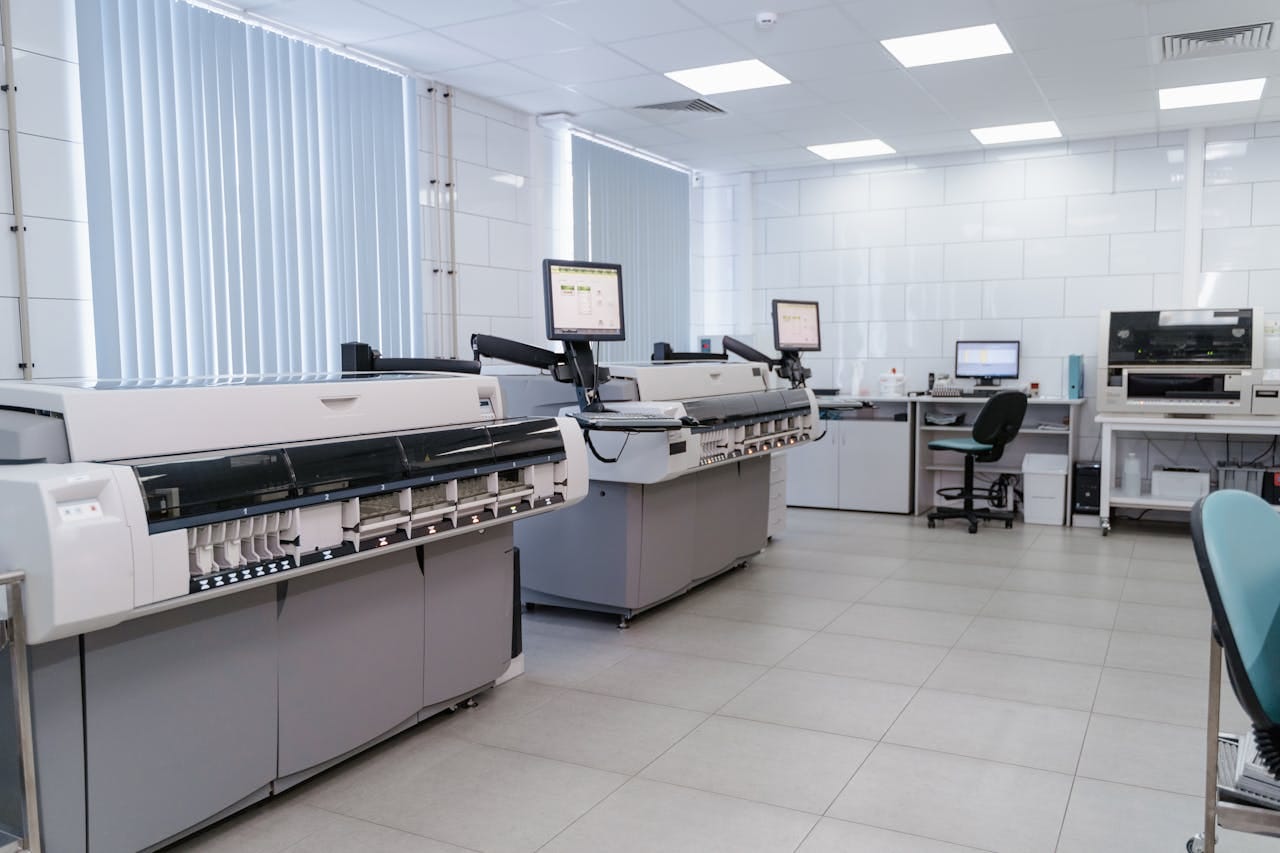
Automation in clinical laboratories is transforming healthcare, bringing faster, more accurate results that improve both patient care and diagnostic precision. By reducing manual tasks and minimising human error, automation improves lab safety, optimises workflows, and shortens turnaround times (TAT)—all at the heart of today’s healthcare demands.
Automation tools, from sample handling systems to data management software like LIMS, streamline various lab operations. Here is the take: choosing the right tool is important. Solutions like Flabs integrate reporting, communication, and data management, taking care of LIMS’s role in automation. But that’s not just it.
Automation encompasses a wide array of tools that collectively drive lab efficiency, accuracy, and responsiveness to meet the growing needs of modern healthcare.
Automation in a Clinical Laboratory
Automation means the use of technology and automated laboratory systems or software to run tasks. Automation in clinical laboratory settings serves the same purpose as it does in any other industry: to hasten workflows and reduce dependence on manual labour for repetitive tasks.
The immediate outcome is minimisation of human error in regular tasks. When speed increases in clinical laboratories, it leads to lower turnaround times (TAT), faster diagnoses, and improved patient outcomes.
As the need for healthcare increases, clinical laboratories are in need of more automation than ever in today’s world. In addition, the need for adhering to standard procedures and medical regulations pushes one to adopt automation in various systems of healthcare. It could be handling volumes of patient data, storage and retrival of specimens, or for quality control inspections.
Benefits of Automation in Clinical Laboratories
Let’s understand the advantages of automation in a clinical laboratory, looking at every aspect more closely.
Enhanced Data Management and Access
Lab automation systems streamline data handling for accurate storage and quick retrieval of patient records, test results, and critical documents. Efficient management of date breeds reliable and rapid reporting, supporting timely decision-making in patient care.
Improved Safety
Automation enhances lab safety for both patients and staff. It minimises repetitive strain injuries, as automation equipment allows staff to handle specimens just once. The automated system completes the remaining steps.
Consistency in Processes
Traditional lab operations relied on manual checks and guides, leading to variability. Automation in clinical laboratory settings standardises lab procedures, reducing manual errors and containing variability.
Real-Time Monitoring and Alerts
Automated systems often include real-time monitoring and alert mechanisms, which quickly flag deviations or issues. This allows staff to address any problems immediately, reducing downtime and improving lab reliability.
Specimen Storage and Tracking
Automation reduces manual steps in specimen storage and retrieval, offering fast access to samples when required. Some systems archive samples in trays for manual storage, while others automate specimen transport to and from storage areas.
Faster Patient Care and Collaboration
Automated systems reduce test turnaround times, providing faster access to results for patients and physicians. By integrating lab departments and centers, automation promotes smooth collaboration, empowering healthcare providers with timely data.
Boosted Staff Efficiency
Automation minimises repetitive tasks, allowing lab personnel to focus on specialised work. It enhances productivity, reduces errors, and improves overall output quality. Staff can manage tasks proactively and perform at their best.
Reduced Cross-Contamination Risk
Automated handling minimises human interaction with samples, significantly reducing cross-contamination risk. When the integrity of test results is above all, especially in high-throughput labs, automation is thus important.
Energy and Resource Efficiency
Automation can lead to optimised energy and resource usage, as systems are programmed to operate efficiently. They reduce waste and lower operational costs.
Increased Testing Capacity
With optimised processes and faster operations, automation in clinical laboratory settings enables labs to handle larger volumes of tests efficiently. Automated workflows boost throughput. It means that labs can manage high testing volumes with minimal manual intervention.
Simplified Analysis and Troubleshooting
Automation makes data processing and error detection straightforward, even for extensive data sets. In clinical biochemistry, it helps clinicians identify patterns quickly, supporting research, clinical studies, and decision-making with ease.
Systems for Clinical Laboratory Automation
After looking at the advantages of automation in clinical laboratory settings, the immediate question is how? What are the typical systems available or used otherwise for accomplishing automation?
While LIMS is the well-known system/software module for introducing automation in clinical laboratory settings, there are various systems available to automate a multitude of tasks. Some of the prominent ones are:
- Quality Management System (QMS)
- Electronic Laboratory Notebook (ELN)
- Laboratory Execution System (LES)
- Scientific Data Management System (SDMS)
- Instrument Control System
- Radiology Information System (RIS)
- Enterprise Resource Planning (ERP) System
- Robotic Specimen Handling Systems
- High-Throughput Screening Systems
- Chromatography Data Systems (CDS)
- Automated Microbiology Systems
- Molecular Biology Automated System
- Sample Storage and Retrieval Systems
- Digital Pathology System
- Environmental Monitoring System (EMS)
- Electronic Batch Record (EBR) System
Depending on the criticality of operations and the stakes involved, one or more of these systems for automation in clinical laboratory settings is essential.
Disadvantages of Clinical Lab Automation
While it is impossible to imagine a today’s clinical labs without end-to-end automation, there are also a few disadvantages associated with it.
- High initial setup and maintenance costs.
- Dependence on technical expertise for operation and troubleshooting.
- Potential job displacement due to reduced manual work.
- Limited flexibility for non-standard or unique tests.
- Vulnerability to software malfunctions or cyber threats.
- System downtime impacting workflow continuity.
- Reduced hands-on oversight, risking undetected errors.
- Need for continuous staff training to keep up with system updates.
Role of LIMS in Clinical Lab Automation
In clinical lab automation, the Laboratory Information Management System (LIMS) is pivotal for transforming traditional lab operations. By streamlining processes, automating data management, and ensuring regulatory compliance, LIMS minimises human error and supports labs in maintaining high standards of efficiency.
Solutions like Flabs Pathology software exemplify the impact of LIMS by integrating patient data handling, report automation, and real-time communication tools, such as WhatsApp, into one user-friendly platform. As technology evolves, having advanced features is a norm rather than a speciality.
Beyond just data organisation, a well-implemented LIMS enhances lab productivity, supports consistent quality control, and offers scalable growth options for expanding labs.
Flabs specifically adds value here with secure data backups. Its easy-to-use interfaces and patient portals, make it an ideal choice if you want seamless automation, optimise workflows, and improve patient interaction. Further, the scalability of Flabs ensures it grows with your lab, adapting to evolving clinical needs.
Conclusion
Beyond operational efficiency, automation also supports labs in achieving a higher level of data security and confidentiality, crucial for patient trust and regulatory compliance. Utilising the best LIMS works on this aspect with robust data encryption, secure backups, and seamless integration. safeguarding patient information while streamlining workflows. Embracing tools like Flabs helps labs maintain a balance of performance, security, and patient care, essential for building a trusted, modern automated lab environment.
Also read: What is Quality Control in a Laboratory
Get Started at ₹1!
Try Flabs for a full month for just ₹1.
Follow us on