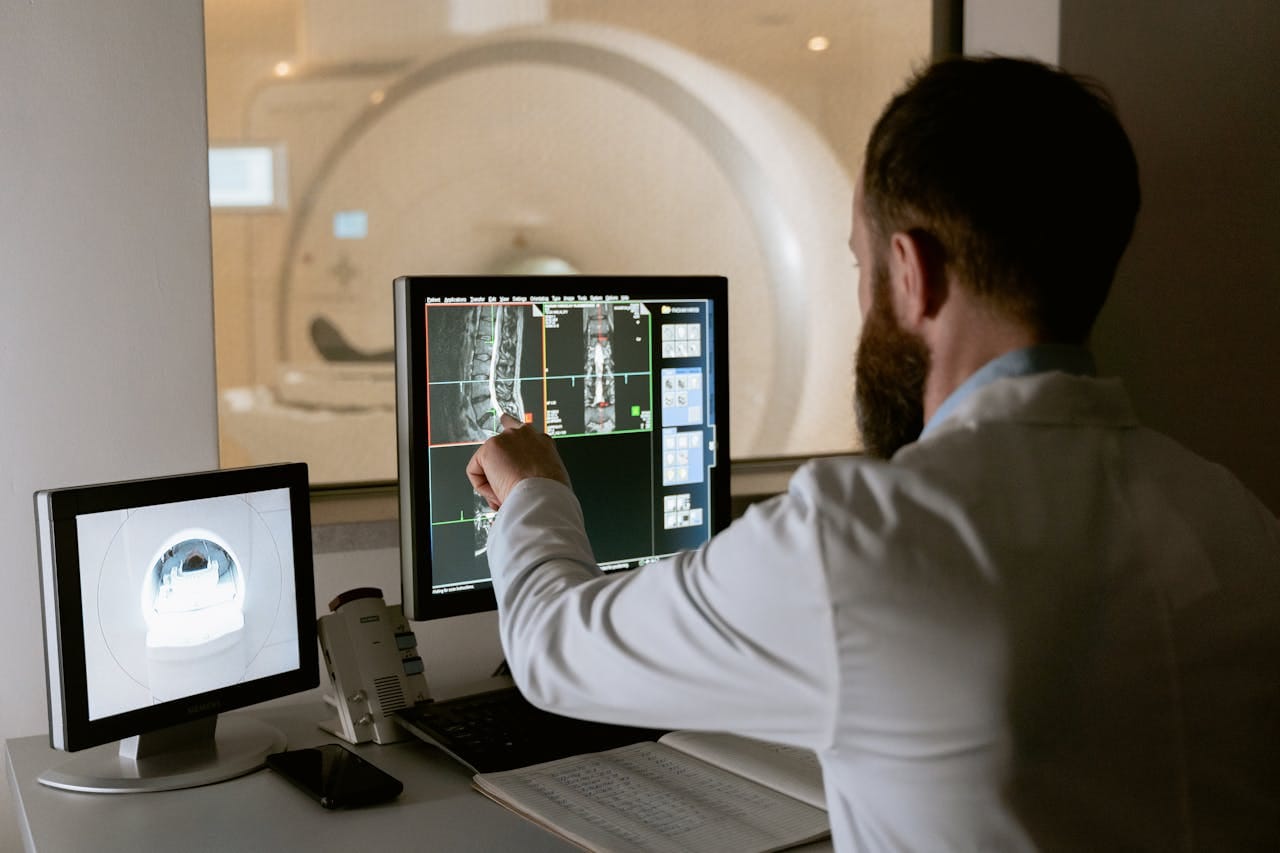
Radiology systems have improved in their diagnostic capabilities from the first X-ray. As the need for radiology tests grows, so does the generation of imaging test reports. Healthcare facilities must also focus on responsible ways of handling the huge amounts of patient data in the form of their medical imaging reports. Data privacy is also a concern. PACS radiology systems are here to fill the gap.
They're software to digitise medical imaging reports for efficient storage, management and processing. They were primarily serving the X-ray department. Today, PACS has evolved to process medical images from a host of departments, such as CT, MRI, Endoscopy, Ultrasound, etc. Advancing medical laboratories must adapt PACS radiology systems to automate various crucial tasks.
PACS Full Form in Radiology
PACS radiology's full form is Picture Archiving and Communication System. PACS software technology allows storage, retrieval and management of radiology images and associated data. They must use the DICOM (Digital Imaging and Communications in Medicine) standards to store, process, and exchange this data.
Primarily, PACS systems enable digital storage of radiology test results, thereby reducing the burden of maintaining physical copies. It significantly reduces storage and data handling costs while improving data security. Since the data is stored digitally, healthcare providers can access the data remotely from anywhere in the world. This speeds up communication between medical staff and patient care.
Components of PACS Radiology Software
Usage of every PACS system has four key components:
- Hardware of medical imaging machines,
- A secure network to distribute and exchange patient images.
- Workstations or mobile devices to view, process, and interpret the images.
- An electronic archive to store and retrieve images; provision of related documentation and reports.
Functionality of PACS Systems
PACS systems function based on DICOM standards. DICOM standards define the format for the storage and exchange of medical images across laboratories and healthcare facilities. It lays down the rules of image file format, quality standards, and patient data safety. When onboarding PACS software, medical facilities ensure that they adhere to those standards.
PACS software systems are predominantly used in X-ray radiology, where the need to store, exchange and transmit test results (X-ray images) is the highest. However, nowadays, other departments of healthcare and medicine are also adopting picture archiving and communication systems for storage.
While it can handle an assortment of images from diverse medical imaging devices, it can also adapt to new image types anytime as medical imaging technology evolves. So, scaling laboratories can also onboard PACS systems.
Types of Images PACS Radiology Systems Handle
- X-Ray
- Ultrasound
- Digital radiography
- Computed tomography (CT)
- Magnetic resonance imaging (MRI)
- Positron emission tomography (PET)
- Endoscopy
- Mammogram
PACS Integration with Other Medical Systems
PACS are not standalone software. They integrate with a range of medical software to augment additional capabilities.
Hospital Information System (HIS): A software program for handling the administrative needs of hospitals, PACS software integration with HIS makes patient data retrieval, matching and labelling of reports more efficient.
Radiology Information System (RIS): Medical facilities use RIS as a central system to manage various imaging departments electronically. Integration with PACS enables data retrieval from other medical departments.
Electronic Medical Record (EMR): It is an electronic record of a patient's health history. Integration with PACS helps healthcare professionals with faster clinical interpretation of test results.
Impact of PACS in Healthcare
PACS software automates radiology lab functionalities in many respects. From storage of patient medical images to enabling transferability, PACS radiology systems must be an essential component of laboratories. Some of the advantages of using PACS in healthcare are given below.
Higher Efficiency: There is no need for physical film storage with PACS software in place. While automating various radiology tasks, PACS also enables quick retrieval of information from anywhere, at any point in time. Hence, both the speed of diagnosis and treatment planning become more efficient.
Diagnostic Accuracy: The importance of PACS in radiology lies in the provision of HD images of radiology test results. Medical professionals can view them from multiple angles to observe any deviations. A more accurate diagnosis is possible.
Collaboration: As PACS systems enable image retrieval from any place, they facilitate collaboration between healthcare providers from across the world. As more and more health conditions are discovered in today's world, quick collaboration has become inevitable.
Record Keeping: Medical laboratories can store gigabytes of images on PACS radiology software, making record keeping and tracking of health history simpler. There is no fear of losing or corrupting the data, unlike in the case of physical reports.
Cost Effective: PACS systems require significant upfront costs. However, the long-term benefits of PACS, like less need for physical film storage and improved speed and accuracy of diagnoses, save overall costs for medical laboratories.
Educational Purpose: Facilitates teaching and research by providing easy access to a large database of radiological medical images. Medical professors can retrieve the image database into their presentations and digital representations to prove a perspective and lesson.
EHR Integration: PACS can be integrated with electronic health records (EHRs), hospital HIS, and RIS, simplifying patient data management and accessibility. Automating data retrieval from OP and IP makes matching patient identity with their test results accurate and quick.
Challenges with PACS
As they're software systems, using PACS software might involve training personnel.
Healthcare facilities are slow to adopt PACS systems due to data privacy concerns.
As the data volume grows, medical facilities must invest in data storage hardware to address privacy concerns. It incurs additional costs.
Medical labs must ensure PACS systems are compliant with the latest DICOM and medical regulations.
Conclusion
Understanding PACS meaning and in-depth details, mode of working, and applicability is the responsibility of every advancing medical laboratory. Deploying the right PACS systems automates radiology workflows, reduces burden to manage patient’s imaging data and saves huge costs in the long-run. So, they should not worry about upfront costs to onboard them. Ultimately, the importance of PACS in radiology lies in warranting diagnostic accuracy and quality patient care.
You may also like to read: CT Scan Vs MRI Scan
Get Started at ₹1!
Try Flabs for a full month for just ₹1.
Follow us on