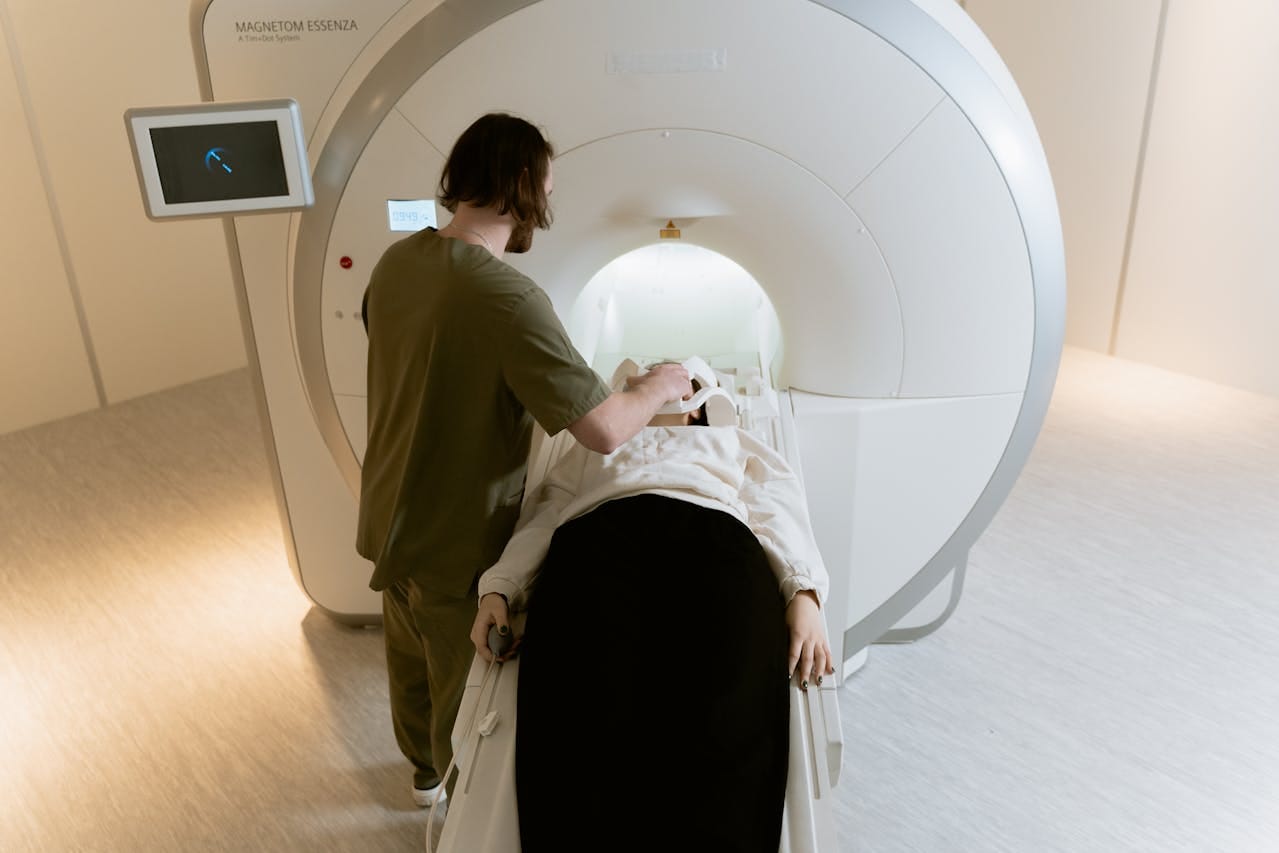
In the realm of medical diagnostics, CT (Computed Tomography) scans and MRI (Magnetic Resonance Imaging) scans stand out as two of the most advanced and widely used imaging techniques. Each offers unique insights into the body's internal structures, providing invaluable information that aids in the diagnosis, treatment planning, and monitoring of various health conditions.
While both technologies have revolutionised medical imaging with their ability to produce detailed cross-sectional images, they operate on different principles and are suited to different diagnostic needs. This article aims to demystify CT and MRI scans, exploring their differences, specific uses, and factors influencing their costs. We will delve into understanding when each imaging technique is most appropriately used, helping patients and healthcare providers make informed decisions about their application in clinical practice.
What Is a CT Scan?
A Computed Tomography (CT) scan, also known as a CAT scan, is a sophisticated medical imaging technique that uses a combination of X-ray measurements taken from different angles around the body and computer processing to create cross-sectional images (slices) of bones, blood vessels, and soft tissues inside the body. CT scan technology offers detailed images that are clearer than standard X-rays, allowing for a better examination of various parts of the body.
During a CT scan, the patient lies on a table that slides into a large, circular opening of the scanning machine. As the X-ray tube rotates around the patient, multiple images are taken from various angles and compiled by a computer to generate detailed internal pictures. This process can provide valuable diagnostic information about the patient's anatomy, helping to identify diseases, conditions, or injuries with greater precision and speed.
What Is an MRI Scan?
Magnetic Resonance Imaging (MRI) is a diagnostic imaging technique that utilises powerful magnetic fields, radio waves, and computer technology to generate detailed images of the organs and tissues within the body. Unlike CT scans, which use X-rays, MRI does not involve ionising radiation, making it a preferred choice for examining soft tissues and structures in great detail.
The MRI process involves the alignment of hydrogen atoms in the body's water molecules using a strong magnetic field. Radiofrequency pulses are then applied, causing these atoms to produce signals that are detected by the scanner. These signals are converted into detailed images by a computer, providing clear views of soft tissues, including the brain, spinal cord, nerves, muscles, ligaments, and tendons, as well as internal organs like the heart and liver.
MRI scans are particularly valuable for diagnosing a wide range of conditions, including tumours, strokes, joint abnormalities, and diseases of the internal organs. Their ability to produce high-resolution images of soft tissues makes them an indispensable tool in medical diagnostics, offering insights that other imaging techniques cannot.
What Is the Difference Between an MRI and CT Scan?
CT (Computed Tomography) scans and MRI (Magnetic Resonance Imaging) scans are both advanced imaging techniques, but they differ significantly in their technology, applications, and the type of information they provide:
1. Technology
- CT Scan: Uses ionising radiation (X-rays) to create detailed cross-sectional images of the body. A CT scanner emits a series of narrow beams through the human body as it moves through an arc, creating a detailed image slice of the tissues and organs.
- MRI Scan: Utilises a powerful magnetic field and radio waves to generate detailed images. MRI scans produce signals from the body’s hydrogen atoms when exposed to the magnetic field, which are then translated into images without using ionising radiation
2. Image Details
- CT Scan: Excellent for visualising complex bone fracture, tumours and evaluating the presence of diseases in the lungs and chest. It provides good details of the soft tissues and organs but is not as detailed as an MRI in certain areas.
- MRI Scan: Provides superior detail of soft tissues, including the brain, spinal cord, nerves, muscles, and ligaments. It is beneficial for diagnosing conditions within the joints, soft tissues, and central nervous system.
3. Use Cases
- CT Scan: Often used in emergencies due to its speed in acquiring images, making it ideal for diagnosing injuries from accidents, detecting lung and chest problems, and guiding cancer treatment.
- MRI Scan: More suited for conditions where detailed images of soft tissues are needed for diagnosis, such as tumours, spinal cord injuries, brain disorders, and detailed joint examinations.
4. Exposure to Radiation
- CT Scan: Involves exposure to ionising radiation, though the dose is managed carefully to minimise risk.
- MRI Scan: Does not use ionising radiation, making it a safer option for repeated imaging and for vulnerable populations, such as pregnant women and young children, in specific scenarios.
5. Time and Comfort
- CT Scan: Typically faster, often completed within a few minutes. The speed of acquisition makes it more comfortable for patients who may have difficulty remaining still.
- MRI Scan: This can take longer, sometimes up to an hour, and may require the patient to remain very still in a narrow tube, which can be challenging for those with claustrophobia.
What Is the Cost of a CT Scan and an MRI Scan?
The cost of CT (Computed Tomography) scans and MRI (Magnetic Resonance Imaging) scans can vary significantly based on several factors, including the geographical location, whether the scan is performed in a hospital or an outpatient imaging centre, the specific part of the body being scanned, and whether contrast material is used during the scan. Additionally, health insurance coverage plays a significant role in determining the out-of-pocket expenses for these tests.
On average, in India:
- CT Scans: The cost of a CT scan can range from ₹1000 to ₹15000 or more. The wide range in cost reflects differences in the complexity of the scan, with abdominal and chest CT scans typically on the lower end of the cost spectrum and more specialised scans, such as those for the heart or with contrast, on the higher end.
- MRI Scans: The average cost of an MRI scan in India varies depending on factors like the body part being scanned and the type of scan. On average, the cost of an MRI scan in India ranges from ₹1,500 to ₹40,000, with specific costs for different body parts like the brain, abdomen, knee, and spine ranging from ₹6,500 to ₹12,000, ₹6,500 to ₹13,000, ₹6,500 to ₹9,500, and ₹6,500 to ₹10,000 respectively. These prices are significantly lower compared to other countries, making MRI scans more accessible in India due to government subsidies and advanced medical facilities.
Patients need to check with their health insurance provider to understand what is covered under their plan and to inquire about any required copayments or deductibles. For those without insurance or with high deductible plans, some imaging centres offer cash prices or payment plans to help manage the cost.
Patients are also encouraged to shop around and compare prices at different facilities, as costs can vary even within the same geographic area. However, it's crucial to ensure that the chosen facility is accredited and known for providing high-quality imaging services, as the accuracy of the results is paramount.
Conclusion
Navigating the complex world of medical imaging, specifically when it comes to CT and MRI scans, requires a clear understanding of the distinctions, applications, and financial considerations associated with each modality. Both CT scans and MRI scans are invaluable diagnostic tools, offering detailed insights into the body's internal structures and playing a critical role in the early detection, diagnosis, and management of a wide range of medical conditions.
The choice between a CT scan and an MRI scan depends on various factors, including the specific area of the body being examined, the type of tissue or condition being assessed, the urgency of the situation, and considerations related to patient safety and comfort. While CT scans are known for their speed and effectiveness in emergencies and for imaging complex bone structures, MRI scans provide superior detail of soft tissues, making them indispensable for diagnosing soft tissue conditions and central nervous system disorders.
Understanding the costs associated with these imaging tests is also crucial, as it allows patients to make informed decisions based on their healthcare needs and financial circumstances. With healthcare costs varying widely, patients are encouraged to communicate openly with their healthcare providers and insurance companies to navigate these expenses effectively.
Related reading : CT Scan Machine Price in India
Get Started at ₹1!
Try Flabs for a full month for just ₹1.
Follow us on