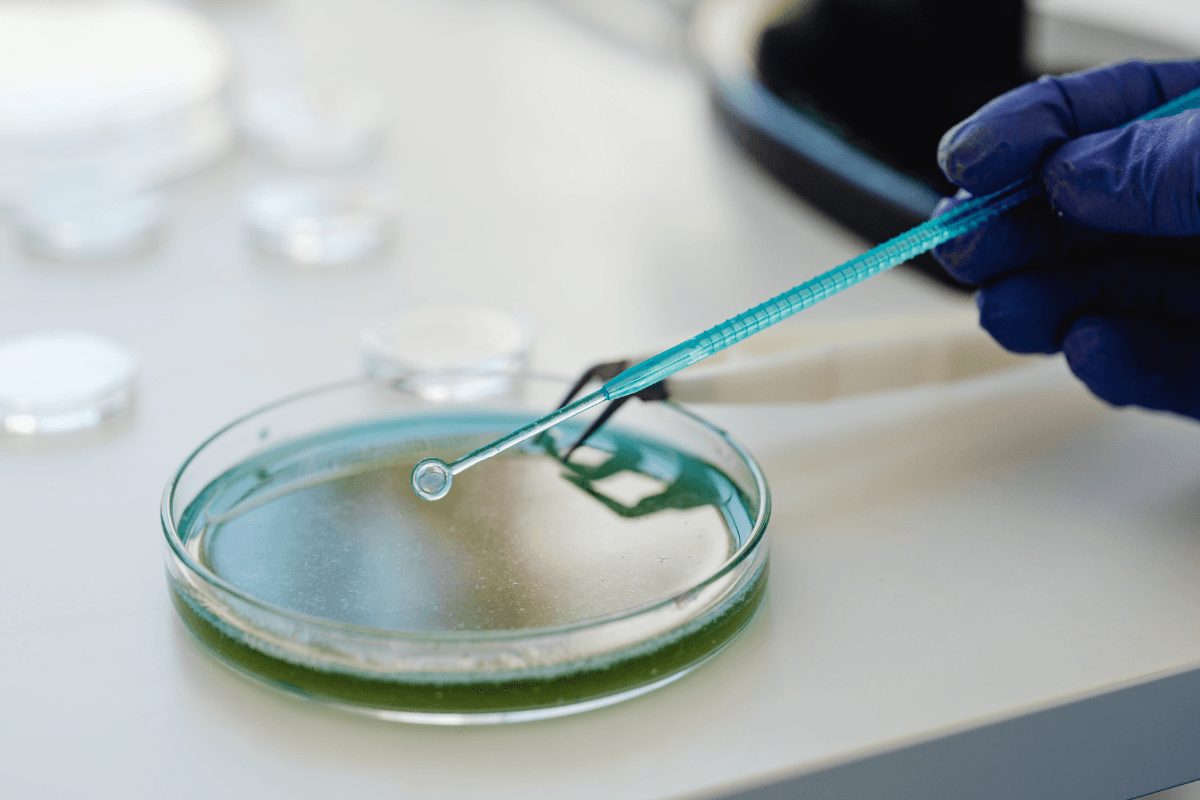
A Petri dish is a shallow, cylindrical, round glass or plastic container widely used in laboratories to culture microorganisms and cells. To study organisms such as bacteria, fungi, or viruses under close examination, it is essential to isolate them in a controlled setting.
Petri dishes provide that environment when combined with an appropriate medium, e.g., agar. Since its invention by Julius Richard Petri, the dish has become a standard laboratory tool for microbiologists, pathologists, and healthcare researchers.
Petri Dish Meaning and Historical Context
The Petri dish was first introduced in the late 19th century by Julius Richard Petri, a German bacteriologist working under Robert Koch. Before its introduction, culturing microorganisms required less efficient containers. The Petri dish design allowed for a transparent, sterile, and reusable culture container that promoted consistent bacterial growth.
In practice, the Petri dish's meaning extends beyond microbiology. It is also a symbol of controlled experimental design in research and diagnostics.
Uses in Laboratory Research
A laboratory Petri dish is indispensable in various fields of microbiology and pathology.
- Bacterial culture and observation: To study bacterial growth on agar Petri dishes.
- Antibiotic sensitivity testing: Placing antibiotic discs on agar plates to measure inhibition zones.
- Cell and tissue culture: Supporting eukaryotic cell growth under controlled conditions.
- Fungal identification: Isolating and examining colonies grown on selective media.
- Sterility testing: Assessing contamination in pharmaceuticals and healthcare environments.
In addition, sterile Petri dishes are employed in quality control testing, environmental monitoring, and teaching demonstrations.
Types of Petri Dishes
Petri dishes are available in various sizes, materials, and sterilisation formats. Selection depends on laboratory requirements.
| Type | Description | Common Uses |
|---|---|---|
| Glass Petri Dish | Reusable, autoclavable, resistant to heat and chemicals. | Long-term laboratory experiments. |
| Plastic Petri Dish | Disposable, lightweight, usually sterile. | Clinical labs, routine microbial testing. |
| Agar Petri Dish | Pre-filled with agar medium for immediate use. | Bacterial and fungal growth studies. |
| Petri Dish Container | Stackable designs with lids to minimise contamination and allow airflow. | General microbiology and teaching. |
Laboratories also use specialised sizes. There are miniature dishes for individual colonies and larger Petri dish sizes for high-density cultures.
Bacterial Growth and Petri Dishes
The bacterial growth Petri dish setup is one of the most recognised laboratory practices. An agar medium supports microbial growth, e.g., such as nutrient agar or blood agar. Colonies appear after incubation, enabling researchers to distinguish species by morphology, colour, and growth rate.
Sterile Petri dishes ensure that no external microorganisms interfere with results. For pathologists, accurate bacterial isolation and identification are central to diagnostic accuracy and patient management.
Petri Dish Medium
The effectiveness of a Petri dish depends on the culture medium inside. Agar remains the most common, derived from red algae. Different formulations are selected based on experimental needs:
- Nutrient agar: General cultivation of bacteria.
- MacConkey agar: Differentiation of Gram-negative bacteria.
- Sabouraud agar: Fungal culture.
- Blood agar: Hemolysis observation in bacterial pathogens.
The choice of medium within the Petri dish defines the precision of laboratory testing.
Petri Dish Sizes and Pricing
Petri dishes are manufactured in multiple diameters, ranging from 35 mm to 150 mm. The standard laboratory size is 90–100 mm, suitable for most microbial cultures. Smaller dishes are preferred for limited samples, while larger formats are useful for experimental setups requiring more space.
Petri dish price depends on material, sterility, and whether the dish is pre-filled with medium. Glass Petri dishes, being reusable, carry higher upfront costs but reduce long-term expenditure. Plastic sterile Petri dishes are more economical for routine diagnostic work, especially in high-volume laboratories.
Petri Dish Facts for Pathologists and Healthcare Professionals
- Named after Julius Richard Petri in 1887.
- Glass Petri dishes are heat-resistant and autoclavable.
- Disposable plastic dishes reduce cross-contamination risks.
- Agar Petri dishes remain the standard for microbial culture.
- Sterile Petri dishes are supplied in sealed packaging for immediate laboratory use
Role of Petri Dishes in Microbiology
The importance of the Petri dish lies in its consistent role in microbiology. For pathologists and healthcare professionals, its function extends beyond academic research into direct clinical application. Accurate microbial growth in Petri dishes leads to evidence-based decisions in infection diagnosis, antimicrobial therapy, and public health surveillance.
Even with advances in molecular diagnostics, the agar Petri dish remains a direct and reliable method to observe living microbial systems. Its relevance persists in every laboratory setting where microbial culture is required.
Conclusion
The Petri dish remains a fundamental laboratory container, connecting traditional culture methods with modern diagnostic needs. From bacterial growth observation to antibiotic resistance testing, its design and versatility continue to shape laboratory science. For pathologists and healthcare professionals, sterile Petri dishes, diverse media, and reliable formats ensure precision in research and diagnostics.
Also check - Sysmex XN550
Get Started at ₹1!
Try Flabs for a full month for just ₹1.
Follow us on