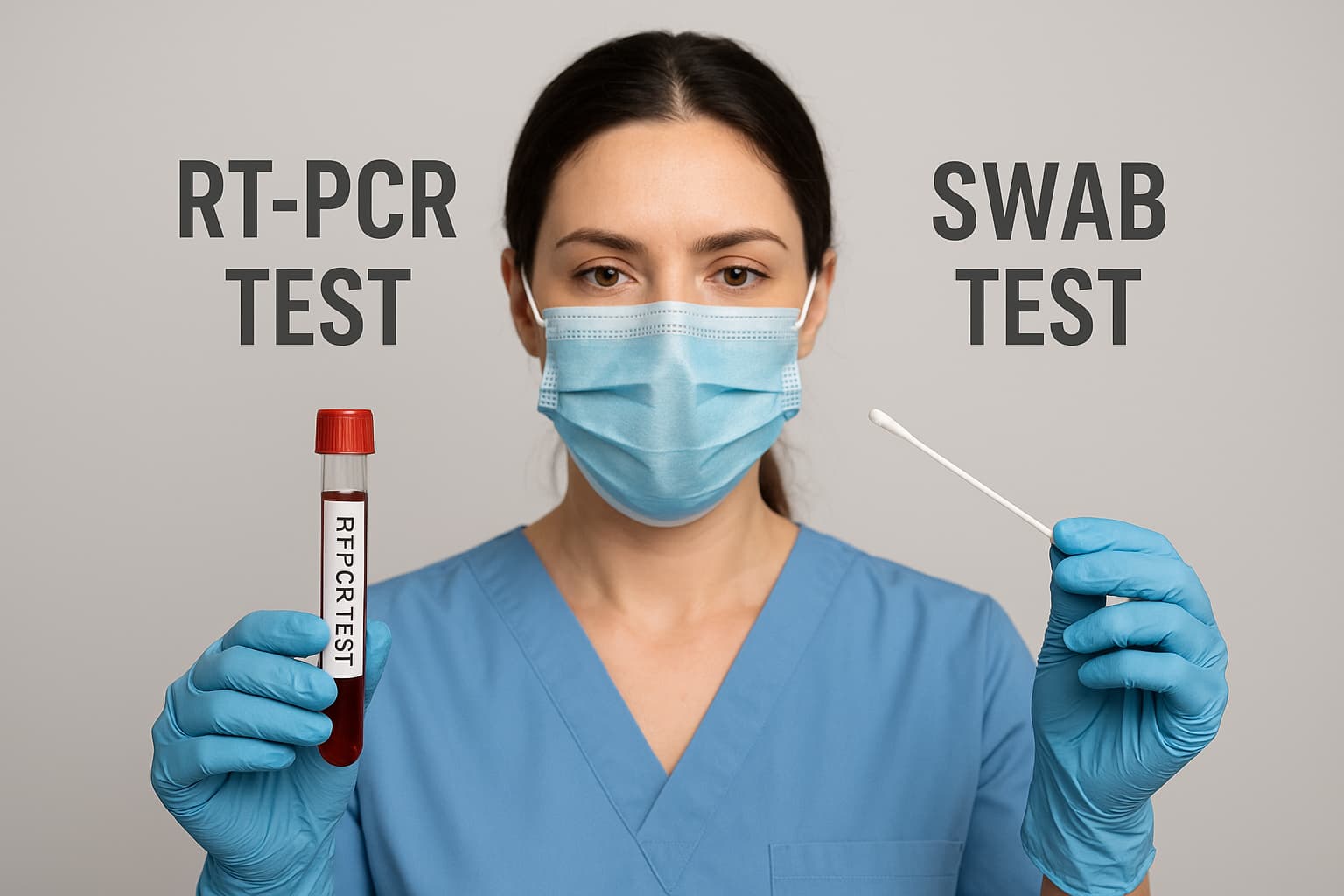
The conversation around COVID-19 diagnostics often uses terms interchangeably, which can blur the distinction between techniques and sample collection methods. As a healthcare professional, you know the value of precise terminology. Yet patients and even providers outside laboratory medicine may ask: Is the RT-PCR test the same as a swab test? The short answer is no. One refers to the diagnostic method, the other to the sampling technique. Let’s walk through the differences.
RT-PCR Test vs Swab Test: At a Glance
| Aspect | RT-PCR Test | Swab Test |
|---|---|---|
| Definition | A laboratory method that detects viral RNA using reverse transcription and polymerase chain reaction. | Collection technique using nasal, throat, or oral swabs to obtain samples. |
| Purpose | To confirm the presence of SARS-CoV-2 or other viral pathogens. | To gather biological material that will be analysed by RT-PCR or other tests. |
| Process | Involves RNA extraction, conversion to cDNA, and amplification with PCR machines. | Involves inserting a sterile swab into the nasal cavity, throat, or mouth. |
| Result Output | RT-PCR test report showing positive/negative result with Ct values. | Produces no result on its own; the swab is only the input for testing. |
| Accuracy Factors | Determined by laboratory protocols, reagents, and machine calibration. | Determined by the technique of collection, the site of sampling, and the patient’s viral load. |
| Common Terms | RT-PCR test meaning, RT-PCR test result. | COVID swab test, nasal swab COVID test, throat swab COVID test, mouth swab COVID test. |
RT-PCR Test Meaning
RT-PCR, or reverse transcription polymerase chain reaction, remains the reference standard for detecting SARS-CoV-2. The method begins by converting viral RNA into complementary DNA (cDNA). Using thermal cycling and PCR machines, the DNA is amplified into millions of copies, making viral genetic material detectable even when present in small amounts.
The role of PCR machines here is central. Their ability to perform repeated cycles of heating and cooling allows accurate amplification. For COVID-19 diagnostics, the sensitivity provides a clear advantage over other types of COVID-19 tests, particularly antigen-based rapid tests.
When you receive an RT-PCR test report, the result is based on threshold cycle values (Ct values), which correlate with viral load. While clinicians may interpret RT-PCR test results in context, the presence of amplified viral RNA establishes infection with high reliability.
What Is a Swab Test?
A “swab test” refers not to the analysis method but to the sample collection technique. Swabs are sterile applicators designed to collect respiratory specimens. Several sampling routes are used in COVID-19 diagnostics.
- Nasal swab COVID test: Sample from the anterior nares or deeper nasopharyngeal region.
- Throat swab COVID test: Sample collected from the oropharynx.
- Mouth swab COVID test: Less invasive but may show reduced sensitivity.
- 3 Swab Test: In some protocols, combined nasal, throat, and oral swabs are used to maximise viral recovery.
The accuracy of COVID swab test results depends heavily on the correct sampling technique, timing relative to exposure, and viral shedding patterns. Poor collection can lead to false negatives, even when RT-PCR is used.
RT-PCR Test vs Swab Test: The Core Difference
RT-PCR test: The laboratory method used to detect viral RNA.
Swab test: The method of sample collection, which can then be processed by RT-PCR, antigen testing, or other assays.
In practice, when patients say “swab test for coronavirus,” they usually mean the nasal or throat swab used for collection, regardless of whether it will be processed by RT-PCR or a rapid antigen assay. As pathologists, clarifying it improves communication and prevents misinterpretation.
Types of COVID Test and Where RT-PCR Fits In
There are two main categories of COVID-19 diagnostic testing.
Molecular tests: RT-PCR is the leading method. High sensitivity, longer turnaround time, and lab-based.
Antigen Tests: Rapid, point-of-care, lower sensitivity, immediate results.
While antigen tests provide quick screening, RT-PCR test reports remain the standard for confirmatory diagnosis. In many clinical settings, a positive antigen result is followed by molecular confirmation, particularly for high-stakes cases.
Interpreting RT-PCR and Swab Test Results
When reviewing RT-PCR test results, it is important to consider cycle threshold values alongside clinical presentation. Low CT values usually indicate higher viral load.
For COVID swab test results, the focus shifts to sampling adequacy. A well-collected nasopharyngeal swab analysed by RT-PCR is far more reliable than a poorly executed oral swab, even if the same molecular platform is used.
Conclusion
For pathologists and healthcare professionals, precise language matters. The phrase “RT-PCR test vs swab test” is not about two competing diagnostic methods. It is about differentiating between the analytical process and the sampling tool. By reinforcing the distinction, you ensure accuracy in both professional communication and patient education. It sustains confidence in laboratory medicine during and beyond the COVID-19 pandemic.
Also check - Types of PCR: Exploring Different Techniques in Molecular Biology
Get Started at ₹1!
Try Flabs for a full month for just ₹1.
Follow us on