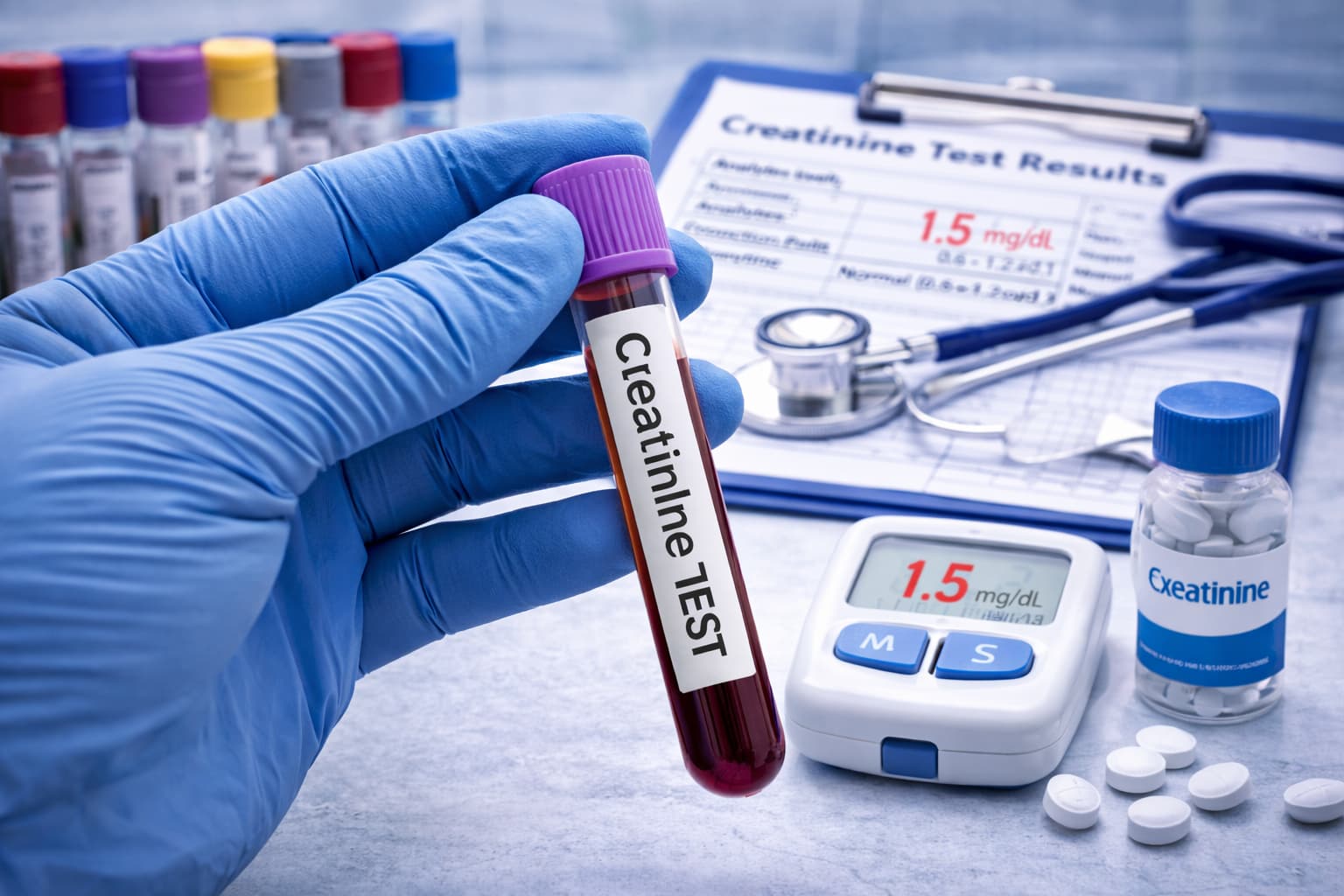
Nephrology relies on biomarkers, yet few hold the power of creatinine. For pathologists and healthcare professionals, this byproduct of muscle metabolism is the daily workhorse of renal assessment. However, it is possible to sometimes overlook the subtle variables shifting those serum values or the operational difficulties slowing down reporting.
We need to look at the creatinine test not just as a routine line item, but as a gateway to assessing renal filtration dynamics. You know the physiology: creatine phosphate breaks down in skeletal muscle, releasing creatinine into circulation at a fairly constant rate. The kidneys filter it freely. Most excretes unchanged.
Simple physiology doesn't always equal simple interpretation. Let's dissect the current standards for using the marker, the nuances in procedural variance, and how we handle the data in a modern lab environment.
Clinical Utility and Indications
Physicians do not request a creatinine test in isolation. It is part of a broader investigation. We see it utilised primarily for three purposes: screening, diagnosing acute kidney injury (AKI), and staging chronic kidney disease (CKD).
In acute settings, slight elevations matter. A rise of just 0.3 mg/dL can mean Stage 1 AKI. Early detection is the need of the hour here.
For chronic management, the focus shifts to trends over months or years. We also see frequent requests for monitoring drug nephrotoxicity, where the clearing capacity dictates dosage.
The utility extends beyond renal pathologies. Cardiac evaluations frequently require renal function baselines, and pre-operative protocols demand it to ensure a patient can metabolise anaesthesia safely.
Types of Assays and Procedures
While the endpoint remains the same, the journey to a result varies.
Serum Creatinine Analysis
The creatinine blood test is the standard. Most laboratories employ either the Jaffe reaction or enzymatic assays. The Jaffe method is cost-effective, but it suffers from interference by chromogens like bilirubin or cephalosporins. Enzymatic methods have higher specificity, but at a high cost.
Urine Collection and Clearance
Sometimes serum levels tell only half the story. The creatinine clearance test provides a more granular view of the Glomerular Filtration Rate (GFR). This requires a rigorous creatinine clearance test procedure, usually involving a 24-hour urine collection.
The protocol demands strict adherence. The patient discards the first morning void, collects all subsequent urine for 24 hours, and finishes with the next morning's first void. We then pair this volume data with a serum measurement taken during the collection window.
Errors here usually stem from improper collection rather than analytical failure. Incomplete bladder emptying or missed samples skew the calculation significantly.
Interpreting the Data: Beyond the Reference Range
A single number rarely provides the full picture. Creatinine test results require context. Factors like muscle mass, age, gender, and hydration status heavily influence the raw data. A bodybuilder with high muscle mass might present with elevated levels despite normal renal function. Conversely, an elderly patient with sarcopenia might show "normal" creatinine levels while masking significant renal impairment.
This limitation led to the widespread adoption of the creatinine eGFR test calculation. Reporting eGFR alongside the raw creatinine value normalises these variables.
Common Errors
- Fluid Overload: Dilution can artificially lower serum concentrations.
- Dietary Intake: A heavy cooked meat meal prior to the draw can cause transient spikes.
Medications: Drugs like cimetidine or trimethoprim inhibit tubular secretion, raising serum levels without affecting GFR.
Below is a comparison of how different variables impact the creatinine level test interpretation.
Economic and Operational Aspects
Pathology labs operate as businesses. We must balance clinical accuracy with fiscal reality. The creatinine test cost varies depending on the methodology used and the regional market.
In the Indian healthcare sector, for example, the creatinine test price in India remains highly competitive. Patients frequently compare rates, forcing labs to optimise their cost-per-test without sacrificing quality. A basic serum analysis might be inexpensive, but a full clearance panel involves more labour and consumable resources, naturally driving up the creatinine test price.
High-volume testing creates a specific set of challenges. When you run hundreds of renal panels daily, manual data entry becomes a significant liability. Transcription errors can lead to incorrect diagnoses or delayed treatments.
The Role of Machine Interfacing in Modern Labs
We cannot discuss creatinine test uses and volume without addressing the infrastructure handling the data. Modern pathology relies on speed and precision.
Manually transferring results from a biochemistry analyser to a report creates friction. It invites human error. This is where Lab Information System (LIS) integration proves imperative.
Why Integration Matters
For a high-frequency analyte like creatinine, Flabs Pathology Software brings a distinct advantage through its machine interfacing capabilities.
- Automated Data Capture: The software pulls results directly from the instrument. No manual typing means no transcription errors.
- Real-Time Data Processing: As soon as the analyser finishes the run, the result populates the system. This speeds up the validation process.
- Broad Connectivity: Whether you run a Beckman, Roche, or Abbott system, the software interfaces via standard protocols like HL7 and ASTM.
Consider the workflow for a creatinine clearance test. You have multiple data points: urine volume, urine creatinine, serum creatinine, height, and weight. Flabs allows for customisable reporting, calculating these derived values automatically.
Error Mitigation and Alerts
High creatinine values require immediate attention. Flabs Machine Interfacing supports custom alerts. If a result hits a critical threshold (e.g., >5.0 mg/dL), the system flags it instantly for the pathologist's review. This feature ensures that urgent cases do not get buried in a batch of routine screenings.
Note on Security: Patient data privacy is non-negotiable. Flabs employs robust data security with regulatory-compliant encryption, ensuring that while data flows freely between machines, it stays locked down against unauthorised access.
Optimising the Pathologist's Day
We entered this field to diagnose, not to manage spreadsheets. By letting software handle the "heavy lifting" of data transfer and formatting, we free up mental bandwidth. We can focus on the outliers, the complex cases, and the consults that require our expertise.
The Flabs solution provides effortless integration, so you don't need an IT degree to set it up. The goal is an optimised workflow where the instrument, the software, and the pathologist work in sync.
Moving Forward
Cystatin C and other biomarkers are gaining ground, but creatinine retains its position as the primary screen in renal assessment. The challenge for us isn't just knowing the science; it's managing the process.
We must ensure that every result leaving our lab is accurate, timely, and economically viable. Whether you are running a single-analyser clinic or a multi-site reference lab, the efficiency of your workflow defines your reputation.
Would you like to see how automated interfacing can streamline your renal panel reporting?
Contact Flabs today to schedule a demo and experience firsthand how our solutions can transform your lab operations.
Also check -
Serum Creatinine Test: Measuring Kidney Function Levels
SGPT Test: Importance and Normal Levels
Get Started at ₹1!
Try Flabs for a full month for just ₹1.
Follow us on