As a pathologist or healthcare professional, you encounter liver function tests daily. Among the panel, the Serum Glutamic Pyruvic Transaminase (SGPT) assessment stands out as a specific indicator of hepatocellular injury.
I
t is now more accurately called Alanine Aminotransferase (ALT). While newer biomarkers come up, the SGPT test is a primary tool for screening and monitoring liver health.
This discussion revisits the clinical utility of SGPT. We will explore its biochemical basis, procedural nuances, and the interpretative frameworks required for precise diagnosis.
The Biochemistry Behind the Marker
SGPT concentrates primarily in the cytosol of hepatocytes. It facilitates the conversion of alanine and alpha-ketoglutarate into pyruvate and glutamate. This reaction supports the glucose-alanine cycle.
Unlike Aspartate Aminotransferase (AST), which distributes across cardiac muscle, skeletal muscle, kidneys, and brain tissue, SGPT exhibits high liver specificity.
When hepatocyte membranes sustain damage, cytosolic enzymes leak into the systemic circulation. This leakage occurs even before overt clinical symptoms manifest.
The enzyme has a circulating half-life of approximately 47 hours. The duration allows for effective monitoring of acute injury resolution or chronic disease progression.
SGPT Test Procedure and Pre-Analytics
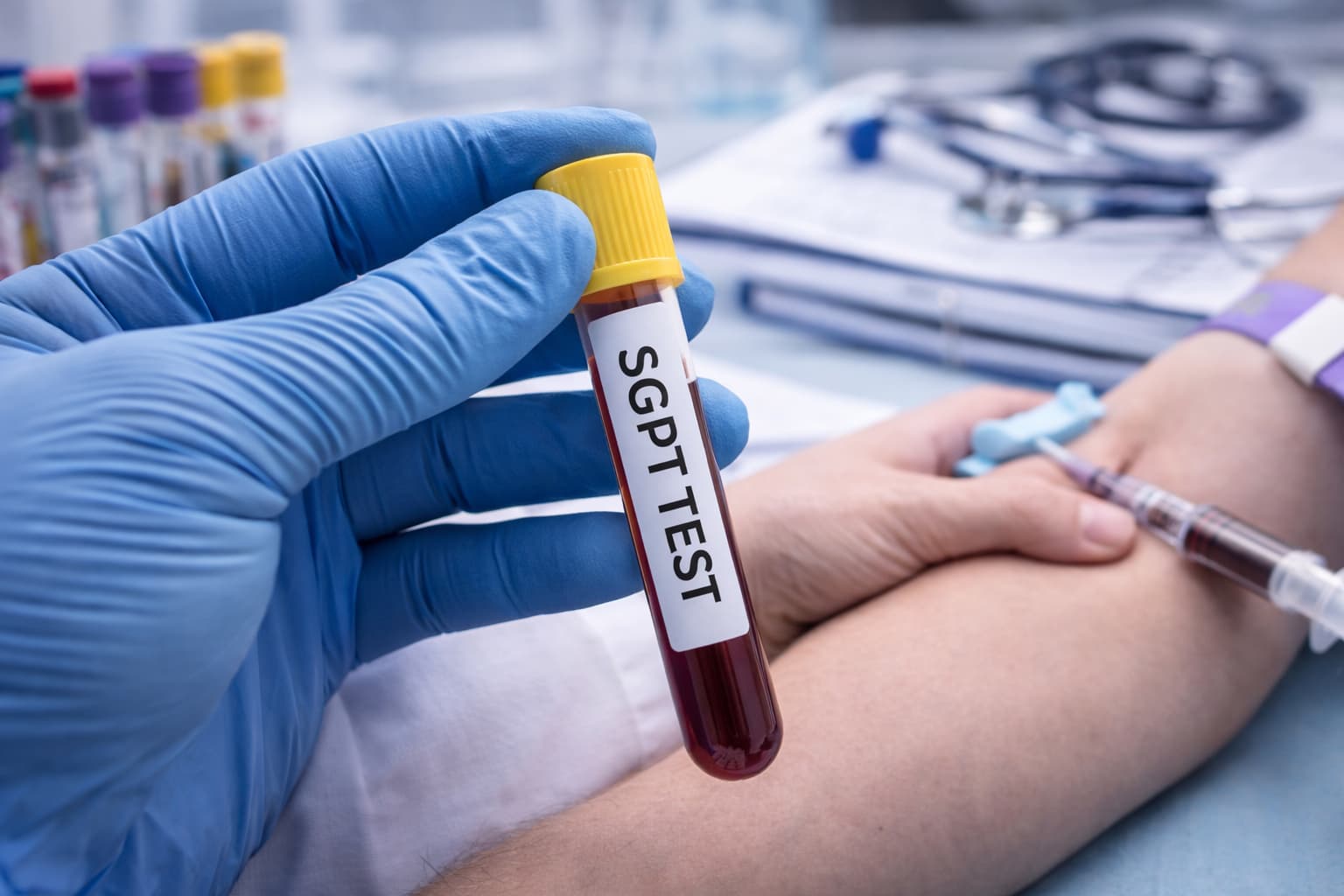
Accuracy begins at the phlebotomy chair. Standard blood collection methods involve venipuncture to obtain a serum sample.
Tube Type: Serum Separator Tube (SST) or Red Top. Plasma (Heparin or EDTA) is also acceptable in certain assay formulations.
Sample Volume: Generally, 1 mL of serum.
Handling: Hemolysis can falsely elevate results because erythrocytes contain aminotransferases. Separating serum from cells promptly prevents this artefact.
Lab Equipment and Assay Principles
Modern chemistry analysers utilise kinetic UV methods to quantify SGPT activity. The reaction measures the rate of NADH oxidation to NAD+. This rate is directly proportional to the ALT activity in the sample.
As you oversee laboratory operations, ensuring daily quality control on these analysers maintains the integrity of the results.
SGPT Blood Test Price
Cost significantly influences patient compliance. The SGPT test price is relatively low compared to advanced molecular diagnostics. In India, the cost generally ranges between ₹100 and ₹300, depending on the facility.
Defining the Reference Interval
"Normal" is a statistical construct rather than a biological absolute. Reference intervals vary by laboratory due to differences in assay methodology and the local population.
However, clinical consensus provides a baseline.
| Group | Reference Range (IU/L) |
|---|---|
| Adult Males | 10 – 40 |
| Adult Females | 7 – 35 |
| Infants | May be up to 2x adult upper limit |
| Geriatric | Slightly higher baseline possible |
Note: The SGPT test normal range for female patients is lower than for males. Hormonal factors and muscle mass differences contribute to this variance.
Interpreting Elevated Levels
We categorise elevations based on the magnitude of increase relative to the upper limit of normal (ULN).
1. Mild Elevation (< 5x ULN)
This pattern appears most frequently in clinical practice. It poses a diagnostic challenge due to the broad differential.
- Chronic Viral Hepatitis: Hepatitis B and C often present with persistent mild elevations.
- Steatotic Liver Disease: Metabolic Dysfunction-Associated Steatotic Liver Disease (MASLD) is a leading cause.
- Medications: Statins and NSAIDs can induce transient enzyme release.
2. Moderate Elevation (5 – 15x ULN)
Levels in this tier demand immediate investigation.
- Alcoholic Hepatitis: The AST/ALT ratio becomes informative here. A ratio greater than 2:1 strongly suggests alcohol aetiology.
- Acute Viral Hepatitis: Early stages may present in this range before spiking higher.
3. Severe Elevation (> 15x ULN)
Massive hepatocellular necrosis drives these numbers.
- Ischemic Hepatitis: "Shock liver" results from systemic hypoperfusion.
- Toxic Injury: Acetaminophen overdose is a classic precipitant.
- Acute Viral Hepatitis: Peak illness can drive levels into the thousands.
The Role of the AST/ALT Ratio
The SGPT test full form (Serum Glutamic Pyruvic Transaminase) hints at its older nomenclature, but the AST/ALT ratio (De Ritis ratio) gives it a modern context.
- Ratio < 1: Suggests NAFLD or acute viral hepatitis.
- Ratio > 2: Suggests alcoholic liver disease or Wilson’s disease.
Non-Hepatic Causes of Variation
While SGPT is liver-specific, extra-hepatic factors influence the readout.
- Muscle Injury: Severe rhabdomyolysis releases enough enzyme to alter the SGPT meaning in blood test results.
- Circadian Rhythm: Levels peak in the afternoon and reach a nadir in the early morning.
- Exercise: Intense physical activity can cause transient spikes.
Why SGPT Is "Used For" Diagnosis
Clinicians order the SGPT test for diagnosis to differentiate hepatocellular injury from cholestatic patterns.
- Hepatocellular Pattern: ALT and AST elevation predominates.
- Cholestatic Pattern: Alkaline Phosphatase (ALP) and Gamma-Glutamyl Transferase (GGT) elevation predominates.
Recognising these patterns directs the next diagnostic steps. A hepatocellular pattern prompts viral serologies or autoimmune markers. A cholestatic pattern prompts imaging like ultrasound or MRCP.
Actionable Insights for the Lab
As you validate results, keep an eye on discordant findings. An isolated high SGPT with normal AST and ALP warrants a medication review or history taking for supplement use. Herbal supplements are an under-recognised cause of hepatotoxicity.
Standardisation of reporting units (IU/L) and reference intervals across your network reduces confusion. It ensures that a patient moving between clinics receives consistent care.
Conclusion
The SGPT test is a fundamental assay in the metabolic profile. Its specificity for liver injury makes it superior to AST for hepatic screening. By understanding the nuances of the SGPT test procedure, biological variations, and the differential diagnosis of elevated levels, you provide sharper insights to the clinical team.
Your role in interpreting these numbers goes beyond verifying the assay. You connect the biochemical data to the patient’s clinical reality. That synthesis drives better outcomes.
Also check - Oxidation Fermentation Test: How It Determines Bacterial Metabolism
Get Started at ₹1!
Try Flabs for a full month for just ₹1.
Follow us on