The Differential Leukocyte Count (DLC) constitutes a primary component of haematologic assessment, quantifying the relative percentage of specific white blood cell types within peripheral blood. By distinguishing between neutrophils, lymphocytes, monocytes, eosinophils, and basophils, clinicians gain granular insights into a patient’s immune status.
The test aids in differentiating bacterial infections from viral etiologies, identifying allergic responses, and flagging haematologic malignancies. Unlike a Total Leukocyte Count (TLC), which provides an aggregate number, the DLC provides details necessary for precise diagnosis. Pathologists rely on m to interpret complex physiological responses to disease.
Decoding the Differential Leukocyte Count
For established practitioners, the concept is routine. Yet for students and junior technicians, recalling the DLC full form in medical terminology is the first step in haematology. It is “Differential Leukocyte Count”.
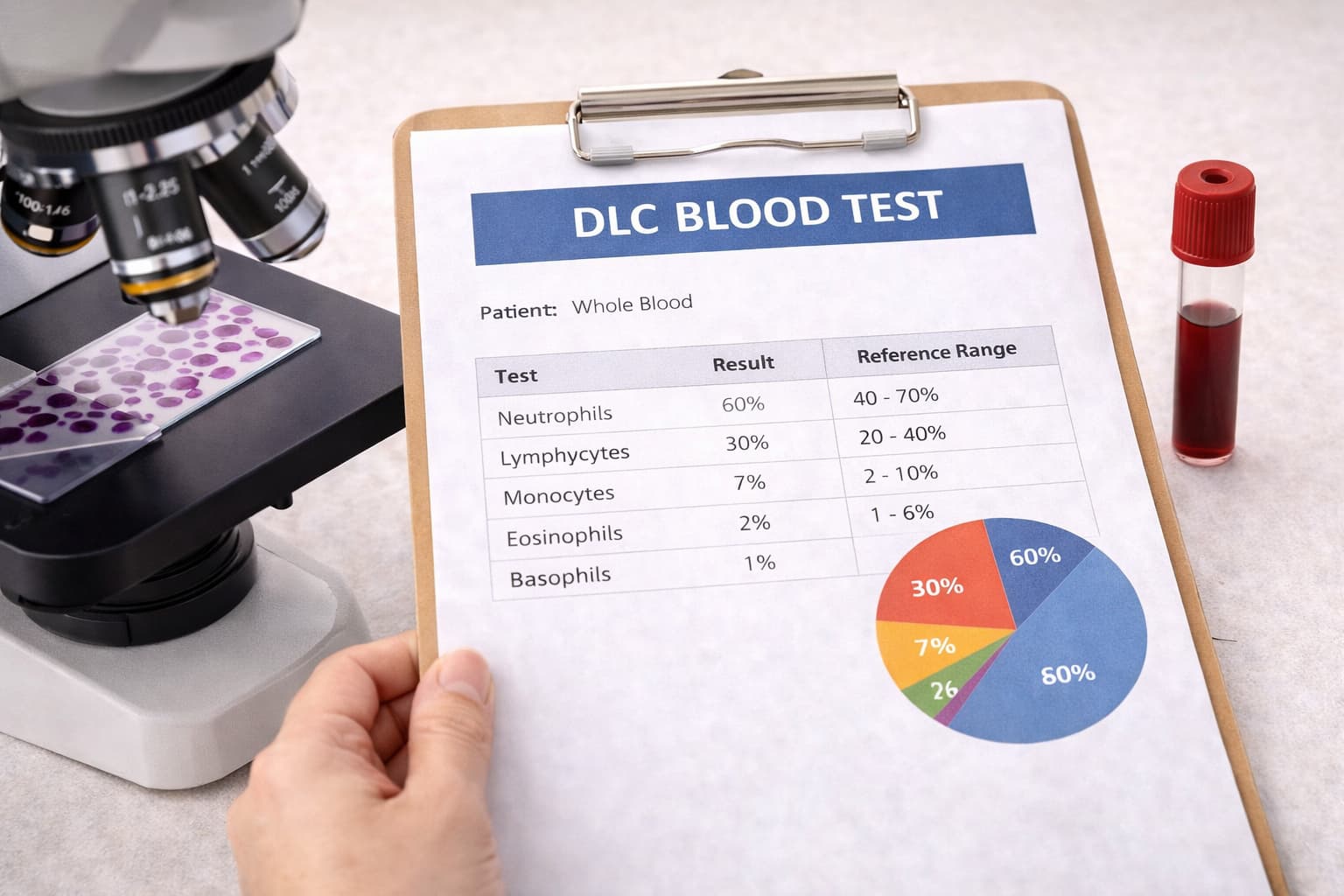
The DLC principle rests on the morphological differentiation of leukocytes. White blood cells are not uniform; distinct subsets perform specialised roles in immune defence. A DLC test determines the percentage of each cell type present in a sample of 100 white blood cells.
This distribution reveals which arm of the immune system is currently active. While automated haematology analysers provide rapid results, manual microscopy is imperative for verifying abnormalities.
Clinical Indication
Physicians request a differential leukocyte count DLC to investigate a broad spectrum of clinical presentations.
- Differentiating Infections: High neutrophil counts point toward bacterial origins, whereas elevated lymphocytes suggest viral pathologies.
- Allergy and Parasite Assessment: Eosinophilia provides strong evidence for allergic reactions, asthma, or parasitic burdens.
- Autoimmune Monitoring: Chronic inflammation often manifests as monocytosis.
- Marrow Evaluation: Leukaemia and aplastic anaemia display distinct patterns in DLC test report data.
- Therapeutic Oversight: Patients undergoing chemotherapy or immunosuppression require frequent monitoring to prevent neutropenia.
The DLC Procedure
The DLC procedure requires a venous blood sample collected in an EDTA vial to prevent coagulation. For neonates, a heel prick suffices.
Automated vs. Manual Analysis
Modern pathology lab equipment utilises flow cytometry or impedance sizing to generate a differential leukocyte count procedure result automatically. However, when flags appear, a manual review becomes necessary.
The Microscopic View
Viewing DLC under a microscope involves creating a thin blood smear on a glass slide, usually stained with Leishman or Giemsa stain. The pathologist or technician scans the smear, identifying cells based on nucleus shape and granule absorption.
The DLC calculation formula for manual counting:

Interpretation and Normal Ranges
Pathologists must correlate the DLC in blood with the patient's clinical history. Below is a standard DLC table reference. Note that a DLC normal range can vary slightly between laboratories and demographic groups.
| WBC Type | Normal Range | Primary Function |
|---|---|---|
| Neutrophils | 40% – 75% | First responders to bacterial infection and inflammation. |
| Lymphocytes | 20% – 40% | Antibody production (B-cells) and direct cellular attack (T-cells); viral defence. |
| Monocytes | 2% – 10% | Phagocytosis: defence against chronic infections. |
| Eosinophils | 1% – 6% | Response to allergens and parasitic infections. |
| Basophils | < 1% | Release of histamine; involved in allergic responses and inflammation. |
DLC vs. ALC: The Distinction
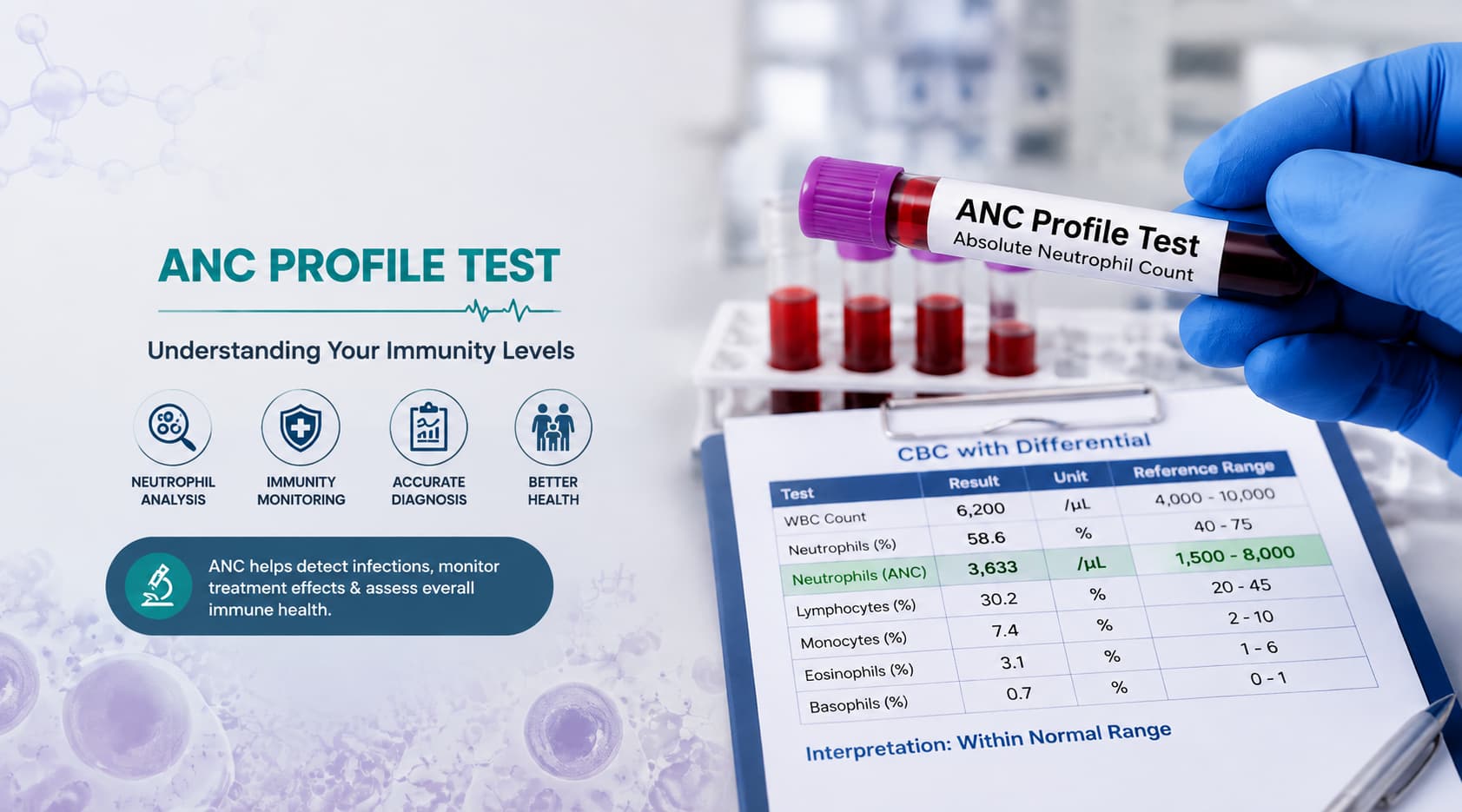
Confusing the normal DLC count (percentage) with the Absolute Leukocyte Count (ALC) is a common pitfall. The DLC shows the proportion of cells. The ALC shows the actual number of cells per microliter of blood.
For example, a patient with a low total WBC count might have 80% neutrophils. While the percentage appears high, the absolute number of neutrophils could still be insufficient to fight infection. Both metrics must be reviewed in tandem for proper diagnosis.
Other Haematology Tests
- CBC (Complete Blood Count): The overall context.
- ESR: A marker for non-specific inflammation.
- Haemoglobin & Hematocrit: Assesses anaemia.
- Platelet Count: Evaluates clotting capability.
Optimising Laboratory Operations with Advanced LIS
For pathology labs in India and globally, accuracy is only half the battle. The other half is efficiency. Patients and referring doctors expect a rapid turnaround time. Managing manual smear reviews, automated data streams, and reporting formats can create bottlenecks.
This is where integrating robust software becomes vital.
Streamlining Operations
Flabs LIS software is a flawless solution for modern diagnostic labs. By automating the data flow from analysers directly to the report format, labs reduce manual entry errors.
The Patient & Doctor Experience
The modern healthcare consumer demands instant access. Flabs enables labs to generate QR-coded reports automatically. Patients can retrieve their results via WhatsApp or a dedicated portal. It reduces front-desk inquiries.
Operational Efficiency and Security
Data security remains paramount. Flabs ensures compliance with industry standards with secure backups and disaster recovery.
- Smart Integration: Connects with existing lab equipment.
- Scalability: Suitable for single-centre labs or multi-location chains.
- Financial Management: Tracks billing and inventory alongside.
Using AI-powered tools within Flabs, pathologists can focus on the complex task of cell identification rather than administrative burdens.
Final Thoughts
The differential leukocyte count test provides a window into the body’s cellular defence mechanisms. From identifying simple viral fevers to monitoring complex leukaemias, the utility of the DLC is undeniable. However, the operational side of pathology requires modernisation. It should also make the work easier for pathologists and healthcare professionals.
For labs aiming to improve throughput and reliability, adopting a comprehensive Laboratory Information System is the logical next step.
Ready to Upgrade Your Lab's Efficiency?
Transform your lab operations with a 5-Day Free Trial of Flabs Pathology Software today. Experience effortless instrument integration, automated reporting, and patient engagement tools designed for modern healthcare demands.
Get Started at ₹1!
Try Flabs for a full month for just ₹1.
Follow us on