A growing share of coagulation assessments now requires deeper insight into fibrinogen function, particularly in settings where bleeding, thrombosis, or liver impairment complicate diagnosis. As more laboratories refine coagulation panels, the fibrinogen test becomes a central marker for interpreting clot dynamics and disease progression.
Expanding its use across haematology, obstetrics, oncology, and perioperative medicine allows clinicians to connect laboratory values with practical decision-making, guiding therapy in real time.
What a Fibrinogen Test Measures
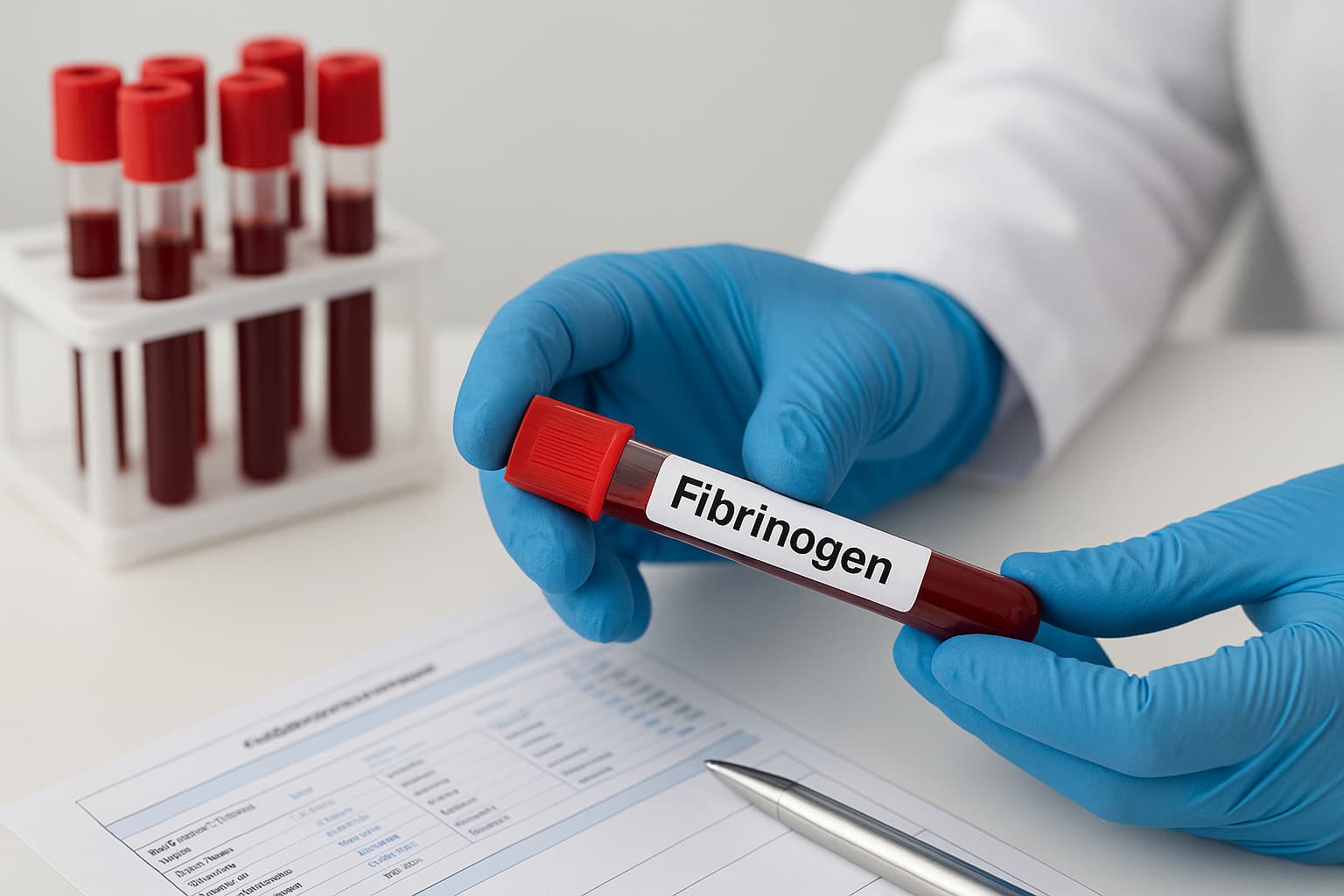
A fibrinogen test, also referred to as a fibrinogen blood test or serum fibrinogen test, evaluates both the amount and the functional capacity of Factor I. Synthesised in the liver, fibrinogen is converted to fibrin during coagulation, forming a stabilising mesh over a developing clot. Any disturbance in blood clot fibrinogen concentration or activity alters haemostasis and may contribute to bleeding or unwanted thrombosis.
There are two laboratory methodologies used: the Fibrinogen Activity Test and the Fibrinogen Antigen Test
1. Fibrinogen Activity Test
- Measures the time taken for a clot to form after thrombin is introduced.
- Provides insight into functional fibrinogen.
- Reported in mg/dL.
2. Fibrinogen Antigen Test
- Evaluates the quantity of fibrinogen present.
- Useful when activity results fall outside the expected range.
- Helps distinguish between quantitative vs qualitative abnormalities.
Correlation of both assays is essential for characterising inherited or acquired fibrinogen disorders.
Why a Fibrinogen Test Is Ordered
Clinicians request a plasma fibrinogen test in a wide spectrum of scenarios, ranging from acute care settings to longitudinal disease monitoring.
- Excessive bleeding, unexplained bruising, or symptoms of abnormal haemostasis.
- Prolonged PT or aPTT.
- Suspected disseminated intravascular coagulation (DIC).
- Liver function evaluation, given hepatic synthesis of fibrinogen.
- Unexplained thrombosis or recurrent clot events.
- Assessment of inherited fibrinogen abnormalities.
- Monitoring pregnancies with haemorrhagic risk.
- Screening before surgical procedures.
- Evaluating systemic inflammation, as fibrinogen is an acute-phase reactant.
- Cardiovascular risk assessment, with links to stroke and thrombotic events.
Types of Fibrinogen Disorders
Distinguishing between fibrinogen defects is necessary for accurate diagnosis and treatment planning.
| Type | Description |
|---|---|
| Afibrinogenemia | Complete absence of functional fibrinogen |
| Hypofibrinogenemia | Low fibrinogen concentration |
| Dysfibrinogenemia | Normal quantity with abnormal function |
| Hypodysfibrinogenemia | Reduced quantity and impaired function |
Each disorder alters clot formation differently, influencing bleeding risk, thrombotic patterns, and therapeutic requirements.
Normal and Abnormal Fibrinogen Levels
Most laboratories reference a normal fibrinogen level of 200–400 mg/dL (2–4 g/L). However, the fibrinogen normal range may vary with age, pregnancy, or underlying conditions.
Low fibrinogen may indicate
- DIC
- Severe hepatic impairment
- Genetic deficiencies
- Excessive bleeding
- Impaired clot formation
High fibrinogen may reflect
- Infection or systemic inflammation
- Pregnancy
- Age-related increases, obesity, or tobacco exposure
- Elevated cardiovascular risk, such as DVT or stroke
A normal result supports intact clotting function. But it cannot exclude all haemostatic disorders.
How the Test Is Performed
A fibrinogen test requires venipuncture performed by trained personnel, using proper blood collection equipment.
- The site is cleansed with alcohol.
- A tourniquet is applied to identify the vein.
- Blood is collected into anticoagulated tubes (usually sodium citrate).
- The tourniquet is removed, and a bandage is applied.
No fasting or major preparation is necessary; however, certain anticoagulants may need temporary adjustment as directed by the supervising clinician.
Interpreting Results
Interpretation requires integration with PT, aPTT, clinical symptoms, medical history, medication profile, and any underlying systemic condition
Patterns in values can differentiate between consumption, impaired synthesis, dilutional loss, or qualitative dysfunction. When discrepancies between activity and antigen appear, further assays such as thrombin time, reptilase time, or genetic panels may be warranted.
Risks are minimal, limited to mild discomfort, bruising, lightheadedness, or in rare cases, infection at the puncture site.
When Turnaround Time Matters
In acute bleeding, perioperative settings, obstetric haemorrhage, or suspected DIC, laboratories prioritise a fast turnaround time for fibrinogen testing. Rapid reporting supports decisions around transfusion, plasma administration, or fibrinogen concentrate infusion. Many modern analysers allow streamlined processing to deliver results within minutes in emergency departments or surgical theatres.
Routine assessments may follow standard lab schedules, though workflow optimisation remains vital in high-volume haematology departments.
Management When Levels Are Low
Treatment focuses on restoring adequate fibrinogen concentration, especially during bleeding or invasive procedures. Intravenous fibrinogen replacement may use,
- Fibrinogen concentrate
- Cryoprecipitate
- Fresh frozen plasma (less preferred due to volume load)
Therapy is continued until laboratory values return to a safe range suitable for the clinical situation. Repeat testing assesses the adequacy of the correction.
Availability and Cost
The fibrinogen test is performed exclusively in laboratory settings; no at-home device measures fibrinogen with the required precision. The cost of the fibrinogen test can vary based on region, assay type, and insurance coverage. Many institutions bundle fibrinogen testing within coagulation panels to streamline workflows and reduce expenses.
Summary
The fibrinogen test is essential across multiple specialities for assessing both bleeding and thrombotic risk. Its dual capacity to measure quantity and function provides refined insight into haemostatic balance, liver synthesis, systemic inflammation, and inherited disorders.
When integrated with coagulation assays and clinical presentation, results shape decisions that influence patient outcomes across emergency care, perioperative environments, haematology, cardiology, and obstetrics.
In the end, laboratories should be equipped with optimised venipuncture protocols, validated assay methods, and efficient turnaround time processes. It ensures accurate assessment.
Also check - Gram Stain Test: What It Detects and How It Works
Get Started at ₹1!
Try Flabs for a full month for just ₹1.
Follow us on