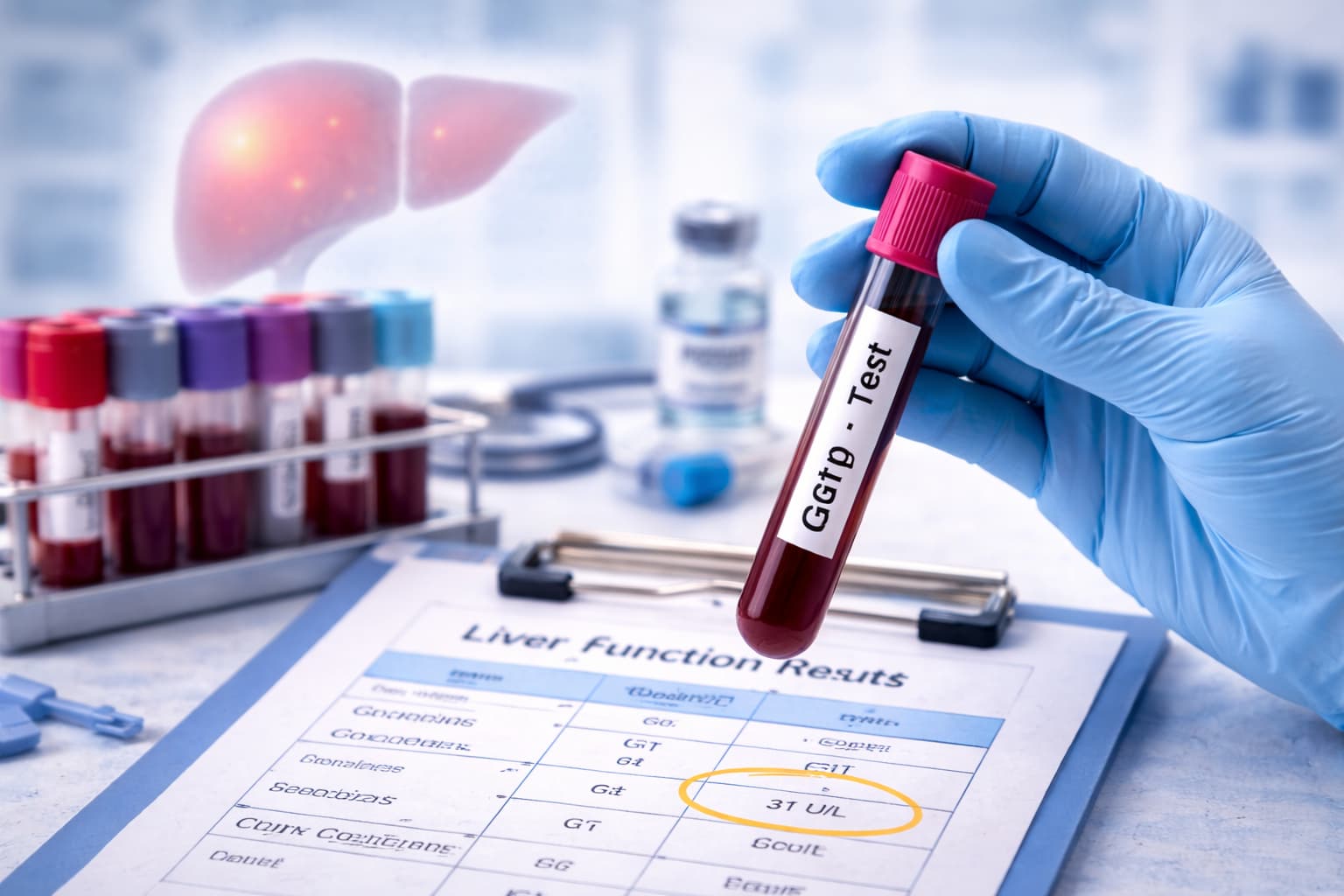
Gamma-glutamyl transferase (GGT) is in a curious position within the liver function panel. You know the drill: high sensitivity, low specificity. It flags liver dysfunction before other markers twitch, yet it points fingers at everything from biliary obstruction to a glass of wine the night before.
For pathology labs in India and across the globe, the challenge lies not in running the assay, but in delivering results that empower clinicians to differentiate between hepatocellular damage, cholestasis, and extra-hepatic variables.
Knowing the utility of a GGTp blood test requires looking past the numbers and into the metabolic narrative of the patient. Let's dissect the pre-analytical variables, interpretative ranges, and how modern LIMS integration streamlines the workflows.
The Clinical Imperative: Why Order It?
You rarely see GGT ordered in isolation. Its primary value emerges when paired with Alkaline Phosphatase (ALP). An elevated ALP can stem from bone turnover (think Paget’s disease or bone metastases) or hepatobiliary issues.
Here, GGT acts as the tiebreaker. Since the enzyme concentrates in the liver and bile ducts but remains absent in bone tissue, a parallel rise confirms a hepatic origin.
Conversely, isolated elevated results in GGTp blood test panels, where ALT, AST, and ALP stay at baseline, often indicate enzyme induction rather than cell necrosis.
Substances like ethanol, phenytoin, or barbiturates induce microsomal production, spiking levels without immediate structural damage.
Metabolic Sensitivity
Beyond the hepatobiliary tree, the enzyme plays a crucial role in glutathione metabolism. It catalyses the transfer of gamma-glutamyl moieties, pivotal for antioxidant defence.
Current research even correlates the GGTp blood test with cardiovascular risk and metabolic syndrome, transforming it from a simple liver marker to a broader gauge of oxidative stress.
Pre-Analytical Variables and Collection
Accuracy starts at phlebotomy. Pre-analytical errors account for a significant chunk of lab discrepancies. To ensure the GGTp blood test results reflect true physiology, strict adherence to protocol is mandatory.
The standard blood collection procedure involves venipuncture into a serum separator tube (SST) or a plain red-top tube. While hemolysis interferes less with GGT than with LDH or Potassium, severe red cell lysis can still dilute the sample, skewing the readout.
Patient preparation holds equal weight. Since GGT levels respond rapidly to intake, advise patients to:
- Fast for at least 8 hours prior.
- Abstain from alcohol for 24 to 48 hours.
- Disclose all supplements, as herbal preparations can silently drive up numbers.
- Inform if you’re pregnant or suspect.
Interpreting the Data: Ranges and Deviations
Reference intervals fluctuate based on instrumentation and reagents. However, most laboratories adhere to ranges stratified by sex, given that hormonal profiles influence enzyme activity.
| Demographic | Reference Range (U/L) | Clinical Context |
|---|---|---|
| Adult Males | 10–50 U/L | Higher baseline due to metabolic mass. |
| Adult Females | 7–32 U/L | Levels may rise with age or hormonal therapy. |
| Children | Variable | Infants show higher activity due to immature liver metabolism. |
| Elderly | Slightly Higher | Natural physiological drift in enzyme clearance. |
When the Numbers Spike
A GGTp blood test with a high readout triggers a specific differential diagnosis algorithm. The magnitude of elevation matters.
Mild Elevation (1-2x normal): Often points to fatty liver (NAFLD), medication effects, or moderate alcohol consumption.
Moderate to Severe (5x+ normal): Strongly suggests biliary obstruction (cholestasis) or acute viral hepatitis. Tumours blocking the bile duct will send these numbers soaring faster than aminotransferases.
Be aware that high GGTp in blood test reports can persist. The half-life of GGT is roughly 14 to 26 days. Even after the insult (like alcohol) ceases, normalisation takes weeks.
What about a low result in the GGTp blood test? Generally, clinicians do not view low values as pathological. In fact, a value near the bottom of the reference range usually confirms a healthy liver and patent bile ducts. However, certain hormonal treatments or hypothyroidism might suppress enzyme activity slightly. For all practical purposes, a "low" result signals stability.
Improving Lab Operations and Turnaround
Running the chemistry is only half the battle. Getting what is GGTp in blood test results translated into a finalised report quickly determines laboratory efficiency. In a high-volume setting, manual data entry between the auto-analyser and the reporting system introduces friction and error risk.
Automating the flow of data via Machine Interfacing is where modern labs gain an edge.
The Role of LIMS Integration
Connect your biochemistry analysers directly to a Laboratory Information Management System (LIMS) like Flabs to slash your turnaround time. Two-way communication allows the LIS to push orders to the machine and pull results instantly upon completion.
Error Mitigation: Manual transcription leads to typos. Direct interfacing eliminates human touchpoints during data transfer.
Real-Time Validation: Automatic flags for critical values (panic highs) ensure immediate pathologist review.
Workflow Velocity: As soon as the analyser finishes, the draft report is ready. No waiting for batch entry.
For a pathologist, that means spending less time on administrative checks and more time on complex diagnostics.
The Bottom Line
GGT is a workhorse of the hepatic panel. Its ability to distinguish liver aetiology from bone pathology makes it indispensable. However, its non-specific nature demands careful clinical correlation. By understanding the nuance of GGTp blood test interpretation, you can provide clearer answers to referring physicians.
Pairing clinical expertise with robust operational software ensures those answers arrive with speed and precision.
Ready to Optimise Your Lab's Workflow?
Would you like to explore how Flabs can automate your biochemistry analyser interfacing to reduce errors and speed up reporting?
Also check - Fasting Insulin Test: Importance and Interpretation
Get Started at ₹1!
Try Flabs for a full month for just ₹1.
Follow us on