Laboratory incubators are standard equipment in clinical and pathology labs. Their primary role is to provide a controlled environment that supports the growth and maintenance of microbial cultures, cell lines, and other biological samples. Without a stable temperature and atmospheric conditions, many lab procedures would be ineffective or compromised. Among the pathology lab equipment, incubators are simply indispensable.
The application of incubator systems is wide-ranging. From microbial culture in microbiology labs to cell growth in clinical research, incubators ensure the objectives of research and diagnosis are accomplished.
What Is a Laboratory Incubator?
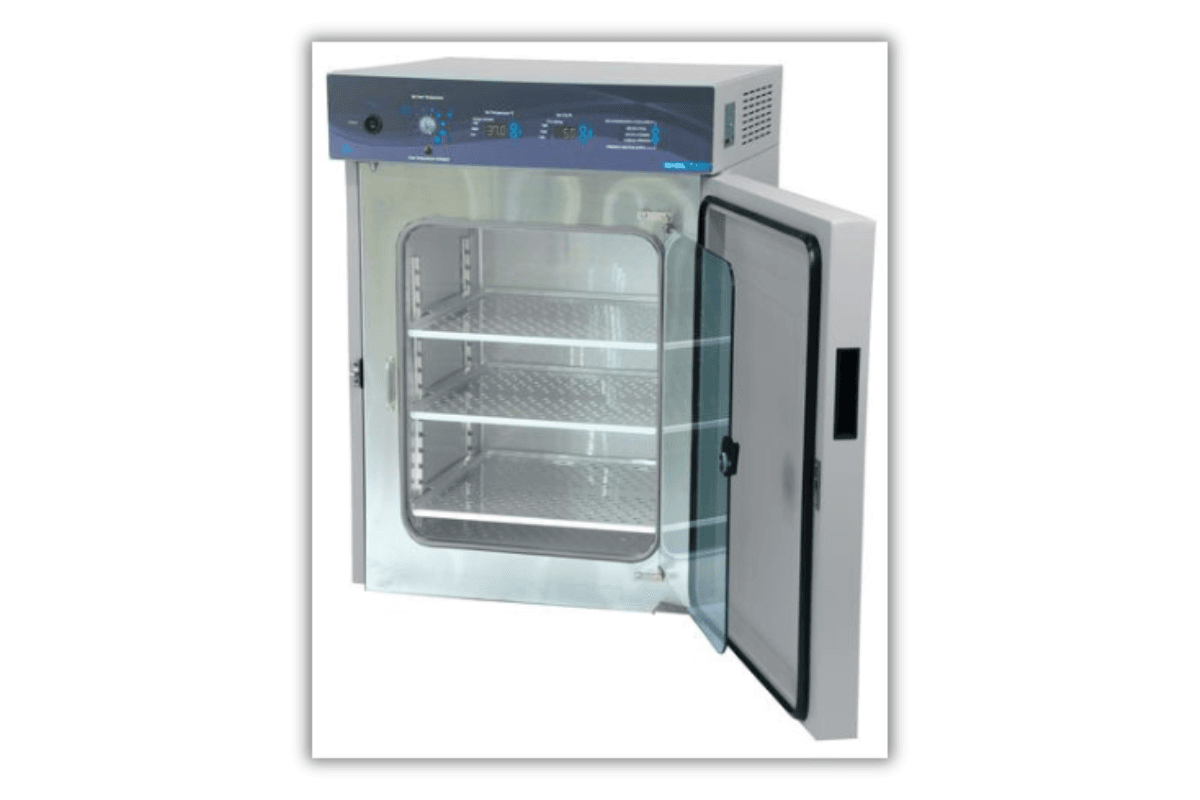
A laboratory incubator is a temperature-controlled chamber used to create the right growth conditions for microorganisms or cells. Depending on the design, incubators may include humidity regulation, CO2 control, and air circulation. These features help maintain uniform environmental conditions throughout the chamber.
Laboratory incubators are available in multiple formats. Common examples include gassed and gasless models, shaking incubators for agitation-based growth, CO2 incubators for mammalian cells, and BOD (biological oxygen demand) incubators for environmental monitoring.
Incubator Uses in Laboratory Work
Incubator uses in laboratory temperature control are central to several research and clinical applications. Their main function is to simulate in vivo conditions to support biological activity.
Uses of Incubators
- Growing bacterial cultures.
- Cultivating fungi or yeast.
- Maintaining mammalian or plant cell lines.
- Supporting protein expression systems.
- Conducting antibiotic sensitivity testing.
- Measuring biological oxygen demand in environmental samples.
- Biochemical and haematological studies.
- Pharmaceutical development work.
- Food analysis and safety testing.
Each application of incubator functions relies on consistent internal conditions to produce valid, reproducible results.
Incubator Uses in Microbiology
Incubators are a daily-use component in microbiology laboratories. Bacterial cultures are commonly grown at 37°C in aerobic or anaerobic conditions. Fungi like Candida or Aspergillus species require different conditions, such as a lower temperature or extended growth time.
CO2 incubators allow precise control of carbon dioxide concentration and humidity. These are essential for culturing mammalian cells, which rely on a balance of CO2 and bicarbonate in their media to maintain pH. Microbiological incubators generally operate in the temperature range of 20–80°C.
Types of Incubators in Laboratory Settings
Choosing the right model depends on the use case. Common types of incubators in laboratory practice are given below.
| Type of Incubator | Primary Use |
|---|---|
| Standard Microbiological Incubators | Maintain fixed temperatures for bacterial and fungal culture growth. |
| CO₂ Incubators | Maintain 5–10% CO₂ levels for mammalian and stem cell cultures. |
| Shaking Incubators | Provide continuous movement for mixing or oxygenation, such as with E. coli. |
| BOD Incubators | Used in environmental labs for testing water and wastewater (Biological Oxygen Demand) with a temperature range of 20–45°C. |
| Anaerobic Incubators | Maintain oxygen-free environments for cultivating anaerobic bacteria. |
| Dry Bath Incubators | Feature single or dual heating blocks for precise temperature control of small samples in tubes. |
| Hybridisation Ovens | Specialised for nucleic acid hybridisation procedures with precise temperature regulation. |
Incubator Working Principle
The working principle of a laboratory incubator involves maintaining a stable, enclosed environment with precise temperature, humidity, and sometimes CO2 levels. A thermostat regulates the internal temperature. Air circulation systems through internal fans, ensure uniform distribution and reduce hot or cold spots.
In CO2 incubators, sensors monitor gas concentrations, adjusting inflow to maintain desired levels. Some units also incorporate HEPA filters for contamination control and water pans to regulate humidity.
Many modern laboratory incubators include programmable timers that can cycle through different temperature and humidity profiles. They facilitate complex experimental protocols without constant manual adjustment.
Incubator Components
Incubator components vary by model. But the most common parts include the following ones.
- Thermostat and heating system: Maintains the desired temperature.
- Shelving and chamber interior: Usually made from stainless steel for easy sterilisation.
- Air circulation fan: Ensures even temperature distribution.
- Humidity control (optional): Maintains consistent internal humidity.
- CO2 regulation (in gas models): For incubators used in cell culture.
- Digital display and controller: Allows users to set and monitor internal conditions.
Advanced models may include more intelligent systems. These parts work together to ensure reliable environmental conditions for a wide range of laboratory needs.
Selecting an Incubator for Pathology Labs
When selecting an incubator, lab professionals should assess specific operational requirements.
Temperature Range: Ensure the incubator can maintain the range needed for your organisms. For example, mammalian cells require 37°C with high humidity and 5–10% CO2, while environmental bacteria may need 25–30°C without additional gas control.
Humidity and CO2 Control: CO2 and humidity control is necessary for some cell cultures. Look for incubators with built-in sensors and regulators if these parameters are required.
Size and Layout: Choose the right capacity for your lab. Benchtop models save space, while larger units offer higher throughput.
Shaking Feature: For cell suspensions or protein expression, select an incubator with shaking functionality.
Compliance and Calibration: Accredited labs may require incubators with calibration records and compliance with regulatory standards.
Contamination Prevention: Consider models with built-in UV sterilisation, HEPA filtration, or antimicrobial coatings to minimise contamination risks.
For seamless lab operations, incubators should integrate well with pathology laboratory software to record run parameters and quality logs.
Laboratory Incubator Price Ranges in India
The cost of laboratory incubators in India varies based on capacity, temperature range, additional features, and the intended application. Basic models for general bacteriological use are available under ₹25,000.
Mid-range incubators are priced between ₹25,000 and ₹90,000. They include digital temperature displays, compact footprints and better insulation. These models are appropriate for laboratories that need more precise control without CO2 regulation or shaking functionality.
Advanced incubators with capacities above 50 litres, programmable temperature settings, and improved air circulation generally fall within the ₹90,000 to ₹3,00,000 range.
High-end incubators exceeding ₹3,00,000 include CO2 regulation, data logging, dual convection modes and shaking capabilities. These are used in research-intensive or high-throughput labs where precise environmental control and automation are necessary.
For budget planning, considering the initial cost is not enough. Labs must also reckon maintenance expenses (CO2 tanks, filters, calibration), energy efficiency, warranty and service availability. Factoring in both purchase and operating costs ensures the selected model is sustainable over time.
Preventing Contamination and Ensuring Performance
Preventing contamination is essential in clinical and pathology environments. Regular cleaning, filter replacement, and temperature calibration are necessary to maintain performance. They must also uphold lab safety rules for every stakeholder.
Some models offer UV sterilisation or antimicrobial coatings to help reduce contamination risk. Interior materials like stainless steel simplify disinfection and corners reduce microbial build-up.
Laboratory Incubators vs. Laboratory Ovens
Despite both generating heat, laboratory incubators and ovens serve distinctly different purposes. They operate at different temperature ranges too. Laboratory ovens usually function at temperatures between 93.3°C and 316°C. They are suitable for sterilisation, drying and high-temperature testing.
In contrast, laboratory incubators operate at much lower temperatures, usually between 15.6°C and 48.9°C. It is the optimal range for biological growth. So, these instruments cannot be used interchangeably—an oven's temperatures would destroy biological samples, while an incubator cannot reach temperatures needed for sterilisation.
Summary
Laboratory incubators maintain the growth conditions for a wide range of biological materials. From bacterial culture and mammalian cell lines to environmental testing, they support reproducible outcomes.
Knowing incubator uses in laboratory environments helps pathologists and healthcare professionals select the right unit for their operational needs. By considering the incubator working principle, components, application of incubator technology, and laboratory incubator price, labs can invest in systems that support reliable performance in both research and clinical applications.
Also check - Centrifuge for Pathology Labs
Get Started at ₹1!
Try Flabs for a full month for just ₹1.
Follow us on