Pus culture testing is a diagnostic screening tool used to detect the cause of an infection. The test involves a microbiological examination of the pus to identify the bacteria responsible and their sensitivity to antibiotics. Pus culture testing enables doctors to treat infections with targeted antibiotics. When conducting test and reporting results, pus culture report format is an important aspect for medical laboratories. How results are presented determines the accuracy of diagnosis and early treatment.
Therefore, all diagnostic laboratories administering the test must adhere to the guidelines set by the Indian Council of Medical Research (ICMR) for preparing and publishing the pus culture report. Every advancing pathology laboratory should follow, update, and innovate pus culture report formatting for better healthcare provision.
Structure of Pus Culture Report Format
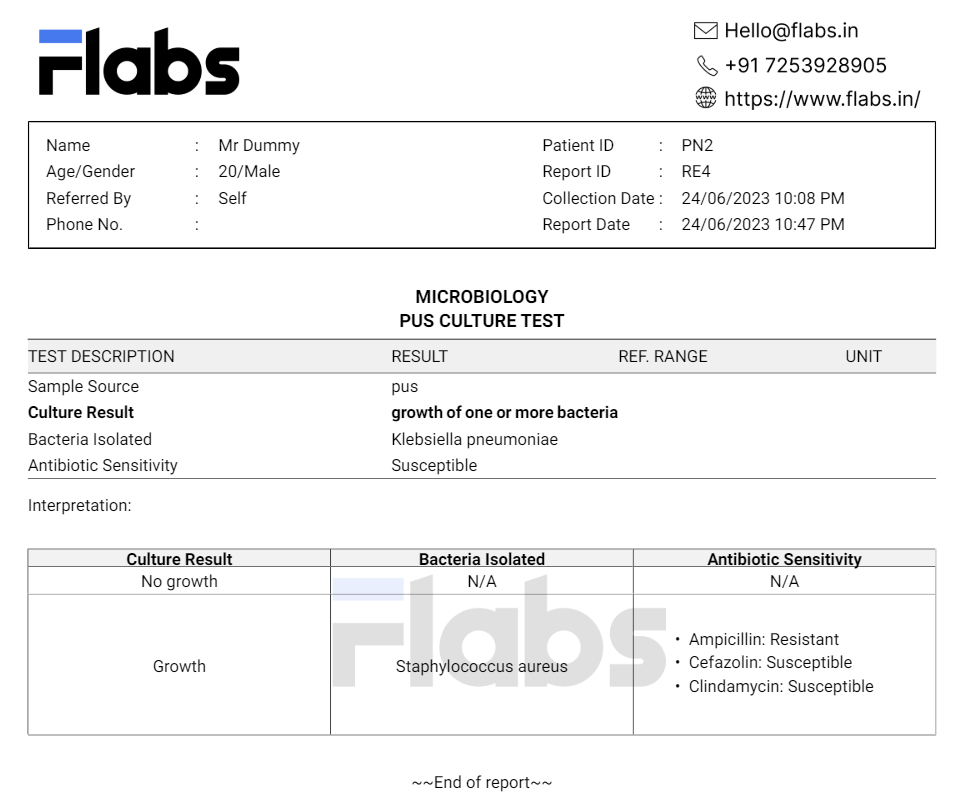
As per the ICMR guidelines, a pus culture report format must adhere to the following structure. While design-related changes are permitted, every laboratory must ensure that all key details are included in the report:
Header: This should include the logo of the diagnostic lab and contact details such as email, phone, and website.
Report Title: Mention the department of the test (MICROBIOLOGY) along with the test title "PUS CULTURE TEST."
Patient Identification: Include the patient's name, age, gender, phone number, and a unique patient ID.
Sample Details: Provide the date, type, and method of pus culture sample collection. In this case, the type of sample is "PUS."
Test Results: Mention the type of bacteria identified (e.g., Klebsiella pneumoniae, Staphylococcus aureus, etc.) and other findings from microbiological examinations.
Reference Ranges: Ensure that the pus culture test report contains a section for reference ranges, along with appropriate units of measurement.
Clinical Interpretation: Present a section about the interpretation of test findings, indications of pus culture growth, and health implications. Highlight "Antibiotic Sensitivity" as resistant or susceptible. Suggest further tests if necessary.
QR Codes: Provide barcodes, QR codes, or other data encryption methods for lab contact details. This facilitates open communication between patients and medical professionals.
Signatory: Ensure that the pus culture report is signed by relevant lab personnel to increase reliability and traceability.
Additional Details: Provide information about other laboratories or medical facilities that patients can visit for further testing and guidance related to their health condition.
Download Pus Culture Report Format PDF
Click below to download free PDF sample report

Conclusion
Unlike other pathology tests, the pus culture test requires time to obtain results. After obtaining the sample, it is incubated in various growth media to encourage the multiplication of microorganisms present in the culture. Subsequently, the interpretation of the results involves determining the type of bacteria through microbiological examination."
Given this, ensuring an accurate pus culture report format is critical for timely diagnosis and intervention. Moreover, proper formats serve as a foundation for transferability and traceability in healthcare laboratories across countries.
Get Started at ₹1!
Try Flabs for a full month for just ₹1.
Follow us on