Hepatitis C Virus (HCV) infection is a silent epidemic. It progresses to advanced liver fibrosis or cirrhosis before clinical symptoms manifest. When it comes to diagnosis, the challenge lies in distinguishing between active viremia and past exposure in asymptomatic patients.
A missed diagnosis can lead to irreversible hepatic damage, hepatocellular carcinoma, and continued transmission. Conversely, misinterpreting initial screening results can cause unnecessary patient anxiety and costly, redundant workups.
The Anti-HCV Antibody Test serves as the critical initial screening tool. Understanding its nuances is essential for pathologists and healthcare professionals.
Defining the Anti-HCV Antibody Test
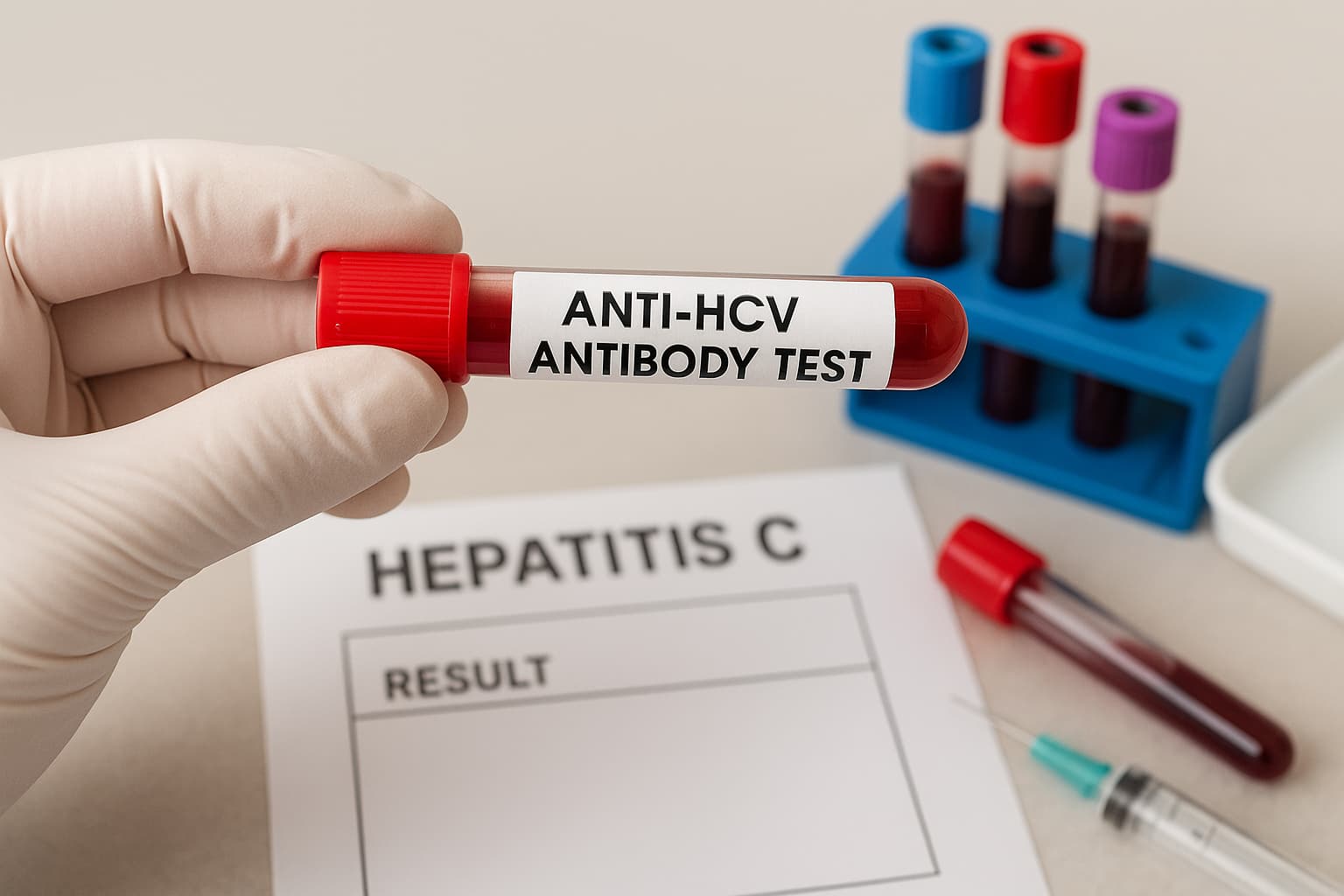
The Anti-HCV Antibody Test (Hepatitis C Virus Antibody Test) is a qualitative serological assay designed to detect immunoglobulins (IgG) produced against recombinant HCV antigens. Unlike nucleic acid amplification tests (NAAT) that detect viral genetic material, this assay identifies the host's immune response.
For healthcare professionals, it is vital to reinforce that a positive/reactive result indicates exposure, not necessarily active disease. Approximately 15–25% of individuals spontaneously clear the virus but remain antibody-positive for life.
Methodology Lab Equipment
Modern pathology laboratories primarily utilise Chemiluminescence Immunoassay (CLIA) or Enzyme-Linked Immunosorbent Assay (ELISA) on high-throughput immunochemistry platforms (e.g., Roche Cobas, Abbott Architect). These automated systems enable high sensitivity (>99%) to minimise false negatives.
- HCV test full form: Hepatitis C Virus Antibody Test.
- Sample: Serum or plasma from a standard blood collection procedure (venipuncture).
Indications for Testing
Current guidelines advocate for universal screening for all adults at least once, with targeted periodic screening for high-risk groups.
- Screening: Pre-surgical evaluation, blood donation, and routine health check-ups.
- Diagnosis: Investigating elevated liver enzymes (ALT/AST) or symptoms like jaundice.
- Monitoring: High-risk populations (hemodialysis patients, IV drug users).
Interpreting Results
- Anti-HCV Normal Range: The result is reported as Non-Reactive or Negative.
- Abnormal Result: Reported as Reactive or Positive.
Result Interpretation Table
| Result | Interpretation | Clinical Implication | Recommended Action |
|---|---|---|---|
| Non-Reactive | No HCV antibodies detected. | No prior exposure (or window period). | No further testing unless recent exposure (<6 mos) is suspected. |
| Reactive (Positive) | Antibodies present. | Presumptive HCV infection (active or resolved). | Mandatory Reflex Testing: Perform HCV RNA (PCR) quantitative test. |
| Indeterminate | Signal-to-Cutoff (S/CO) ratio is borderline. | Inconclusive; possible cross-reactivity. | Repeat testing or use a supplementary assay. |
False Positives and Negatives
Pathologists must be vigilant regarding discordant results.
- False Negatives: Can occur during the "window period" (first 8–10 weeks post-infection) or in profoundly immunosuppressed patients (e.g., HIV coinfection, renal failure).
- False Positives: May arise from cross-reactivity with other viral antibodies, autoimmune disorders (e.g., Lupus), or interfering substances in the sample (lipemia, hemolysis).
Test Procedure
Preparation and Collection
The blood collection procedure is straightforward. No fasting is strictly required, though avoiding fatty meals can prevent lipemic interference.
- Venipuncture: A standard draw into a suitable blood collection tube, usually a serum separator tube (SST) or EDTA tube.
- Processing: Centrifugation to separate serum/plasma.
Turnaround Time and Cost
- Turnaround Time: In automated labs, the turnaround time is around 2–4 hours post-receipt. However, routine reporting often takes 24 hours.
- Anti-HCV Test Price: The cost varies by facility and region. In India, the anti-HCV test price generally ranges between ₹400 and ₹1,200.
Confirmatory Testing
A reactive anti-HCV antibody test is never the final diagnosis for active hepatitis. It must be followed by an HCV RNA PCR test.
- Antibody Positive + RNA Negative: Past infection (resolved). No active disease.
- Antibody Positive + RNA Positive: Active Hepatitis C infection. Requires treatment evaluation.
Conclusion
The Anti-HCV Antibody Test is the gatekeeper of hepatitis C diagnosis. While a normal fibrinogen level or liver enzyme panel provides clues, the antibody test is definitive evidence of exposure.
By knowing the distinction between the hepatitis C antibody normal range (non-reactive) and a true active infection, pathologists and healthcare providers can ensure patients receive timely, life-saving antiviral therapy, preventing the silent progression to cirrhosis.
Also check -
Urine Cytology Test
HBsAg Card Test: Fast Detection of Hepatitis B Explained
Hepatitis B Surface Antigen Test
Get Started at ₹1!
Try Flabs for a full month for just ₹1.
Follow us on