In medical terminology, subtle distinctions can hold deep meaning. A common area of confusion lies between “autopsy” and “post mortem.” Both relate to examination after death, yet each carries a specific context in pathology and forensic medicine. For instance, an autopsy may aim to confirm a disease’s pathophysiology, whereas a post-mortem may serve legal scrutiny.
Appreciating such nuance allows medical professionals to align clinical findings with forensic obligations. It improves both precision in death certification and reporting. The discussion below explores each dimension and its relevance to modern pathology practice.
Difference Between Autopsy and Post-mortem
At first glance, “autopsy” and “post mortem” seem interchangeable. However, within professional medical practice, intent and scope distinguish them.
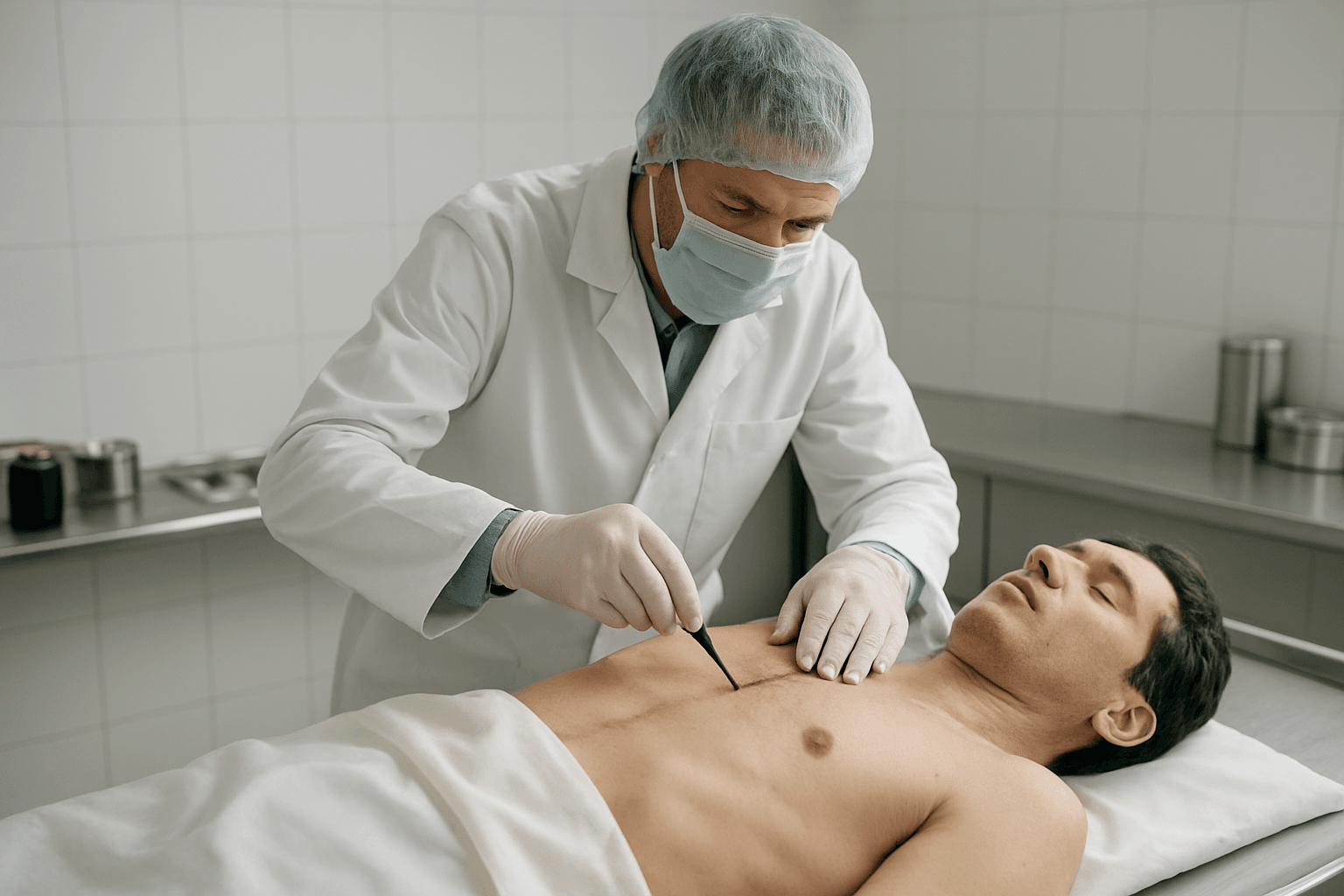
Autopsy originates from the Greek term autopsia, meaning “to see for oneself.” It signifies a systematic internal and external examination of a deceased body conducted by a qualified physician, generally a pathologist. The objective is medical or scientific, e.g., verification of disease mechanisms, diagnostic accuracy, or therapeutic outcomes.
Post mortem encompasses all examinations, investigations, and documentation processes occurring after death. The word comes from the Latin phrase post mortem (“after death”). It includes both autopsies and ancillary procedures such as toxicology, histopathology, and radiographic imaging to determine the cause of death.
| Parameter | Autopsy | Post Mortem |
|---|---|---|
| Meaning | Direct physical examination of a body after death | Any examination, report, or procedure carried out after death |
| Primary Objective | Medical or scientific evaluation | Legal, investigative, or administrative evaluation |
| Conducted By | Pathologist or forensic specialist | Authorised medical officer under statutory authority |
| Documentation | Detailed autopsy report | Comprehensive post-mortem report including ancillary findings |
| Legal Context | May be requested for hospital deaths, teaching, or research | Required under law for unnatural or suspicious deaths |
| Consent | Requires next-of-kin consent unless ordered by law | Mandated under legal jurisdiction in specified cases |
Thus, while every autopsy is a post-mortem, not every post-mortem involves a full autopsy. The distinction lies in purpose, authority, and procedural scope.
Post Mortem Studies in Pathology
Post-mortem and autopsy studies date back centuries. Early dissections advanced anatomical education and disease comprehension long before modern imaging existed. By the 19th century, autopsy rooms became integral to teaching hospitals. Pathologists correlated gross lesions with microscopic features, establishing evidence-based clinical correlation.
Today, post-mortem studies extend beyond dissection. Radiological “virtopsies,” minimally invasive tissue sampling, and molecular pathology tools refine cause-of-death investigation. These approaches minimise invasiveness while preserving evidentiary value.
Purpose and Scope of a Post-Mortem Procedure
A post-mortem procedure may be hospital-based or forensic. Each follows defined steps from authorisation to final reporting.
- Authorisation and Identification: The process starts with confirming identity through official documentation, photographs, or forensic tags.
- External Examination: The examiner records physical features, clothing, scars, injuries, and any medical devices present.
- Internal Examination: Major cavities, viz., cranial, thoracic, and abdominal, are opened in sequence. Organs are inspected, weighed, and sectioned. Samples are collected for histopathological, microbiological, or toxicological testing.
- Ancillary Procedures: Imaging, serological assays, and molecular diagnostics complement direct observation.
- Reporting: Findings are compiled into a structured post-mortem report.
Forensic and hospital autopsies share these procedural stages, yet differ in authority. Hospital autopsies prioritise medical learning. Forensic autopsies address legal accountability under criminal law.
Post Mortem Rules in India
In India, post-mortem examinations follow statutory mandates under the Code of Criminal Procedure (CrPC) and associated health regulations.
- Authorisation: Conducted only upon written requisition from the police or a magistrate when death is suspicious, accidental, or under custodial circumstances.
- Venue: Must occur in designated government hospitals or authorised institutions.
- Timing: Performed after inquest formalities. The officer-in-charge ensures the chain of custody for all evidence.
- Personnel: Only qualified government medical officers or forensic pathologists may perform it.
- Reporting: The final post-mortem report is submitted to the investigating authority. Copies remain archived for legal reference.
Compliance with post-mortem rules in India safeguards procedural transparency and upholds evidentiary integrity during judicial proceedings.
Clinical Relevance of Autopsy Findings
Autopsy reports contribute directly to clinical governance. They reveal diagnostic discrepancies, therapeutic effects, and disease evolution. In teaching hospitals, data derived from autopsy and post-mortem studies refine diagnostic criteria, mortality audits, and epidemiological databases.
Pathologists frequently correlate ante-mortem records with post-mortem findings. Discrepancies between clinical impressions and autopsy results have driven major medical discoveries, e.g., viral myocarditis recognition, hepatic injury profiling, etc.
The Six Types of Autopsy
Autopsies may be classified according to intent and investigative approach. There are 6 types of autopsy recognised in medical literature.
- Forensic Autopsy: Ordered by legal authorities for deaths involving crime, accident, or suspicion.
- Pathological Autopsy: Conducted with family consent for research or teaching to evaluate disease mechanisms.
- Anatomical Autopsy: Performed for educational dissection in medical institutions.
- Verbal Autopsy: Relies on interviews and available records when direct examination is not possible, used in population health surveys.
- Virtual Autopsy: Uses imaging technologies such as CT or MRI for non-invasive internal visualisation.
- Psychological Autopsy: Analytical evaluation of mental health status prior to suicide or unexplained death.
Comparison in Practice
- A working differentiation between autopsy and post-mortem difference emerges during procedural planning. Consider two scenarios.
- A patient dies in the hospital following complex cardiac surgery. The family consents to examination to assess surgical results. The examination is a clinical autopsy, focused on the pathology of disease and surgical outcome.
- A body is recovered from a river under suspicious circumstances. The magistrate orders an examination to confirm the cause of death. It becomes a forensic post-mortem, broader in scope and bound by statutory rules.
Both involve anatomical dissection. Yet, the administrative purpose, reporting hierarchy, and consent differ markedly.
Documentation and Ethical Dimensions
Ethical conduct anchors every autopsy and post-mortem. Pathologists adhere to institutional review protocols and confidentiality obligations. Tissue retention, photographic recording, and specimen disposal require explicit authorisation.
Educational dissemination of findings must preserve anonymity. Family counselling before and after examination fosters trust and transparency. Professional courtesy toward cultural and religious sensitivities ensures respectful handling of remains.
From a legal perspective, maintaining a chain of custody, labelling integrity, and sealed evidence submission preserves credibility during litigation.
Role of Technology in Modern Post-Mortem Analysis
Advances in digital imaging, histopathology automation, and molecular assays have refined the precision of post-mortem investigations. Three-dimensional reconstruction of injuries and tissue microarray analysis enable objective interpretation.
Virtual or minimally invasive autopsy protocols reduce exposure risk for infectious cases. Integration of post-mortem computed tomography (PMCT) with conventional dissection enhances correlation and data retention.
There are electronic documentation systems that allow rapid transmission of reports to investigative agencies while maintaining audit trails.
Conclusion
Autopsy involves direct anatomical examination by a pathologist, whereas post-mortem encompasses all examinations and documentation after death. In professional medicine, distinguishing these terms prevents ambiguity in communication.
Precision in labelling an investigation as either autopsy or post mortem ensures alignment with consent requirements, legal authority, and institutional protocol. When pathologists maintain this distinction, forensic outcomes become clearer, academic reporting improves, and multidisciplinary coordination strengthens. Such clarity sustains professional credibility and reinforces the shared commitment.
Also check - Clinical Audit: Steps, Benefits, and Real-Life Examples
Get Started at ₹1!
Try Flabs for a full month for just ₹1.
Follow us on