a crucial role in realising this goal. Yet slow communication between healthcare systems, outdated paper records, and incomplete patient histories stand in the way of seamless patient care. They waste valuable time and cause errors and misdiagnoses.
Especially in medical care, where every second counts, healthcare providers need a way to access patient information quickly and easily. That's where EHR integration stands out. It enables access to patient information in real-time. Let’s discuss the benefits of electronic health records and their integration, the pros and cons of EHR, and best practices in EHR integration here.
What is EHR Integration
EHR systems are digitised records of patient's medical history. They record information related to medical diagnoses, medications, treatment regimens, and lab results. EHR integration involves connecting and synchronising multiple EHR systems to onset seamless data exchange and inter-operations. EHR integration enables medical professionals to get a comprehensive view of a patient’s medical records anytime, from anywhere in the world, regardless of where the source is located.
While the idea of EHR integration seems perfect, there are many pros and cons to it. However, the benefits of electronic health records and their integration outweigh the challenges associated with integrating different EHR systems.
Advantages of EHR Integrations
Quality Patient Care: EHRs provide access to a patient's complete medical history, helping healthcare providers make informed decisions about treatments and follow-ups. The improved attention and targeted delivery improve patient care. EHR integration also reduces manual errors, mismatched diagnoses, and incorrect diagnoses.
Improve Data Exchange: EHRs facilitate real-time data exchange between medical providers, labs, pharmacies, and other stakeholders, ensuring updated information at every end. This eliminates the risk of mismatching diagnostic tests with patients.
Interoperability: Effective healthcare is only possible with communication between different medical departments and facilities. However, it requires data exchange regarding patients, their medical tests, and specimen details. EHR integration makes all complex data exchanges faster and more accurate, effortlessly facilitating interoperability.
Regulatory Compliance: Various medical systems, such as LIMS and RIS, must adhere to relevant regulations repeatedly. Tracking when to update/upgrade compliance requirements manually is tedious. EHR integration automates the processing, ensuring compliance with various acts, such as the Health Information Technology for Economic and Clinical Health (HITECH) Act, DICOM, etc.
Cost Reduction: EHR integration reduces operational costs by streamlining processes and reducing paperwork. It also reduces the need for duplicate tests and procedures, saving money.
Patient Engagement and Safety: EHRs facilitate patients' access to their own medical records, letting them play an active role in healthcare. Labs with EHR integration facilities thus enjoy improved patient satisfaction. In addition, EHR integration reduces the risk of errors associated with documentation and transcription, protecting the patient data in the process.
Remote Access: Medical systems with EHR integration allow the exchange of patient data, allowing healthcare providers, consultants, and labs from anywhere to access healthcare services. This enables access to experts from across the world who are required when complex diagnoses are necessary.
Research and Education: EHR integration in medical systems can anonymise and aggregate patient data for research purposes. The past diagnostic and patient health history data can contribute to medical research and the advancement of healthcare knowledge.
Challenges in EHR Integration
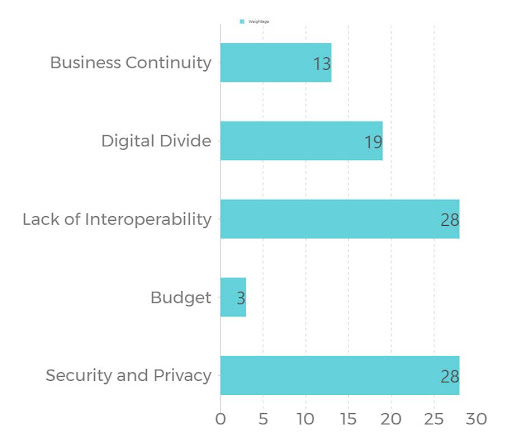
- There are compatibility issues between different EHR systems, which may have different data standards and formats in function.
- Sometimes, EHR systems are prone to hacking and data theft, raising data security and privacy concerns.
- There is considerable capital involved with the cost of integration and maintenance.
- Traditional healthcare providers tend to resist change due to inertia with older systems.
- Training staff to use new systems effectively is not easy and immediate.
- Ensuring regulatory compliance of EHR systems is a task in itself.
- EHR systems require a separate set of operations and systems to manage large volumes of data. For example, storage, retrieval and maintenance systems.
- Maintaining data accuracy and consistency is a concern.
- Not all EHR systems integrate with other healthcare systems and devices. It is vital to procure only compatible EHR systems.
Best Practices in EHR Integration
Initial Planning and Assessment: Before integrating an EHR system, identify the current system's integration needs. Understand existing workflows, data structures, and potential challenges. Set clear goals and objectives and define the project scope. Now, work on a timeline and allocate resources to get all stakeholders on a single footing.
Select the Right Vendor: Not all EHR systems are similar, so ensure compatibility with existing systems before choosing an EHR vendor. Evaluate post-purchase vendor support and services based on their track record, technical expertise, and responsiveness. Go for a vendor with a reputation for reliable support and services to ensure a smooth integration process.
Data Migration and Mapping: Data migration involves securely transferring data from legacy systems to the new EHR system. It is important to maintain accuracy and security during data migration to prevent data loss or corruption. Data elements between old and new systems should be mapped to maintain consistency and ensure a seamless data exchange.
Test and Validate: Comprehensive testing of the integrated EHR system is necessary to ensure it functions as expected. This includes testing data accuracy, system functionality, and interoperability. Validate the system to identify and address any issues before going live, ensuring it meets the practice’s needs and supports efficient workflows.
Conclusion
EHR integration is set to play a central role in medical facilities seeking to advance and provide quality healthcare. While challenges remain, we must consider the overall benefits associated with integrated EHR systems, which enable speedy and accurate diagnosis, eliminate manual tasks, and improve the consistency of work done.
As digital pathology reigns, we need systems to store large amounts of patient data and medical history, making EHRs indispensable. Thanks to advancing technologies, EHR systems are also becoming more capable every day, supporting integrations from a wide range of medical systems.
Training and Support: Provide adequate training to healthcare staff on how to use the integrated EHR system, navigate the interface, and access patient information. Facilitate ongoing support to address any issues that arise after the system goes live, including technical support, user questions, and problem resolution.
Get Started at ₹1!
Try Flabs for a full month for just ₹1.
Follow us on