
Laboratory report formats play a central role in the frontline of pathology laboratory tests. They facilitate easy interpretation, diagnosis, timely reporting, and quality healthcare for patients. The ESR (Erythrocyte Sedimentation Rate) test stands out among the variety of laboratory tests in this connection.
The test reveals the occurrence of inflammation in the human body. After the test, labs must issue the reports following the standard ESR test report format. Let's look at the structure of ESR report format in certified pathology laboratories.
What is the ESR Test
In a healthy individual, there is a normal rate at which red blood cells settle to the bottom of a test tube in 1 hour. Any inflammation or infection in the body introduces extra proteins, the RBCs, that lead to longer sedimentation rates (Sed Rate). Physicians will suggest the ESR test to identify possible inflammation in a patient's body. Depending on the age, deviation from normal values of Sed rates indicates possible infection in the body.
The ESR test is requested when a patient reports symptoms of unexplained fevers, muscle symptoms, headaches, certain types of joint pains or arthritis. A well-designed ESR report format is useful for detecting autoimmune disorders, bone infections, certain forms of arthritis, and inflammatory diseases.
ESR Report Format Guidelines
As per the general standards of ICMR (Indian Council of Medical Research) and NABL (National Accreditation Board for Laboratories), an ESR report must be formatted using the components below. However, different laboratories can use slight variations without losing the essence of the report.
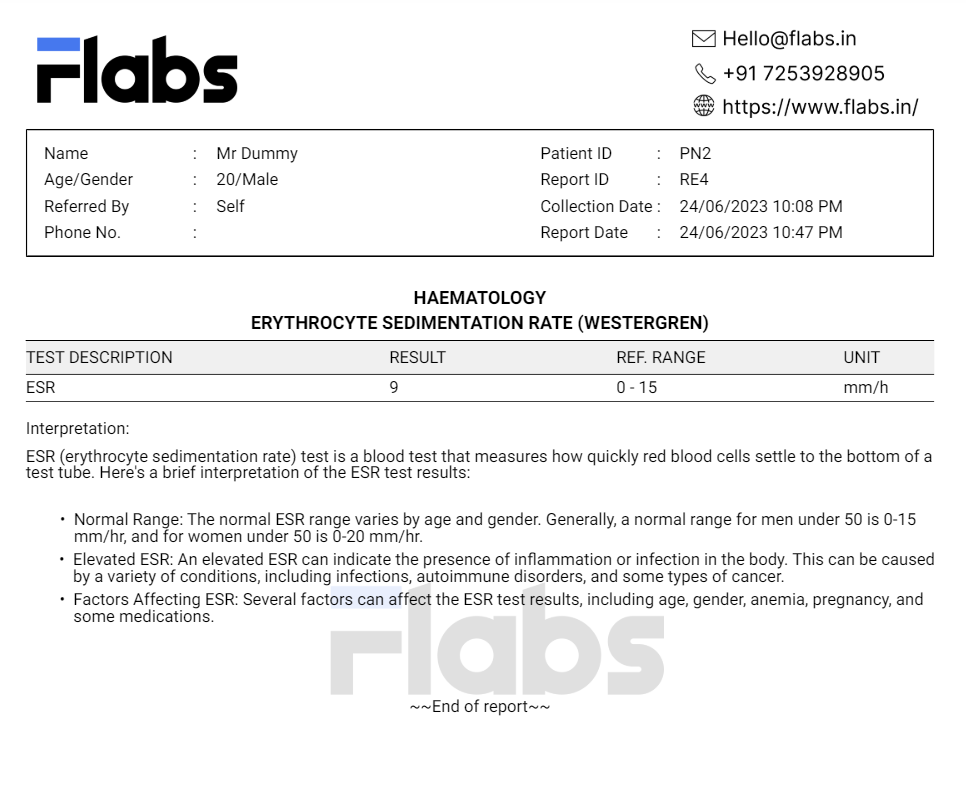
Report Labels: Start the ESR test report with official letterhead, logos, and report title (Erythrocyte Sedimentation Rate (ESR) Report).
Patient Information: Gather the patient's name, gender, date of birth, and lab-specific unique identity number. In the first section of the ESR report, also include the sample collection date and the referring physician's name.
Test Methodology: Mention the method used for ESR testing, such as the Westergren method. Include the lab reference range along with suitable units of measurement (mm/hr). Suitable units of measurement are an essential part of the ESR report format.
Test Findings: Mention both summarised and detailed test results for a good ESR report format. Highlight deviations with clear formatting of the ESR test report and include the test date.
Interpretation: Provide clinical interpretation of the test results in the context of the patient's health condition and history. Mention deviations from normal values and discuss the possible reasons.
Comparative Observations: Supply the ESR normal values and lower and higher bounds in the ESR test report. Provide a comparison with the previous results and indicate any improvements. Highlight if the ESR results are normal for the patient.
Test Causation: It is good practice to include the reason for the examination in the ESR test report. Explain the reasons in terms of observed symptoms, what caused them, and their role in diagnosis.
Sample Info: An ESR test report format must include sample info for the sample type (e.g. Whole blood), collection techniques, and handling requirements.
Quality Control: Include the measures taken to maintain quality control to facilitate the authenticity and reliability of the ESR report format. Outline the lab's QC practices, calibration and maintenance measures, and how potential sources of errors are managed.
Signatory: To standardise the ESR test report format, the signatory of lab personnel and the concerned authority becomes paramount. Include the lab's contact details and the qualifications of the personnel involved. Always ensure the ESR report is adequately attested to facilitate traceability and reliability when different laboratories worldwide are involved.
Additional Observations: Note other relevant observations during the ESR blood test that may impact test results, whether sampling anomalies or test conditions. Suggest the importance of prompt labelling and storage.
Result Delivery: Detail the process for delivering ESR test results to the healthcare provider, including electronic and physical delivery mechanisms to ensure timely receipt.
Confidentiality and Data Privacy: To improve privacy and confidentiality, use QR codes, barcodes, and other encryption techniques in ESR report format. Describe further steps to ensure patient privacy in ESR reports and keep test results secure.
Review Comments: Add a blank space or an additional page in the ESR report for comments by a second reviewer. They can add insights or validate findings.
Treatment Plan: Based on the results, suggest an appropriate treatment plan. For abnormal findings, the plan should include treatment options or monitoring.
ESR Test Report Sample PDF
To gain a full understanding of the ESR test report formatting, download the sample report below.

Conclusion
Just as with pathology lab reports, an ESR report format is also important for accurate diagnosis and timely healthcare provision. From ensuring patient information, laboratory information, and test results to data privacy measures in the ESR report, pathology laboratories can make a huge difference in moving forward with interventional care.
Also read - CBC with ESR Test – Meaning, Use & Results
Get Started at ₹1!
Try Flabs for a full month for just ₹1.
Follow us on