Pathology is a specialised medical profession demanding additional skills compared to a degree in general medicine. Given the role of pathologists in aiding accurate and efficient medical care for patients, the level of competence required is only understandable. But the question “how to become a pathologist in India” remains elusive to most aspiring people. It must be noted that an MBBS degree is crucial to become a pathologist, even those who hold a bachelor degree in relevant sciences.
Having said that, let's dig deep into how to become a pathologist in India through a step by step process in this guide. You will also learn average salaries, best colleges for pathology courses in India, along with top hirers in this article.
What is the Meaning of a Pathologist?
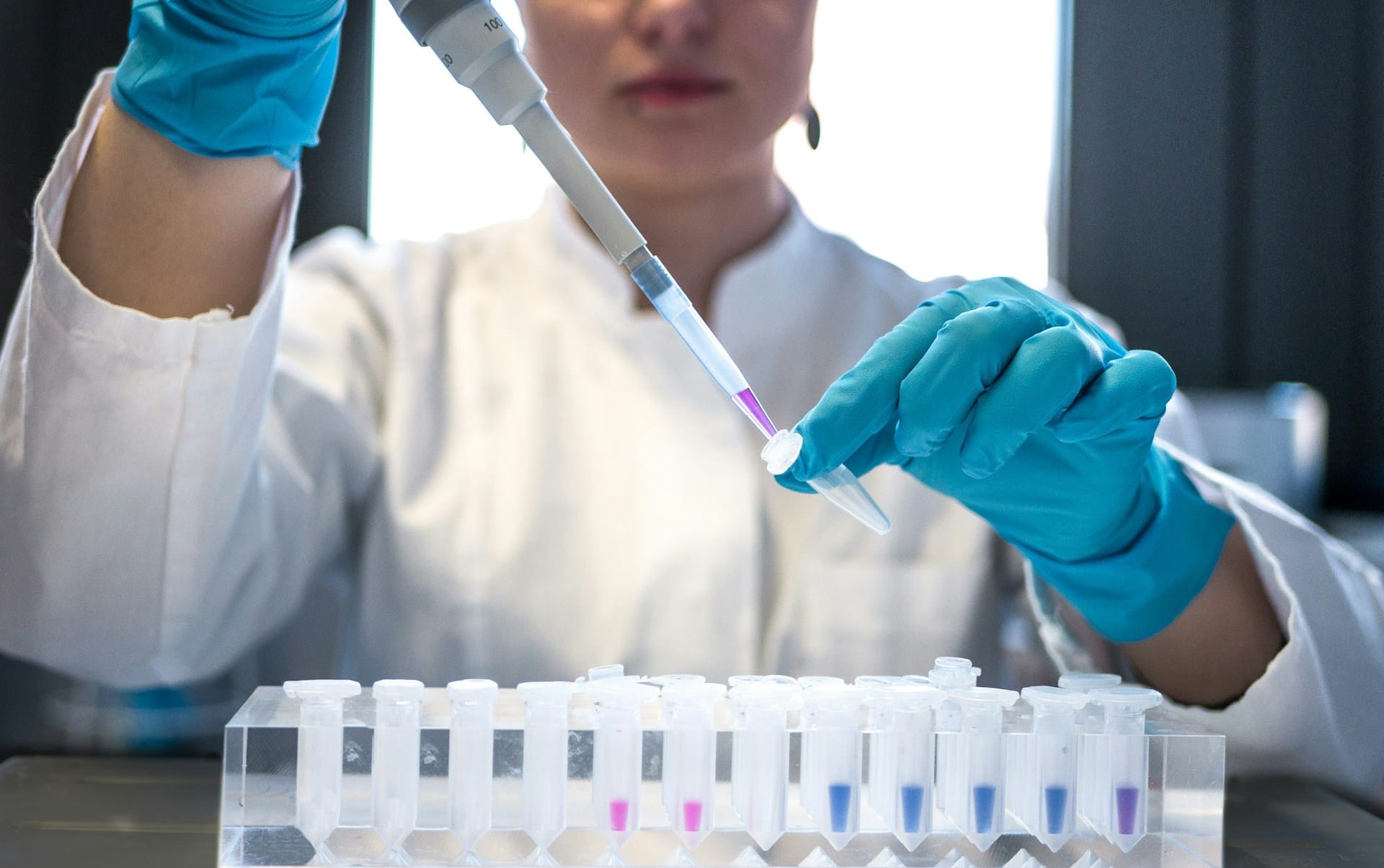
A pathologist is a medical expert who diagnoses diseases by analyzing body fluids, tissues, and lab test results. They help doctors make accurate treatment decisions based on these findings.
How to Become a Pathologist in India
1. Prepare from School Stage
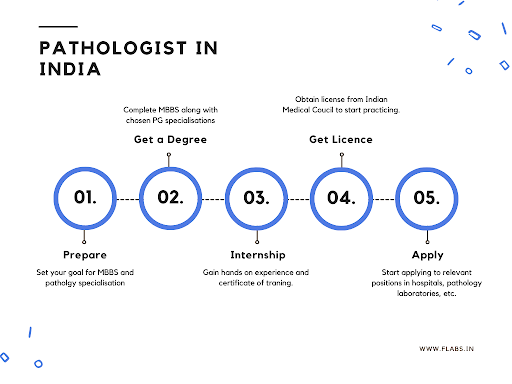
If you want to pursue a career as a pathologist, you need to set the MBBS goal from your school stage itself. Because MBBS is a mandatory step to become a pathologist in India. In fact, getting MBBS admission is one of the difficult steps of how to become a pathologist in India.
Begin your journey right after you complete your standard 10+2 education, choosing science subjects such as Physics, Chemistry, Biology, and Math. Once done, you could apply to various private colleges. Many colleges hold their own entry exams, and clearing them is essential to secure a seat.
Prestigious institutions like AIIMS, AFMC Pune, and others also offer their specific exams usually around May and June. Keep an eye out for all the relevant exams notifications without fail. Many of the MBBS competitive tests are multiple-choice tests. If you pass, the next step is an interview. Admission depends largely on how well you do in these assessments.
2. Complete MBBS Degree
To get into a Bachelor of Medicine (MBBS) program, you'll need to take NEET by NTA. Clearing NEET is one of the toughest parts of getting to study MBBS. To earn an MBBS, it requires 4.5 years studying subjects anatomy, biochemistry, and more. Afterward, a 6-month to 1-year training period is required. This period is crucial for gaining knowledge and skills.
Then, you can focus on pathology, but you'll still encounter related fields throughout your training. Once you have your MBBS you have to go for an MD or diploma.
Most people ask how to become a pathologist in India without MBBS. There are other ways to start a career in pathology without going through tedious MBBS. Some of the non-medical options to enter pathology career are:
- B.Sc. in Pathology
- Bachelor of Audiology, Speech and Language Pathology
- B.S.c. in Biology
- B.Sc. in Clinical Pathology
- B.Sc. in Microbiology.
3. Specialisation in Pathology with a PG
Aspirants seeking a glorious career in Pathology can pursue a specialised degree related to Pathology to increase their career chances as well as enhance their skill. Some of the well known pathology PG specialisations are:
- Master of Science (M.Sc.) in Pathology
- Master’s Degree Programme
- Doctor of Medicine (M.D.) in Pathology
- Doctor of Osteopathic Medicine
- Ph.D in Pathology
- Doctoral Courses
- Ph.D in Speech Pathology and Audiology
- Postgraduate Diploma in Clinical Pathology
- Diploma Courses
- Diploma in Pathology
4. Go for Certification Courses
Students seeking a career in pathology also go for a certification course to earn a degree in the field from recognised universities and institutions. There are certificate courses available both at bachelor, master and doctoral level. As mentioned, it must be followed by a specified period of hands-on training to become eligible to gain licence in India. Some of the prominent certification course are:
- Post MD Certificate course in Cytopathology
- Post-Doctoral Certificate Course in Renal Pathology
- PDCC (Blood Component Therapy and Apheresis)
5. Internship or Training
How to become a pathologist in India after MBBS?
Just like any other career in medicine, completing a minimum of 1 year internship or training is mandatory to apply for a licence as a pathologist in India. Irrespective of the degree level you have, everyone must undergo a training period in hospitals or laboratories. However, the internship period can be up to two years depending on the rules and regulations of internship providing entities.
You can work at clinics, hospitals, universities, or government medical centres, alongside senior professionals. Internships equip you with the skills and assurance needed for a healthcare career. You'll also learn about diagnostic and administrative methods, patient care, and how to pioneer new medical treatments and vaccines to combat illnesses and viruses.
6. Apply for a Licence
Once you finish your studies and internship to be a pathologist in India, you need to get a licence by signing up with the Medical Council of India (MCI) or your State Medical Council (SMC), and pass the National Board of Examinations (NBE) test. Then you have to sign up on the Indian medical register website.
7. Start Your Career
Upon receiving your medical licence, a myriad of opportunities await in pathology, from bustling hospital environments to specialised clinics, and cutting-edge laboratories. Additionally, you might opt to delve into the academic sphere or research domain, where roles such as a medical researcher or a university professor become viable career paths.
Pathologists earn an average annual compensation of approximately ₹21.8 Lakhs. This figure typically varies between ₹18.0 Lakhs and ₹46 Lakhs. The data analysed comes from a total of 76 individual salary profiles within this medical specialty.
Top Hirers of Pathologists in India
- Suburban Diagnostics
- Oncquest Laboratories Ltd
- Medall Healthcare Pvt Ltd
- Thyrocare
- Dr Lal Pathlabs
- SRL Diagnostics
Best Institutions in India offering Pathology Courses
- AIIMS, Delhi
- The Armed Forces Medical College, Pune
- Madras Medical College, Chennai
- HIMSR New Delhi – Hamdard Institute of Medical Sciences and Research
- Vydehi Institute of Medical Sciences and Research Centre, Bangalore
- Banaras Hindu University, Varanasi
- Christian Medical College, Vellore
- King George’s Medical University, Lucknow
- Sanjay Gandhi Postgraduate Institute of Medical Sciences, Lucknow
- Jawaharlal Institute of Postgraduate Medical Education and Research (JIPMER) university, Pondicherry
- Kasturba Medical College, Karnataka
- St. John’s Medical College, Bangalore
Conclusion
Given the amount of competition and crunch of medical colleges in India, the question of how to become a pathologist in India is rather complex. That is why, you must start preparing from the early stages of your education. Getting an MBBS admission is the biggest challenge nowadays. Fortunately, you can pursue the medical degree abroad also, in MCI recognised colleges. However, one more biggest step of how to become a pathologist in India involves getting proper licence to start practising in India.
All said and done, it is not so difficult if your goal to become a pathologist in India is fuelled by passion and perseverance.
Also check - Top 10 Pathology Labs in India (2026)
Get Started at ₹1!
Try Flabs for a full month for just ₹1.
Follow us on