Respiratory disorders on the rise in India have underscored the value of structured pulmonary assessments. As airway diseases progress silently long before symptoms escalate, quantitative measurement through a lung function test has become essential across pathology labs in India.
With advanced diagnostic systems and digitised operations, clinicians gain precise functional data that supports early detection, risk stratification, and long-term management.
Understanding the Lung Function Test
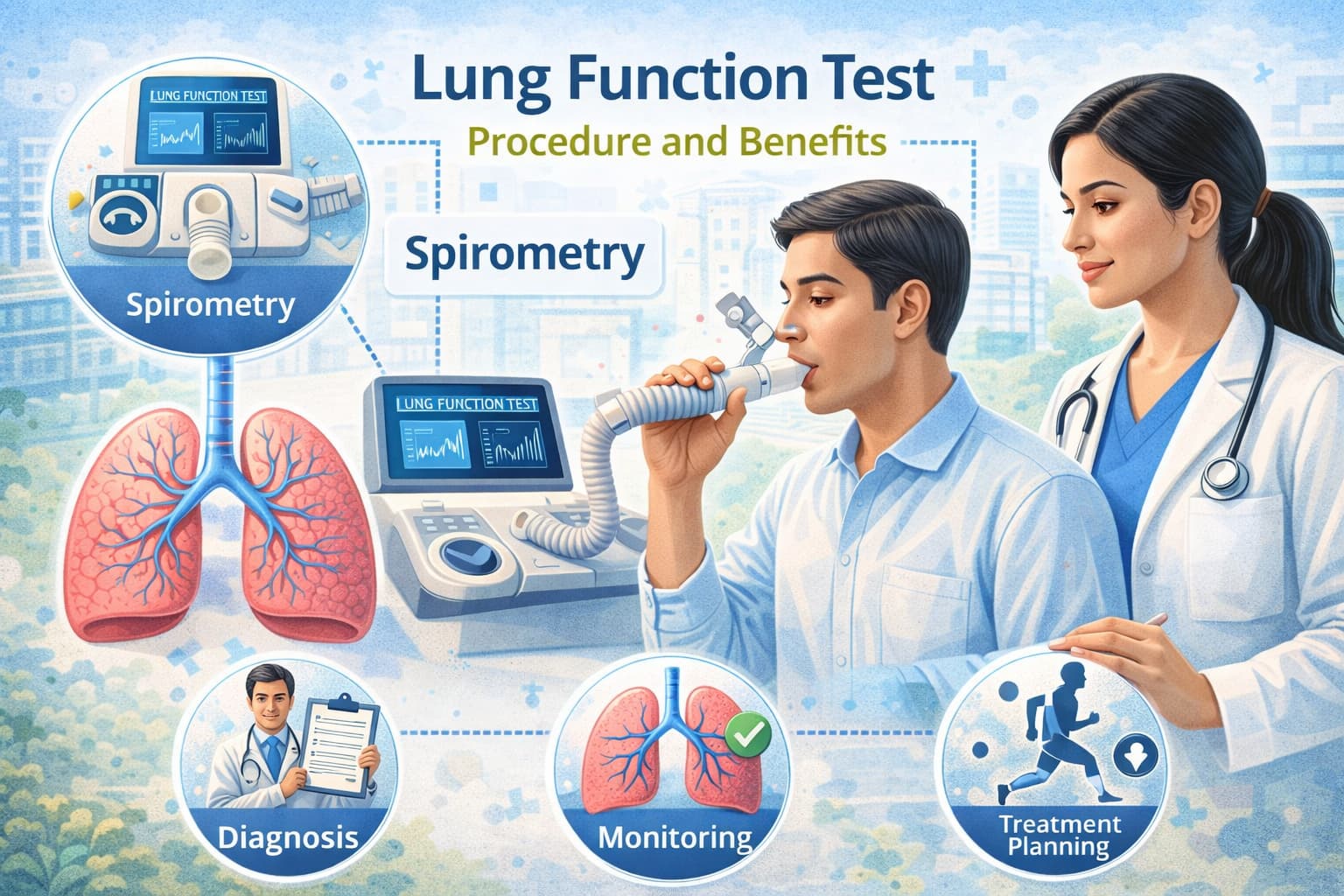
A lung function test evaluates how efficiently the respiratory system moves air in and out and how well gas exchange occurs.
For pathologists and clinicians, the objective is clear: obtain reproducible values that reflect airway patency, lung volume status, diffusion capacity, and bronchodilator responsiveness.
These measurements are now central to diagnosing asthma, COPD, restrictive lung disease, and occupational airway disorders. As digital platforms, AI-enabled interpretation tools, and NABL labs expand nationwide, the precision and reliability of these assessments have reached new benchmarks.
Why the Procedure Matters
A structured lung function test gives clinicians a quantitative baseline. Since respiratory symptoms can overlap across multiple conditions, relying only on patient complaints or auscultation risks misclassification. In contrast, a standardised workflow offers:
- Objective data tied to disease severity.
- Clarity when differentiating obstructive vs restrictive physiology.
- Insight into bronchodilator response.
- Reliable progression tracking.
- Support for therapy planning and occupational screening.
Core Procedure: How a Lung Function Test Is Performed
The procedure varies depending on specific parameters assessed, but most labs follow a structured process that includes preparation, device setup, calibration, and step-wise measurement.
Pre-Test Preparation
- No bronchodilators for a specified period before testing.
- No heavy meals before measurement.
- Patients must avoid smoking or high-intensity exercise beforehand.
- Ensuring patient familiarity with breathing manoeuvres.
A digitally guided workflow inside [Flabs LIS](https://flabslis.com/Measurements and Test Parameters) can store instructions, link them to patient profiles, and automate reminders for compliance.
Measurements and Test Parameters
| Parameter | Description | What It Indicates |
| FEV₁ | Forced Expiratory Volume in 1 second | Degree of airway obstruction |
| FVC | Forced Vital Capacity | Lung emptying capacity |
| FEV₁/FVC Ratio | Ratio of timed and full expiration | Differentiates obstructive vs restrictive patterns |
| PEF | Peak Expiratory Flow | Large airway calibre; useful in asthma monitoring |
| DLCO | Diffusing Capacity for Carbon Monoxide | Alveolar-capillary gas transfer efficiency |
Each value contributes to understanding lung physiology. As lung function test values deviate from expected norms, interpretation guides targeted therapy.
Normal Ranges and Interpretation
Although local reference standards differ across populations, most labs use age-, height-, gender-, and ethnicity-adjusted predicted values. The lung function test normal range is expressed as a percentage of predicted output.
| Category | Normal Range (% of Predicted) | Clinical Meaning |
| FEV₁ | ≥ 80% | Normal ventilatory capacity |
| FVC | ≥ 80% | Adequate lung volume |
| FEV₁/FVC | > 0.70 (adults) | Absence of obstruction |
| DLCO | > 75% | Adequate diffusion capacity |
Clear interpretation is essential. Systems with AI-supported analytics such as Flabs LIS provide structured commentary that aligns with a lab's internal standards.
How to Read Lung Function Test Results
Clinicians decode lung function test results by evaluating patterns rather than isolated values. The process involves the following.
- Comparing measured values to predicted ranges.
- Identifying obstruction, restriction, or mixed patterns.
- Checking reversibility with bronchodilator administration.
- Reviewing flow-volume loops.
- Correlating results with symptoms and clinical history.
AI-based interpretation modules within Flabs LIS can automatically generate consistent commentary, trend-lines, and clinician-ready summaries.
LFT in Asthma and Airway Hyper-Responsiveness
A lung function test for asthma is indispensable for diagnosis and monitoring. Airway obstruction that improves after bronchodilator therapy confirms reversibility. Additionally, asthma lung function test results support the following.
- Initiation or modification of inhaled therapy.
- Identification of poor control.
- Risk assessment for exacerbations.
- Evaluation of occupational triggers.
For longitudinal monitoring, the lung function test peak flow meter is a simple yet valuable device for tracking daily airway variability.
Laboratory Equipment
- Spirometers (volume-displacement or pneumotachograph).
- Body plethysmographs.
- Gas analysers for DLCO.
- Peak flow meters.
- Portable handheld units for field screening.
AI-enabled device integration through Flabs LIS ensures automated data capture, error flagging, and removal of manual entry inconsistencies.
Split Lung Function Test and Extended Panels
A split lung function test separates measurements into phases (e.g., spirometry first, diffusion capacity later) to manage patient fatigue and scheduling.
Flabs LIS supports structured, modular ordering. It enables labs to register individual components, manage billing, and attach separate results to a unified report.
Workflow Efficiency in Pathology Labs
Turnaround time has become a critical quality metric. Integrated LIS platforms like Flabs LIS optimise:
- Sample registration
- Device interfacing
- Automated QC
- AI-driven interpretation
- Report approval and delivery
With built-in TAT Management, labs can track each patient through every stage and maintain predictable schedules for physicians and patients.
The system’s AI Smart Report, AI Flagger, AI Test Suggestion, and AI Voice Reporting enhance diagnostic accuracy and consistency. Multiple doctor signatures, bulk actions, dynamic QR codes, and customisable interpretations support standardisation in busy operations.
Test Report
An accurate lung function test report presents values, predicted ranges, percentage of predicted output, and interpretive comments.
| Parameter | Measured Value | Predicted | % Predicted | Interpretation |
| FEV₁ | 2.10 L | 3.00 L | 70% | Mild obstruction |
| FVC | 3.20 L | 3.90 L | 82% | Normal |
| FEV₁/FVC | 0.66 | — | — | Reduced ratio |
| DLCO | 65% | — | — | Moderately reduced |
Clinical Benefits of LFT
| Benefit Category | Description |
| Early Detection of Airway Disease | Reduced ventilatory capacity or impaired diffusion may indicate early inflammatory or structural changes long before symptoms escalate. |
| Monitoring of Treatment | Comparing pre- and post-therapy data provides clarity on therapeutic response and guides modifications. |
| Quantification of Severity | Objective, quantifiable values offer stable anchors for decision-making when subjective symptoms fluctuate. |
| Occupational Health | Industries exposed to dust, fumes, or chemicals rely on periodic testing to detect occupational airway impairment. |
| Improved Disease Management | Consistent tracking refines inhaled medication dosing, bronchodilator scheduling, and follow-up planning. |
The Role of Digitisation
Manual operations introduce transcription errors, delayed reporting, and inconsistent commentary. AI-driven diagnostic platforms reduce these vulnerabilities.
With Flabs LIS,
- You can log calibration data and QC checks automatically.
- Device outputs sync directly with patient records.
- Interpretations stay consistent across shifts.
- Pathologists obtain structured insights instantly.
- Reports retain traceability with barcodes and dynamic QR codes
These enhancements are valuable for laboratories working toward or maintaining NABL accreditation.
Final Thoughts
As respiratory disorders rise across India, the lung function test has become indispensable for diagnosis and long-term management. Precise values, structured reporting, and credible interpretation allow clinicians to grasp the respiratory landscape with clarity.
Digitised diagnostic ecosystems such as Flabs LIS elevate the process by streamlining registration, improving quality control, reducing manual dependency, and ensuring on-time reports every single day. For pathology labs aiming for higher throughput and consistent quality, AI-powered operations create a resilient operational environment.
Related - Decoding Your Lung Function Test Results
Get Started at ₹1!
Try Flabs for a full month for just ₹1.
Follow us on