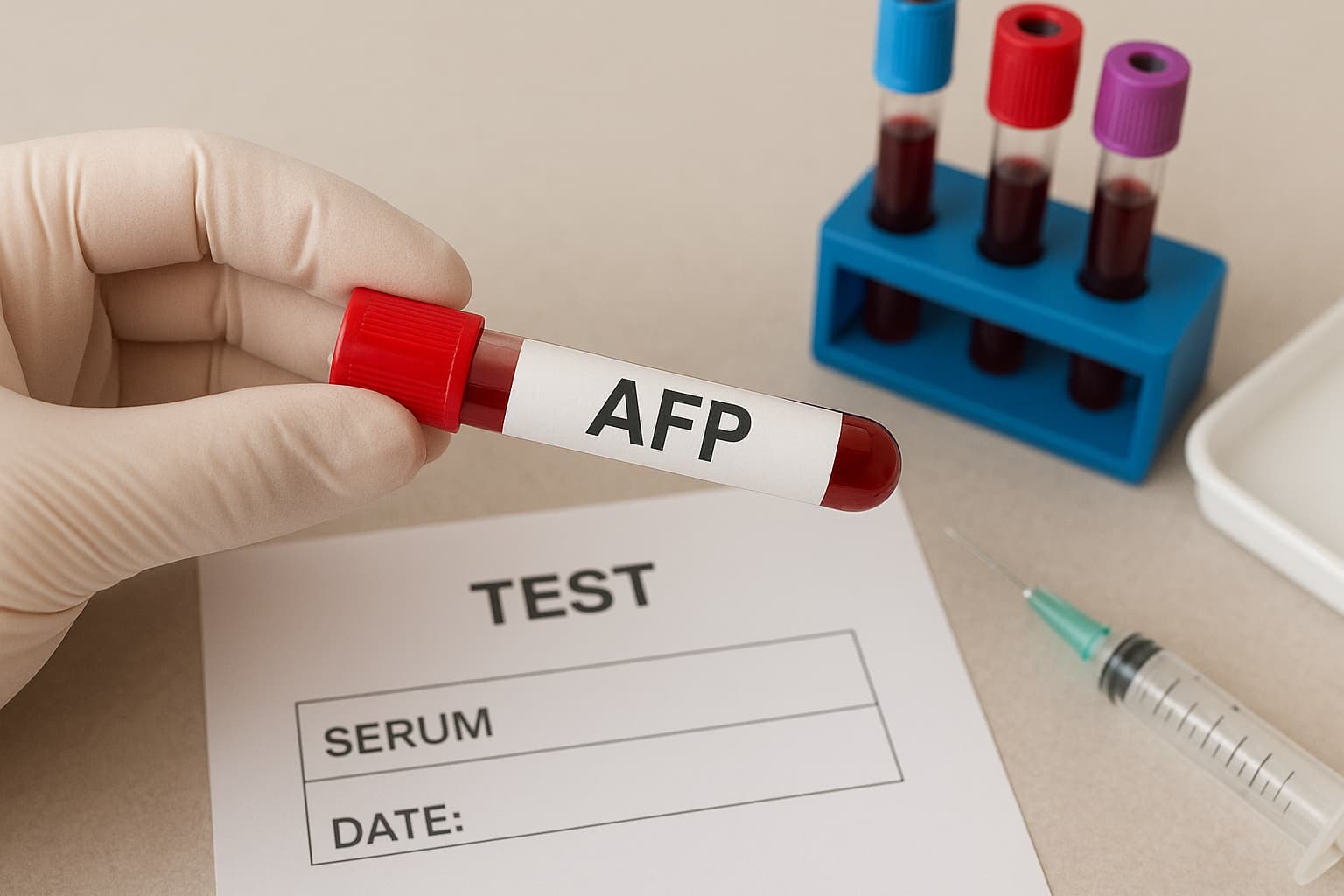
The rising global incidence of liver and germ cell tumours has renewed interest in precise biochemical indicators. Among them, the serum AFP test is one of the most widely requested assays across pathology services. Many clinicians rely on its dynamic trends to refine differential diagnoses, evaluate tumour biology, and monitor therapeutic impact.
For pathology professionals, proper measurement, reporting, and interpretation becomes essential. Fluctuations in AFP influence staging, prognosis, and surveillance strategies. The discussion below presents a structured overview designed for laboratory specialists and clinicians managing complex hepatic or oncologic presentations.
Clinical Role of the Serum AFP Test
The serum AFP test is central to disease evaluation in both hepatic and oncologic cases. Alpha-fetoprotein reflects its origin as a fetal protein produced by the liver and yolk sac. In adults, sustained elevation signals underlying pathology ranging from liver injury to malignant transformation.
1. Hepatic Disease Evaluation
The test serves as a primary AFP tumor marker for hepatocellular carcinoma (HCC). Chronic liver injury from cirrhosis or viral hepatitis encourages the formation of malignancy. When the alpha-fetoprotein increase in the results is significant, clinicians may investigate for early HCC or advanced fibrosis.
2. Germ Cell Tumour Assessment
AFP synthesis also occurs in yolk sac components of testicular and ovarian germ cell tumours. The assay operates as an essential alpha-fetoprotein tumor marker in urology and oncology, particularly for men presenting with painless testicular swelling. The alpha-fetoprotein test for male populations provides staging insight and supports therapeutic planning.
3. Cancer Surveillance
The AFP test for cancer is used to monitor treatment. Falling AFP after chemotherapy or locoregional therapy is consistent with tumour regression; persistent or rising values may imply residual disease.
4. Prenatal Screening
During pregnancy, AFP measurement plays a role in detecting fetal neural tube defects, abdominal wall anomalies, and chromosomal abnormalities. Timing remains essential, with sampling recommended at 15–22 weeks.
AFP Levels and Interpretation
Healthy non-pregnant adults maintain AFP levels less than or equal to 7 ng/mL. Newborns exhibit significantly higher levels, which fall quickly after birth.
High AFP Levels
High levels of alpha fetoprotein may point to,
- Hepatocellular carcinoma
- Yolk sac tumours
- Testicular or ovarian germ cell tumours
- Cirrhosis
- Viral hepatitis
- Less frequent involvement of gastric, pancreatic, lung, or lymphoid malignancies
When there are alpha-fetoprotein levels in high readings, interpretation must consider assay limitations, sample quality, and physiological influences.
AFP Level Chart for Liver Cancer
AFP behaviour over time yields more reliable clinical insight than single datapoints. Many specialists evaluate AFP curves to correlate tumour dynamics with imaging and clinical changes.
| Condition | AFP Range (ng/mL) | Interpretation |
|---|---|---|
| Stable cirrhosis | 10–50 | Mild elevation may occur due to hepatic regeneration |
| Early HCC | 20–200 | A gradual rise may precede imaging visibility |
| Advanced HCC | > 400 | Strong association with malignant proliferation |
| Post-treatment decline | Variable | Falling trend aligned with therapeutic success |
| Post-treatment rise | Variable | Recurrence or metastatic progression suspected |
How the Serum AFP Test is Conducted
The serum AFP test is a simple blood collection procedure.
- Venous phlebotomy using the standard technique.
- No fasting requirement.
- Maintain hydration for smoother venous access.
- Hold high-dose biotin supplements before sampling.
- Analyse using validated platforms such as ECLIA.
Turnaround Time
AFP results are generally available within 24–48 hours. It mostly depends on batching logistics, analyser throughput, and laboratory policies. Reliable turnaround time is of utmost importance.
Factors Influencing AFP Accuracy
- Gestational dating discrepancies
- Biotin interference
- Chronic liver disease effects
- Multiple gestation in pregnancy
- Haemolysis, lipemia, icterus
- Laboratory-to-laboratory methodological variations
- Naturally elevated neonatal AFP values
Interpreting the AFP Report
A standard AFP report contains numerical values, assay type, reference intervals, and interpretive guidance.
Interpretive Considerations
- Mild elevation does not automatically confirm malignancy.
- Rapid upward movement warrants closer review.
- Cirrhotic patients may display stable, mildly elevated AFP without cancer.
- Abrupt deviation from baseline necessitates imaging or additional tumour markers.
For prenatal evaluation, you must consider gestational age, maternal weight, diabetes, and multiple pregnancy variables as well.
Applications Beyond Screening
- Tracks treatment by showing whether AFP is falling after surgery, chemotherapy, immunotherapy, or locoregional procedures.
- Flags possible cancer recurrence when AFP begins rising during follow-up, sometimes earlier than imaging.
- Supports routine surveillance of chronic hepatitis B or C, advanced fibrosis, or cirrhosis.
- Assists in monitoring for hepatocellular carcinoma recurrence after liver transplantation.
- Complements imaging and additional tumour markers.
When to Recommend AFP Testing
- Chronic liver disease with jaundice, abdominal swelling, or weight loss.
- Testicular swelling or suspicion of germ cell tumours.
- Follow-up during cancer therapy.
- Prenatal screening pathways.
- Persistent nausea, vomiting, or abnormal abdominal imaging.
Closure
The serum AFP test is a sought-after indicator for tumour evaluation. The test is used in hepatic disease and prenatal assessment as well. Its value increases when interpreted with imaging, clinical data, and serial trend analysis.
At every stage of the diagnosis, pathology teams shape the reliability and utility of AFP measurement. Applied thoughtfully, AFP contributes meaningfully to disease detection, treatment assessment, and long-term monitoring across multiple clinical disciplines.
Aslocheck -
Anti-HCV Antibody Test: Detecting Hepatitis C
Biopsy Test for Cancer
Liver Function Test Report Format – Free PDF Sample
Get Started at ₹1!
Try Flabs for a full month for just ₹1.
Follow us on