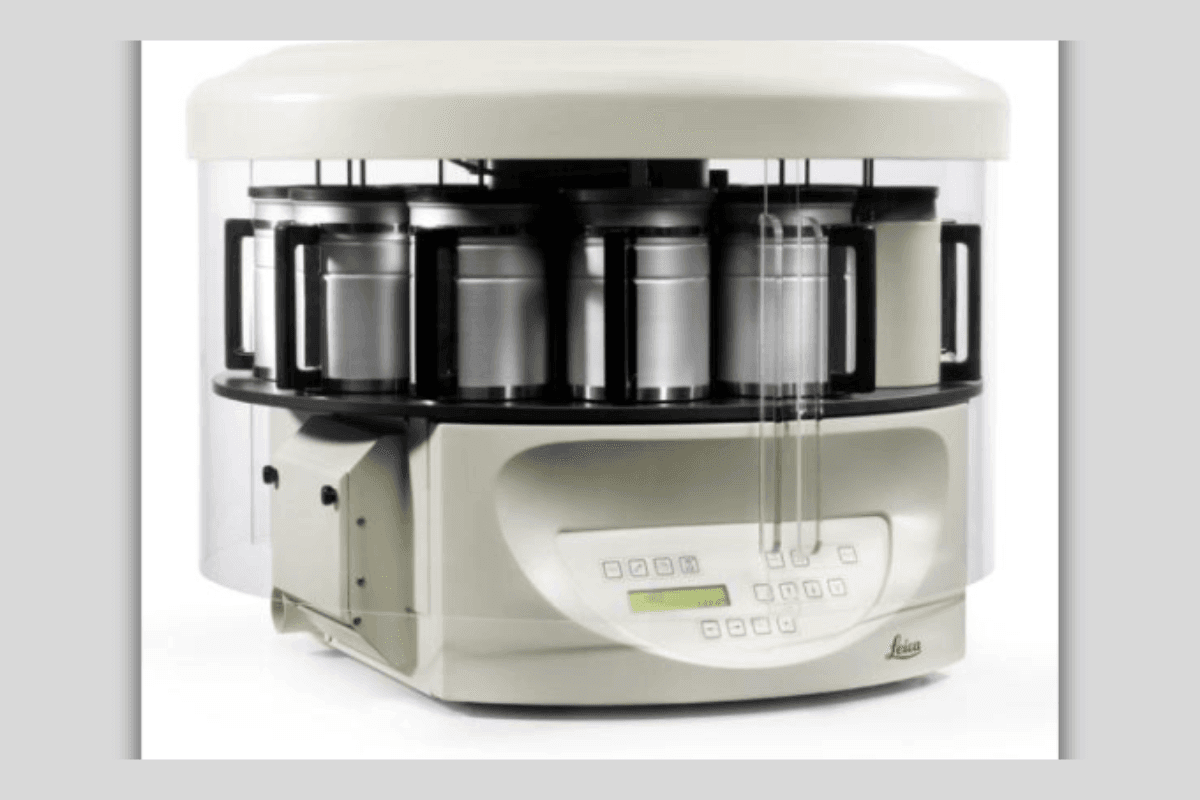
A tissue processor in histopathology is an automated device used in medical laboratories to prepare tissue samples for microscopic examination by pathologists. It facilitates the processing of biological tissues, enabling precise microscopic analysis essential for identifying diseases, including cancer.
Tissue processor uses encompass various laboratory applications, including biopsy analysis, surgical tissue examination and other histological studies. It standardises tissue preparation, reducing manual workload. The instrument ensures consistency and accuracy in histopathological diagnoses in more than one way.
What is a Tissue Processor
A tissue processor is an automated laboratory instrument that systematically prepares biological tissues for microscopic examination by performing fixation, dehydration, clearing, and embedding stages. It facilitates preservation of cellular structure and morphology through controlled reagent exchange, temperature management and precise timing.
Modern tissue processors utilise programmable protocols and closed-system designs to minimise chemical exposure and enhance consistency. They significantly reduce manual processing errors and enable pathologists to reliably interpret tissue morphology for accurate diagnosis.
Tissue Processor Working Principle
The tissue processor's working principle involves multiple stages designed to preserve and prepare tissue samples for embedding and sectioning. Initially, tissues undergo fixation to preserve cellular structure, usually using formalin.
Following fixation, the automatic tissue processor systematically dehydrates the sample by passing it through graded alcohol concentrations, removing water without compromising tissue integrity.
Subsequently, the sample enters a clearing phase using xylene, which removes alcohol and prepares tissues for paraffin infiltration.
Finally, the embedding phase occurs. Molten paraffin infiltrates tissue structures, creating stable blocks suitable for thin slicing and microscopic analysis.
Types of Tissue Processors: Manual vs Automatic
While manual processing was standard practice historically, advancements have introduced automatic tissue processors to histopathology labs, significantly enhancing efficiency.
Manual tissue processing is labour-intensive, prone to variability, and dependent on technician expertise.
In contrast, the automatic tissue processing machine provides uniform results, reducing human error and improving turnaround times. Automatic systems precisely control reagent volumes, timing, and environmental conditions, optimising tissue preservation and consistency.
Benefits of Automatic Tissue Processor in Histopathology Labs
Consistency and Reliability: Automated processors ensure uniform processing conditions for each batch, significantly enhancing diagnostic accuracy.
Faster Processing Time: Automation accelerates tissue preparation, expediting patient diagnoses and treatment plans.
Workflow Efficiency: Automating repetitive processing steps reduces laboratory workload, allowing staff to focus on higher-value tasks.
Improved Safety: Closed-system designs minimise chemical exposure risks for lab technicians, enhancing occupational safety standards.
Features of a Modern Tissue Processing Machine
When selecting a tissue processing machine, histopathology labs should prioritise several features.
| Feature | Description |
|---|---|
| Programmable Protocols | Customisable processing parameters are made for specific tissue types. |
| User-Friendly Interface | Intuitive touchscreen displays and software. |
| Advanced Monitoring | Real-time status updates, reagent level indicators and alert systems. |
| Safety Features | Closed reagent management systems and automated chemical handling. |
| Compact Design | Space-efficient construction that maximises laboratory workspace utilisation. |
How to Choose the Right Tissue Processor
Selecting the appropriate automatic tissue processor requires consideration of laboratory volume, tissue sample types, budget constraints and workflow integration capabilities.
Laboratories handling large volumes may benefit from high-capacity processors capable of batch processing numerous samples simultaneously. Conversely, smaller labs might prioritise compact processors with versatile protocol options suitable for diverse tissue samples.
Integration capabilities with existing laboratory information management systems (LIMS) and other laboratory automation platforms should also factor into purchasing decisions.
Compatibility with established workflows significantly influences operational efficiency and staff acceptance of new equipment.
Also check about Urine Analyser
Maintenance and Troubleshooting
Proper maintenance is essential to ensure the longevity and performance of an automatic tissue processor. Regular upkeep includes:
- Daily cleaning and periodic deep cleaning maintain operational efficiency and prevent cross-contamination.
- Regular inspection of mechanical components, heating elements and reagent delivery systems can detect wear and tear early.
- Timely replacement of reagents and adherence to expiration guidelines ensure tissue processing quality.
- Periodic calibration upholds the temperature and timing accuracy of the instrument.
Troubleshooting common issues promptly minimises downtime. Most frequent concerns are reagent contamination, mechanical jams and software glitches. Access to comprehensive user manuals and responsive technical support is also important.
Suggested - Cryostat for Histology
Future Trends
Demands for efficiency, safety, and precision in laboratory practices drive advancements in tissue processing technology. Notably, artificial intelligence (AI) integration is a prominent innovation. AI enables automated prediction of optimal processing parameters for specific tissue characteristics.
There has been a development of eco-friendly reagents for reduced chemical usage. Advancements in automation and robotics promise even greater precision and efficiency.
Enhanced automation technologies facilitate more delicate and consistent handling of tissue samples.
Also check - Flow Cytometer: Revolutionising Cell Analysis in Pathology Labs
Get Started at ₹1!
Try Flabs for a full month for just ₹1.
Follow us on