Globally, around 10-20% of dementia cases are classified as Frontotemporal dementia. Due to the similarity of symptoms, it is often confused with Alzheimer's and Parkinson’s diseases. But, unlike Alzheimer's, it usually strikes younger, profoundly altering personality and behaviour. Over time, it totally weakens an individual to face life-threatening situations.
This guide will walk you through the 7 stages of FTD, providing insights into diagnosis and treatment options. With clear information, you can better navigate the challenges of FTD and support your loved ones.
Understanding Frontotemporal Dementia
Frontotemporal dementia (FTD) is a group of diseases linked to the deterioration of the frontal and temporal lobes of the human brain—the regions responsible for personality, behaviour, and language. It is also known as Pick’s disease. FTD causes shrinkage of these lobes in the brain, directly affecting the functionalities associated with them.
Depending on the affected region of the brain, symptoms associated with that region become prominent, whether personality changes or difficulty with language usage. Often, FTD is confused with Alzheimer’s disease. However, FTD can also occur in younger people, starting at 40.
7 Stages of Frontotemporal Dementia
Frontotemporal dementia progresses over a period of time until the terminal stage, where it shows significant health decline. During the progression, 7 stages of frontotemporal dementia have been distinctly identified. This distinction helps in frontotemporal dementia diagnosis and management.
1. Early Cognitive Changes
The first of 7 stages of frontotemporal dementia is almost asymptomatic, making it difficult to detect. However, changes are taking place in the brain, which will only show up as slight personality changes. Family and friends, for example, may attribute them to simple ageing.
2. Behavioural Changes
Along with the slight behavioural changes, this stage of FTD introduces issues with language and speech. Often, people at this stage may lose inhibitions and behave inappropriately in public or be unable to use the right words when speaking. Detecting FTD is still difficult at this phase of the 7 stages of FTD, but it can raise suspicion among friends and family members about a possible problem.
3. Language Usage Difficulty
At this stage, language usage becomes significantly difficult, affecting daily work, public, and workplace interactions. Consequently, symptoms of FTD become more apparent at this stage. Visiting a doctor can reveal the early warning signs of FTD. A person with FTD may not notice these changes, but people around them can.
4. Impact on Quality of Life
Once people enter the 4th of the 7 stages of frontotemporal dementia, they will find it difficult to remember simple language and words. So, language usage difficulty becomes more apparent to people around them.
The inability to communicate effectively impacts every sphere of life, making people with FTD experience a decline in their quality of life. They may also experience issues with memory. Behavioural changes become more frequent and severe.
5. Changes in Personality
Personality changes become more severe and visible at this stage, with symptoms mimicking that of Alzheimer's. People will have memory issues and problem-solving difficulties, making their work-life out of consideration. People at this stage of FTD might require assistance with daily activities like eating and bathing. They can also start experiencing issues with motor skills, further reducing the quality of their life.
6. Memory Decline
This is advanced among the 7 stages of FTD where symptoms worsen, impacting the memory of individuals severely. A memory care facility or nursing home is necessary. A significant decline in language and motor skills also happens at this stage, requiring assistance with walking, swallowing, and other basic activities. The responsiveness of FTD people falls drastically to outside situations and what’s happening to them.
7. End Stage and Decline of Health
This is the last of the 7 stages of frontotemporal dementia, where new symptoms will start appearing. The existing symptoms worsen further, totally making an individual incapable. The only intervention possible is to treat and manage symptoms, as there is no cure for frontotemporal dementia. While FTD itself is not fatal, any disease in conjunction with FTD can turn deadly due to a lack of responsiveness. Even minor illnesses can turn severe and life-threatening.
Generally, people at this stage of frontotemporal dementia are kept under full-time care, either at home or a nursing facility. These are the final stages for individuals with FTD.
Frontotemporal Dementia Progression Timeline
Here's a chronological Frontotemporal Dementia Progression Timeline:
1. Asymptomatic (Pre-clinical stage)
- No noticeable symptoms.
- It may last for years.
2. Prodromal Phase
- Subtle changes in behaviour or language.
- Typically lasts 2-3 years.
3. Mild Neurocognitive Disorder
- Noticeable symptoms emerge.
- It usually lasts 2-4 years.
4. Moderate Neurocognitive Disorder
- Symptoms worsen, affecting daily life.
- Typically lasts 3-5 years.
5. Severe Neurocognitive Disorder
- Significant impairment in functions.
- It may last 1-3 years.
6. Profound Neurocognitive Disorder
- Severe decline in cognitive and physical abilities.
- It usually lasts 1-2 years.
7. Terminal Stage
- Complete dependence on caregivers.
- Typically lasts 6-12 months.
Note: The duration of each stage can vary between individuals. Some people may progress more quickly, while others may have a slower progression.
Diagnosing FTD
There is no exact test to diagnose frontotemporal dementia. Typically, various tests are conducted based on symptoms. By ruling out other health conditions, the condition of FTD is diagnosed. As mentioned, it is hard to diagnose FTD in the early stages. When symptoms worsen, the following tests may be ordered to find out FTD.
- Blood tests are conducted to rule out any liver or kidney-related issues, as they can also manifest as symptoms associated with FTD.
- Sleep studies are needed based on the symptoms of loud snoring and pauses in breathing. It can rule out obstructive sleep apnea, which shares symptoms with frontotemporal dementia (FTD).
- Neuropsychological tests are conducted to assess reasoning and memory skills. It can distinguish FTD from other types of dementia.
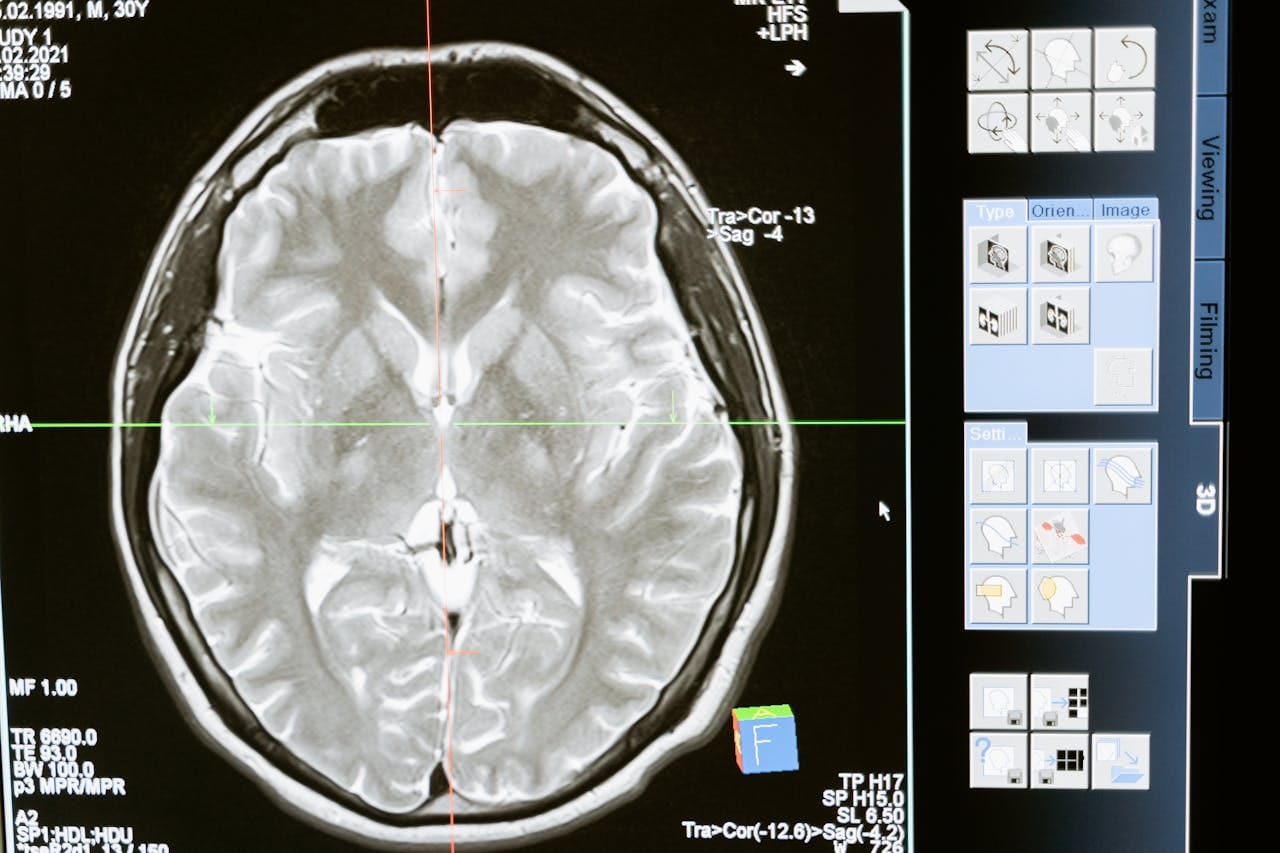
- MRI and PET scans are done to obtain brain imaging to get closer to FTD diagnosis
MRI: Uses radio waves and a strong magnetic field to produce detailed images of the brain, showing changes in the frontal or temporal lobes.
FDG-PET Scan: Involves injecting a low-level radioactive tracer to show areas of low metabolism in the brain, aiding in dementia diagnosis.
Genetic Testing for Frontotemporal Dementia
Frontotemporal dementia can stem from hereditary characteristics. So, FTD genetic testing can reveal mutations associated with FTD. Essentially, these gene tests aim to identify genes or chromosomes responsible for frontotemporal dementia.
Approximately 30-40% of FTD cases are genetic, often due to mutations in the GRN, C9orf72, or MAPT genes. A parent with an FTD-causing mutation has a 50% chance of passing it to their child. So, genetic counselling is an essential aid in the diagnosis of the disease. It can provide valuable insights and help individuals make informed decisions about testing.
Treatment for FTD
There is currently no cure or treatment for frontotemporal dementia (FTD). However, certain medications and speech therapy can help manage symptoms.
Medications such as antidepressants are used to treat behavioural symptoms. They include trazodone and selective serotonin reuptake inhibitors (SSRIs) like citalopram, escitalopram, paroxetine, or sertraline. These medications often have a positive impact on behavioural symptoms.
Antipsychotic medicines like olanzapine and quetiapine are also used to treat behavioural symptoms. But they are used cautiously to avoid serious side effects, including an increased risk of death.
FTD people with language difficulty can benefit from speech therapy. Teaching them to use communication can improve their ability to communicate.
Despite all this, FTD is manageable only until the end stage. Beyond that, it cannot be treated once and for all.
Conclusion
Understanding and managing frontotemporal dementia (FTD) involves recognizing its stages. Diagnostic tests and treatment using medications and therapies can certainly help thereafter. While there is no cure, early detection and proper care can significantly improve the quality of life for those affected by FTD.
Get Started at ₹1!
Try Flabs for a full month for just ₹1.
Follow us on