Allergies are more common than they are not. Most people underestimate the occurrence and impact of allergic reactions. While it is true to some extent, it is only half the picture. Indeed, a small percentage of allergies (5-10%) may not be a big issue for an individual. Often it can be effectively managed. However, allergic reactions in percentages greater than 50% can be fatal. That is, diagnosis of allergic conditions in an individual is important. An Allergy Profile test is meant for that.
It is a series of tests used to determine the cause of allergic reaction, involving skin, blood and food challenge tests. The result of a complete allergy test gives a precise diagnosis of the cause and impact of specific allergens on an individual, helping them with early treatment and management.
What is an Allergy Profile Test
An Allergy Profile test is a comprehensive test list used to determine the cause of an allergy in an individual based on symptoms. Different tests on skin, blood and oral-related are performed to determine the type and cause of allergic reactions to an individual.
Allergies are common in everybody’s life. Some people can be particularly susceptible to allergens and often face allergic reactions throughout their lives. For example, things like mould, pollen and pet dander can trigger allergic reactions. Some people have allergic reactions to bee stings or latex. Peanuts, milk or soy are classified as food-related allergens that some people may not intake without being affected by allergies.
Most allergies manifest as similar types of symptoms, making the accurate diagnosis rather difficult. That is where the Allergy Profile test helps, providing a comprehensive picture of the reasons, type and cause of an allergy, thereby guiding treatment decisions.
Sample
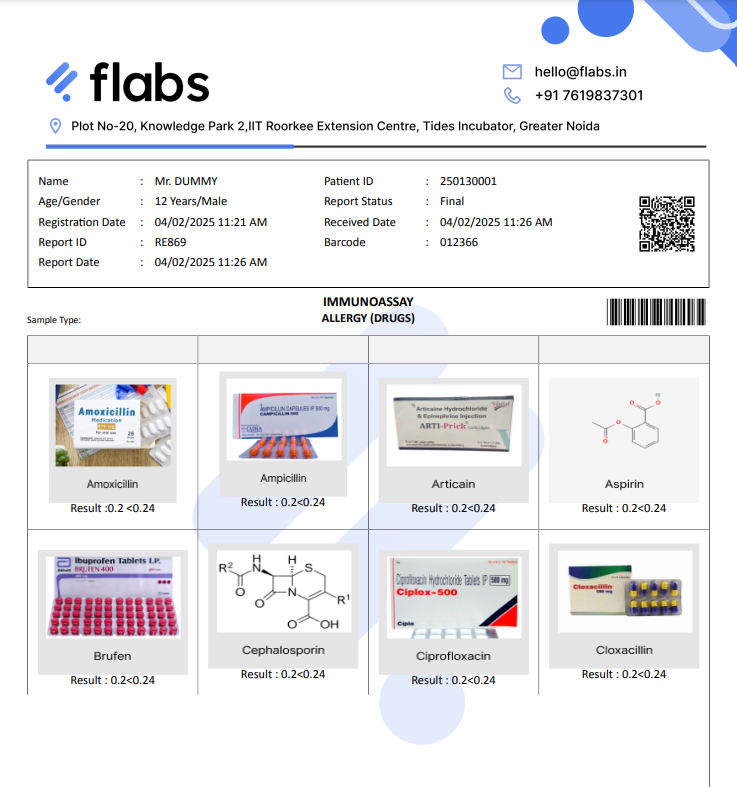
Allergy profile Test report Format
Please check this report format available for free download.

When do You Need It
Allergy symptoms can differ for everyone, even with the same allergen. Consider an allergy profile test if you notice any of these signs:
Airborne Allergies (dust, pollen, pet dander)
- Headache
- Itchy or watery eyes
- Sneezing, nasal congestion, or runny nose
- Wheezing, chronic cough, or shortness of breath
- Sore throat
Food Allergies
- Hives, facial swelling, or itchy skin
- Difficulty breathing, wheezing, or coughing
- Nausea, vomiting, stomach pain, or diarrhoea
- Dizziness or weak pulse
Contact Allergies (latex, fragrances, metals)
- Rashes, hives, or swelling
- Burning skin or blisters
Common Allergens
| Category | Common Allergens | Typical Symptoms |
|---|---|---|
| Airborne Allergens | Dust mites, Pollen (grass, trees, weeds), Pet dander (cats, dogs), Mold spores | Sneezing, nasal congestion, runny nose, Itchy, watery eyes, headaches, Wheezing, shortness of breath, chronic cough, Sore throat, respiratory issues |
| Food Allergens | Peanuts, tree nuts, Milk, eggs, soy, wheat, Fish, shellfish | Hives, facial swelling, difficulty breathing, Nausea, vomiting, abdominal pain, diarrhoea, Tightness in the throat, dizziness |
| Contact Allergens | Latex, Fragrances, perfumes, Metals (nickel, cobalt) | Skin rash, itching, swelling, blisters, Burning sensation, hives, Dermatitis, skin irritation |
| Insect Allergens | Bee, wasp, hornet stings | Severe swelling, difficulty breathing, anaphylaxis |
| Drug Allergens | Penicillin, other antibiotics, Aspirin, NSAIDs | Rashes, hives, respiratory issues, Stomach upset, severe reactions |
Allergy Test List
An Allergy profile test includes different types of tests, each about finding a specific allergen.
Skin Prick Test is used to detect airborne, food, or penicillin allergies, which manifest as redness or raised spots on the skin. Small amounts of allergens are applied to the skin in this test, which is then pricked or scratched.
An Intradermal Test is used if skin prick results are unclear. Allergens are injected into the skin to check for reactions to airborne irritants, medications, or insect stings.
There is also a Patch Test to determine the cause of contact dermatitis. Allergens are placed on the skin and covered with a bandage for 48-96 hours. The skin is then checked for rashes.
The Blood (IgE) Test is used to identify specific or total allergic responses to substances, by measuring the level of allergy-related antibodies (IgE) in the blood.
An Oral Challenge Test in case of a suspected food or drug allergen.
What Happens During Allergy Testing
The procedure of an Allergy profile test depends on the type of test. Blood tests for allergy involve sample collection through venipuncture, preserving the sample in a test tube, transporting it to a lab and diagnosis. The sample is then tested for immunoglobulin (IgE) antibodies against specific allergens. The allergy blood test takes just 10 minutes.
In Skin Allergy tests, the provider pricks or scratches the skin on the forearm or back with a thin needle containing small amounts of allergens. If you’re allergic, reactions such as redness, itching, or raised bumps (wheals) appear within 15 minutes. In the case of intradermal tests, allergens are inserted into the epidermis of your skin.
In the Patch test, allergen-containing patches are applied to the skin and left for 48 to 96 hours. After removal, the provider checks for contact dermatitis reactions such as rashes or swelling. The Patch test is used to identify allergies to substances like latex, metals, and fragrances.
In the Oral challenge test, small amounts of a suspected food or drug allergen is ingested. The test is conducted under strict medical supervision and involves a slight risk compared to other tests. However, immediate medical attention is available in case of severe reactions. For this reason, the Oral challenge test takes 3-4 hours.
How to Prepare
When it comes to preparation for the Allergy Profile test, you may be asked to stop taking allergy medications like antihistamines up to a week before the test. They can interfere with the test results by preventing immune responses. Asthma patients can continue their medication. For further doubts, you can ask your healthcare provider.
Risks of Allergy Screening Test
There are slight risks associated with allergic tests. Severe allergic reactions (anaphylaxis) are rare but possible during allergy testing. Healthcare providers are prepared with emergency epinephrine to handle such situations.
During skin tests, you may experience itching, soreness, or allergy symptoms—this is expected and helps confirm your allergy. Providers can give medications to ease discomfort.
If you react to a patch test at home, avoid applying anything to the area. If intense itching or burning occurs, contact your provider for guidance.
Allergy Panel Test Results
The results of an allergy panel test are available immediately in most cases, except for blood tests. The results will be published in the form of an Allergy profile test report that you can keep for future reference. Just like the test procedure, allergy testing results are also straightforward. Interpretation involves minimal technicalities.
A negative result indicates that you’re not allergic to a particular substance, while a positive result indicates you may be allergic to a given substance. While false negatives are rare, false positive results are quite possible in Allergy panel tests.
It usually happens with the serological allergy test, wherein results show you have an allergy when you don’t. The exact diagnosis requires considering your health condition, medical history, ongoing medications etc. Based on them, additional tests or repeated testing may be ordered for precise diagnosis.
Keeping Allergies in Check
Whether you’re susceptible to allergens or diagnosed with allergic reactions, the following steps should help you cope with the symptoms, or avoid allergies altogether.
- Avoid known allergens by staying indoors during high pollen counts or avoiding severe triggers.
- Take daily allergy medications like nasal sprays or antihistamines to reduce symptoms.
- Consider allergy shots over three to five years for long-term relief from environmental allergens.
- Carry a medical alert card or wear alert jewellery for severe allergies.
- Keep an epinephrine injector with you if at risk for anaphylactic reactions.
- Clean your home regularly by vacuuming and dusting with a damp cloth to reduce allergens.
- Use an air purifier to trap dust and pollen indoors.
- Wash bedding weekly in hot water to eliminate dust mites and allergens.
- Keep windows closed during high pollen seasons to prevent allergens from entering your home.
- Shower and change clothes after spending time outdoors to remove pollen from skin and hair.
- Use a dehumidifier to reduce moisture levels, preventing mold growth and dust mites.
Conclusion
Beyond testing and managing allergies, it’s vital to build awareness about your body’s responses. Keeping a symptom diary can reveal patterns and hidden triggers, guiding future treatment decisions. Stay informed about emerging allergens or new treatments through reliable sources. Regular consultations with your healthcare provider also help adapt your management plan as your environment or health conditions change, ensuring better control over allergic reactions.
Get Started at ₹1!
Try Flabs for a full month for just ₹1.
Follow us on