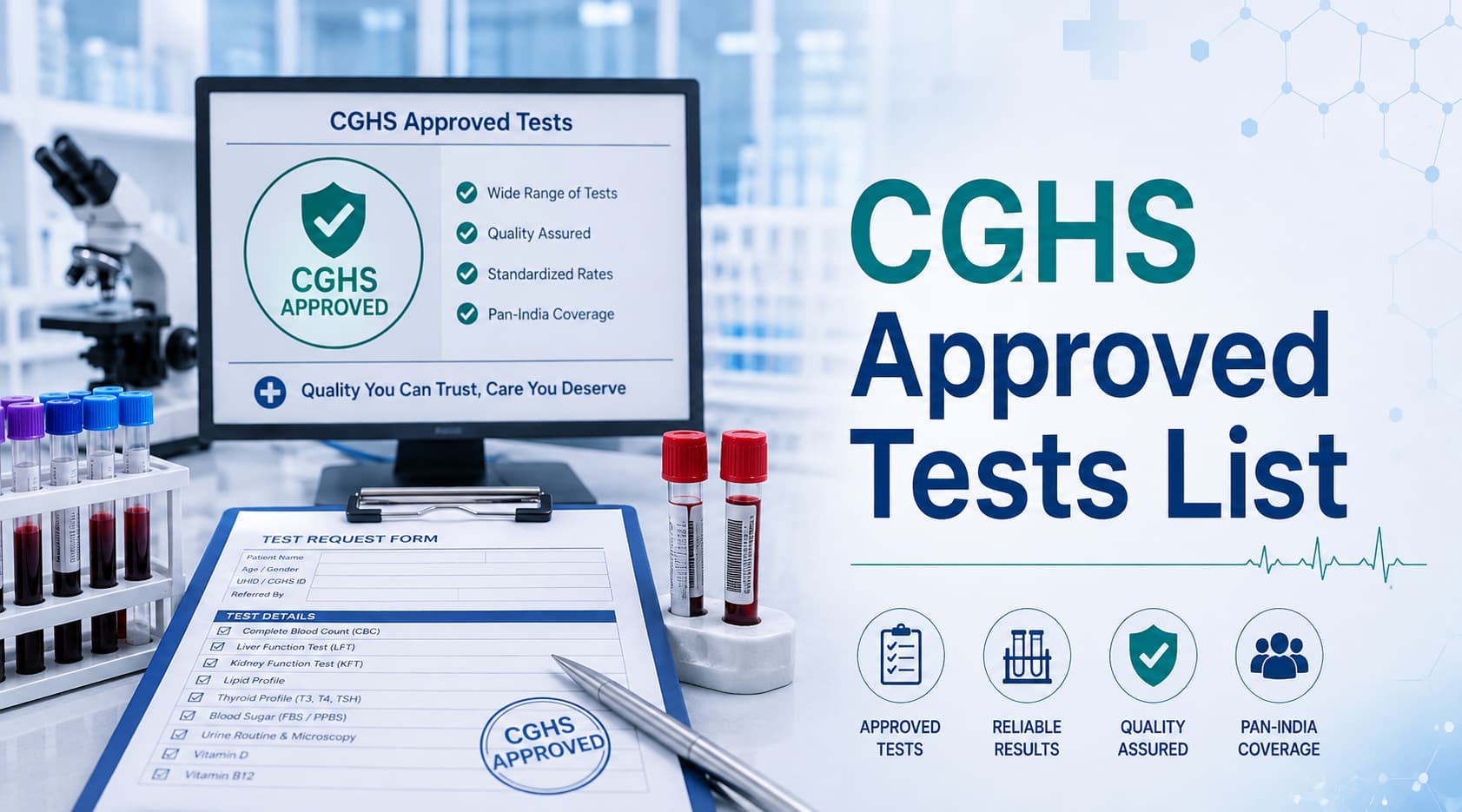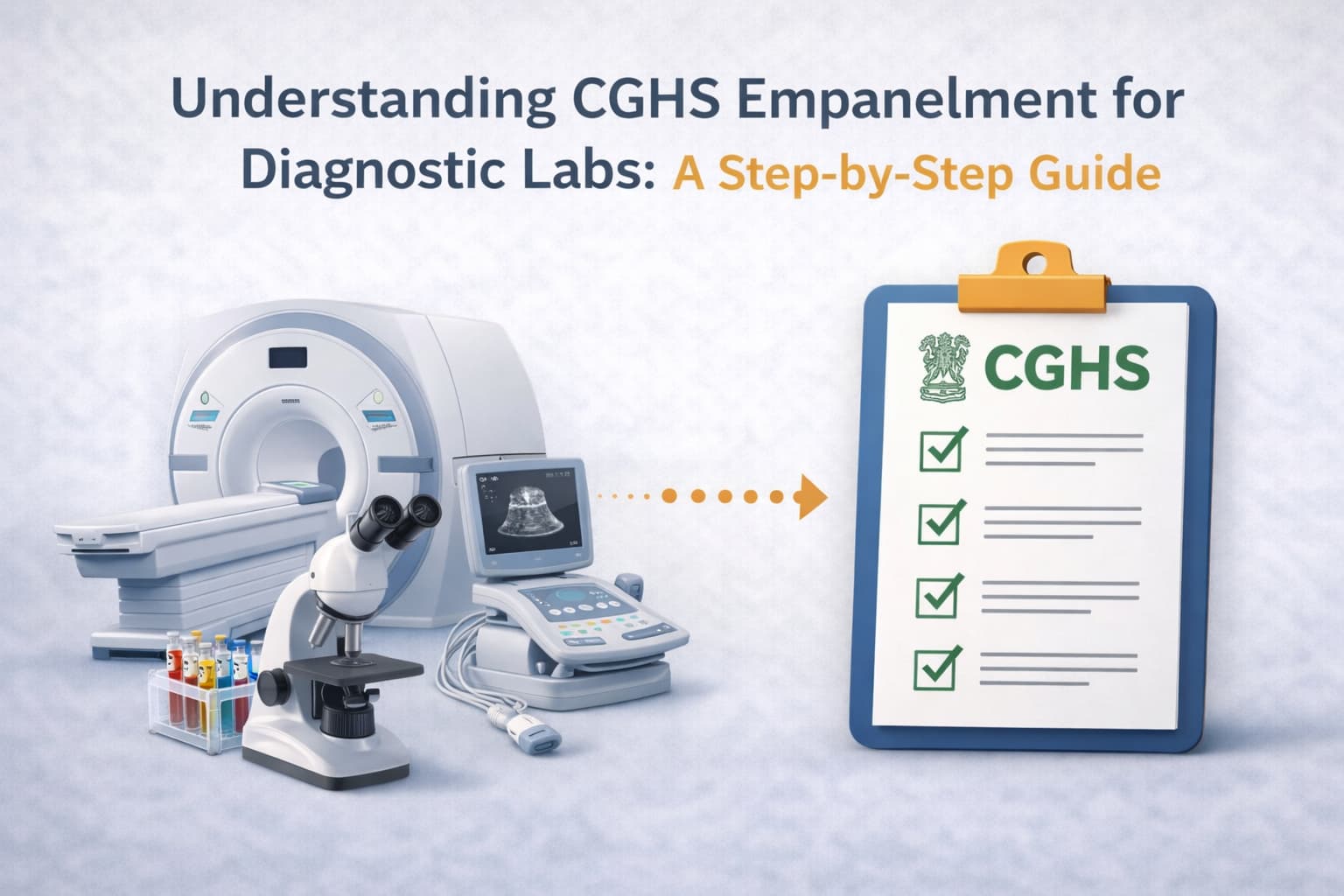
For diagnostic labs that work with government beneficiaries, CGHS Empanelment is far more than an administrative badge. Empanelment places a lab inside a nationally governed care delivery framework where pricing, quality, and reporting face formal scrutiny.
For pathologists and senior healthcare professionals, the process demands preparation across accreditation, manpower, infrastructure, and digital compliance.
The Central Government Health Scheme, commonly referenced through the CGHS full form in medical rules, operates as a structured public health program for central government employees, pensioners, and dependents. The CGHS meaning reflects assurance of defined standards across diagnostics and treatment.
CGHS Empanelment and NABH-QCI
Through a formal MoU, National Accreditation Board for Hospitals & Healthcare Providers, operating under Quality Council of India, conducts assessments for empanelment under the Central Government Health Scheme. For medical labs, the assessment framework aligns operational performance with nationally benchmarked quality indicators.
The CGHS health scheme relies on third-party evaluation to maintain trust among beneficiaries. NABH assessors validate compliance across services, documentation, infrastructure, and staffing before recommending empanelment to CGHS authorities.
Why Diagnostic Labs Pursue CGHS Empanelment
| Organisational Perspective | Beneficiary Perspective |
|---|---|
| Access to a large, stable pool of CGHS beneficiaries | Standardised diagnostics from NABL accredited labs |
| Stronger institutional credibility through NABH–QCI evaluation | Predictable turnaround time and transparent pricing |
| Visibility across government panels and referral networks | Confidence in pathology report format and clinical accuracy |
Application Scope and Eligibility
CGHS empanelment targets allopathic healthcare organisations. For diagnostics, eligible entities include standalone pathology labs and integrated imaging centres.
Applications move exclusively through the NABH empanelment portal. Offline submissions no longer receive acceptance.
Before starting, laboratory leadership should review all eligibility documents listed on the NABH section of the CGHS website. The entire workflow runs digitally through CGHS online systems, including tracking status via the CGHS dashboard.
Prerequisites Related to Accreditation
For laboratories, NABL Accreditation forms the backbone of eligibility. NABL accredited labs demonstrate compliance across quality control, calibration, documentation, and personnel competency.
- Test validation and internal quality assurance.
- Defined pathology report format aligned with NABL norms.
- Equipment maintenance logs and calibration schedules.
- Sample traceability and data security.
Outsourced services receive equal scrutiny. QCI assessors retain authority to inspect partner facilities linked through MoUs.
Support Services: In-house and Outsourced Models
Standard expectation: Basic diagnostic services must operate in-house. Collection, processing, reporting, and record retention should function under direct lab governance.
Permitted exceptions: Tier-II, Tier-III, and remote regions receive limited flexibility.
| Service Area | Outsourcing Condition |
|---|---|
| Laboratory | Allowed via MoU with an NABL-accredited lab; in-house collection centre mandatory |
| Radiology | Allowed via MoU if facility lies within 1.5 km of the healthcare organisation |
Assessors inspect outsourced locations as part of the empanelment visit.
Standards for Manpower
The pattern of staffing in labs align with Indian Public Health Standards (IPHS). Assessment considers sanctioned capacity and average workload across the previous six months.
Accepted consultant models
- Full-time consultants on payroll with exclusive association.
- Part-time consultants running scheduled OPDs.
Non-accepted models
- Visiting consultants on case-to-case arrangements.
Infrastructure and Facilities
Diagnostic labs attached to hospitals or surgical centres face additional scrutiny in shared zones.
Operation theatres connected to lab-supported services must comply with NABH 2018 Air Conditioning Guidelines. Requirements apply uniformly across general hospitals, super speciality centres, and eye care organisations.
Laboratory infrastructure assessment also covers:
- Segregation of pre-analytical and analytical areas
- Bio-medical waste flow
- Backup power and data storage systems
Inspection, Renewal, and Scope
Empanelment never functions as a one-time clearance.
- Within two years of last inspection: Focus inspection permitted for up to three new scopes
- Beyond two years: Full inspection treated as a fresh application
Focus inspection fee: ₹15,000 plus GST
QCI-NABH conducts random audits. Triggers include complaints, adverse media, or routine surveillance. Continued compliance carries equal weight as initial approval.
Application and Documentation
Since 15 November 2022, all CGHS empanelment applications operate through mandatory online filing. Physical forms face rejection.
Pre-application diligence matters. Laboratories should examine eligibility documents uploaded on the NABH portal before initiating CGHS online submission.
Recommendation or non-recommendation letters follow a revised process:
- Uploads no longer appear on the ECE portal.
- Hard copies reach hospitals and empanelment authorities directly.
- Public status displays on the NABH website under CGHS/ECHS programs.
Validity periods fall under CGHS Head Office authority rather than NABH.
Touchpoints Every Lab Should Know
Diagnostic administrators interact with multiple digital layers during empanelment and post-approval operations.
- CGHS dashboard for application tracking
- CGHS website for policy updates and notifications
- Apply for CGHS card online workflows impacting beneficiary volumes
Familiarity with these systems reduces delays and avoids documentation mismatches.
Takeaway for Pathologists
CGHS Empanelment aligns accreditation, staffing, infrastructure, and digital governance. For diagnostic labs, NABL accreditation, disciplined reporting formats, predictable turnaround time, and well-maintained lab equipment form the foundation.
Pathologists leading empanelled labs step into a regulated ecosystem. Given that, preparation places laboratories in a stronger position during assessments and surprise inspections.
A methodical approach transforms empanelment from a procedural hurdle into a structured growth pathway within India’s public healthcare network.
Also check - Top 10 Radiology Labs in India
Get Started at ₹1!
Try Flabs for a full month for just ₹1.
Follow us on