What sets one intervention apart from another in infectious-disease management? For pathologists and clinicians, the answer relies on the organism at play and how the body responds. Bacterial, viral, fungal, and protozoal threats behave differently. Accordingly, the strategy used to contain them can’t be one-size-fits-all.
Two of the most relied-upon tools are on the opposite ends of the care spectrum, viz., antibiotics and vaccines. They intersect in ways that shape population-level disease control.
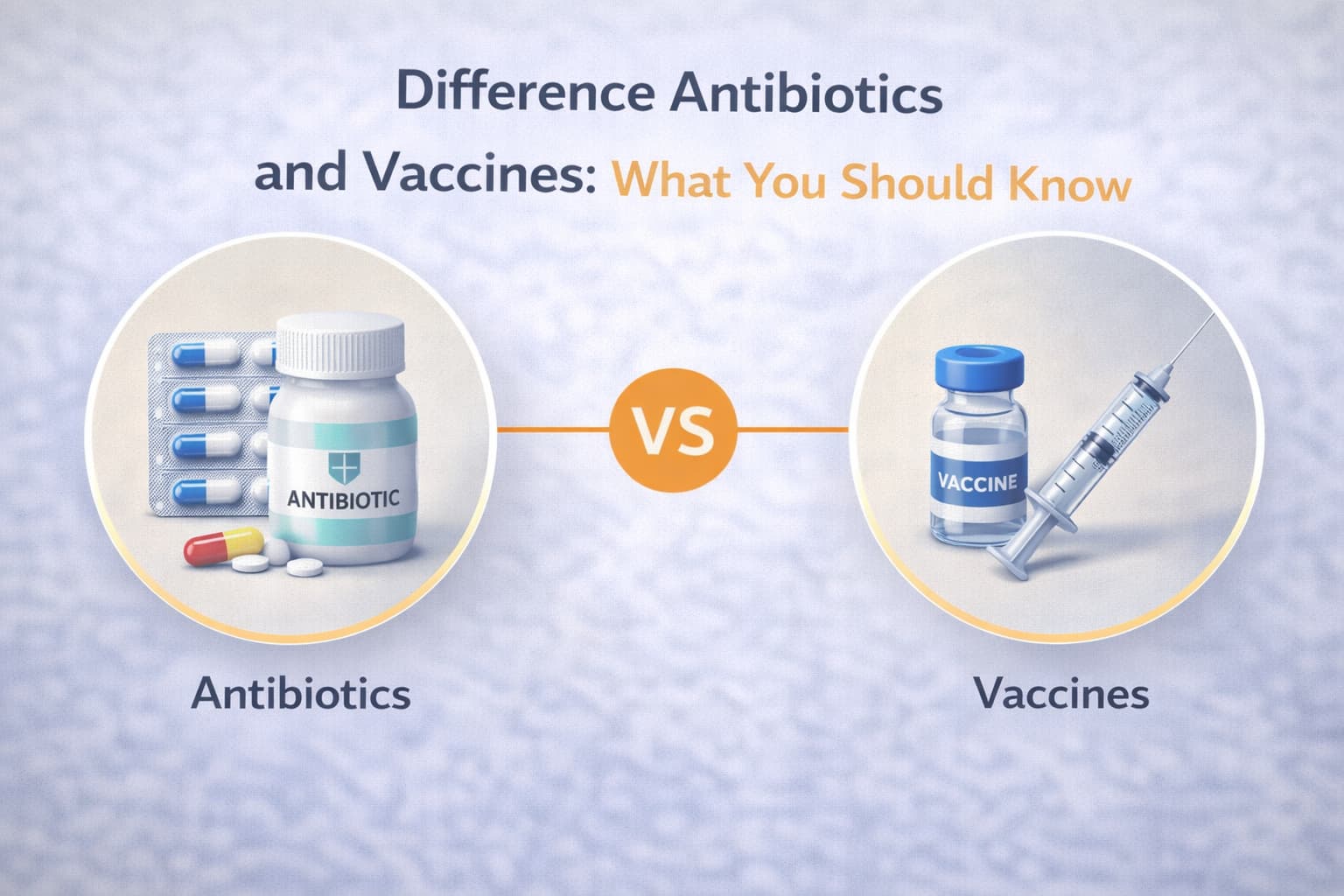
Before going deeper, the difference between antibiotics and vaccines is straightforward in principle: one treats active bacterial disease, the other prepares the immune system before exposure.
But the way those principles show up in practice is more layered, especially when trying to reduce disease burden across a varied patient population.
A Direct Comparison: Antibiotics vs Vaccines
| Feature | Antibiotics | Vaccines |
|---|---|---|
| Primary purpose | Treat active infection | Prevent future infection |
| Timing | During illness | Before exposure |
| Targets | Bacteria (some agents also affect fungi or protozoa) | Bacteria and viruses |
| Mechanism | Kill or slow bacterial growth | Build immune memory through exposure to harmless antigenic material |
| Examples | Penicillin, cephalexin, ciprofloxacin, azithromycin | MMR, Tdap, HPV, polio, flu, hepatitis B, COVID-19 |
| Resistance concern | High when misused | None; vaccination reduces resistance indirectly |
| Administration | Oral, topical, inhaled, IV | Intramuscular, subcutaneous, oral, intranasal |
Where Antibiotics Fit in Modern Healthcare
Antibiotics have long been used to target bacterial infections once they’re underway. The class is enormous, and mechanisms vary, but their driving purpose is the same: disrupt bacterial survival so the immune system can regain control.
Some agents take a direct approach. Bactericidal drugs end bacterial viability altogether, e.g., penicillins, cephalosporins, or fluoroquinolones. Others use a more restrained method. Bacteriostatic options, such as azithromycin, doxycycline, or clindamycin, slow replication so immune cells can finish the job.
Because they act on bacteria rather than viruses, they’re used in conditions where aetiology is clear or strongly suspected. For example, ear infections, UTIs, pneumonia, and certain skin infections. Delivery may be through oral tablets, IV formulations for severe disease, topical preparations, and inhaled therapies for specific pulmonary issues.
Side effects are familiar to most clinicians. Changes in gut flora, digestive upset, rashes, and medication interactions may show up depending on the agent. Management grows more complicated when resistance emerges through misuse. Each unnecessary course increases selection pressure, eventually limiting what is effective.
How Vaccines Influence Future Risk
Vaccines aim for a different outcome. Rather than suppressing pathogens mid-infection, they build immune memory so disease severity or probability of infection drops dramatically after exposure.
The mechanics present a harmless version or component of a bacterium or virus— attenuated organisms, inactivated particles, subunits, toxoids, conjugates, or, in newer platforms, nucleic-acid constructs or recombinant vectors. The immune system recognises these components and stores the pattern for later reference.
Because the immune response needs time to mature, vaccination works best when delivered during periods of wellness. It sets the stage for a faster, more coordinated reaction if the pathogen ever appears. Examples span many specialities: MMR, DTaP/Tdap, HPV, polio, influenza, hepatitis B, and COVID-19 vaccines.
Side effects tend to be mild. There could be soreness, low-grade fever, and fatigue. Serious outcomes are rare. Trace amounts of antibiotics may appear in certain formulations to prevent contamination during manufacturing.
Differentiating Targets and Methods
One aspect that can blur in discussions with patients is what each intervention actually addresses. Antibioticsare squarely in the bacterial realm. They do not affect viruses. That detail becomes especially relevant in seasons where respiratory viral infections dominate. Conversations about influenza or COVID-19 sometimes drift toward requesting antibiotics, even though these agents provide no benefit in those settings.
Vaccines, conversely, handle a broader spectrum. Because viral antigens can be presented safely in vaccine form, immune memory can be built against both bacterial and viral pathogens. A vaccine against pertussis operates very differently from one against HPV or SARS-CoV-2, yet the conceptual foundation is consistent.
Timing Matters: Prevention Versus Intervention
Another part of the difference between antibiotics and vaccines lies in timing. Vaccines work pre-exposure. Their impact depends on immune priming before the first encounter. Antibiotics come later, once symptoms suggest bacterial colonisation has progressed enough to disrupt normal physiology.
Clinicians may sometimes face questions about receiving a vaccine while taking antibiotics. In most cases, the two do not interfere with one another. The primary exception relates to the overall clinical condition. If someone is acutely unwell, vaccination is postponed mainly to avoid blurring adverse-event interpretation, not because antibiotics would interfere with immune-memory development.
Antibiotics and Vaccines at the Population Level
When considering how antibiotics and vaccines contribute to health across a population, the interplay becomes clearer:
- Reduced infection rates from vaccination lowers downstream demand for antibiotics.
- Lower antibiotic use slows resistance.
- Fewer resistant organisms ease future treatment burdens.
- Early immune memory from vaccination helps maintain herd-level protection.
This cascade shows why stewardship programs and immunisation programs operate side by side. They aim for complementary goals: steady upstream infection prevention and judicious downstream therapeutic intervention.
The Case of COVID-19
Even with widespread awareness, misconceptions continue about the roles of antibiotics in COVID-19 management. Because SARS-CoV-2 is a virus, antibiotics provide no therapeutic benefit unless secondary bacterial pneumonia develops. Vaccine timing adds another layer. Vaccination is avoided during active COVID-19 illness, then resumed roughly three months after infection for primary doses, with spacing adjusted for boosters.
Conversations around coinfections, immune compromise, and long-term vaccine schedules will likely continue changing. Yet the difference between antibiotics and vaccines in COVID-19 care is unambiguous.
Shared Goals, Distinct Functions
Pathologists see the downstream consequences of infectious disease patterns every day. Examining tissue samples, tracking microbiologic shifts, and reviewing resistance trends make one reality hard to ignore: prevention and treatment pull in different directions but aim toward the same outcome. Vaccines reduce incidence; antibiotics reduce severity. When both are used appropriately, the overall disease landscape becomes far more manageable.
As a quick recap for teams teaching early-career clinicians or building educational content, here’s a short list that ties together the antibiotics and vaccines difference clearly:
- Antibiotics treat bacterial infections already underway.
- Vaccines prepare the immune defences for future exposure.
- Antibiotics do not act on viruses.
- Vaccines target both bacteria and viruses.
- Overuse of antibiotics accelerates resistance.
- Vaccination lowers disease frequency and indirectly curbs resistance.
- Both contribute to safer, more predictable infection-control patterns.
Why Distinguishing Their Roles Still Matters
The difference between antibiotics and vaccines shows up in daily decision-making, not just academic discussions. Misaligned expectations can quickly shift clinical outcomes. For healthcare professionals, revisiting these distinctions occasionally strengthens stewardship, guides clearer patient communication, and anchors infection-prevention strategies across departments.
As research advances and microbial behaviour continues to evolve, one reality remains—for all their differences, antibiotics and vaccines remain complementary rather than competitive. Each occupies a distinct role, and when used in concert, they create a more resilient framework for infectious-disease control.
Also check - Cytopathology vs Histopathology: Understanding the Difference
Get Started at ₹1!
Try Flabs for a full month for just ₹1.
Follow us on