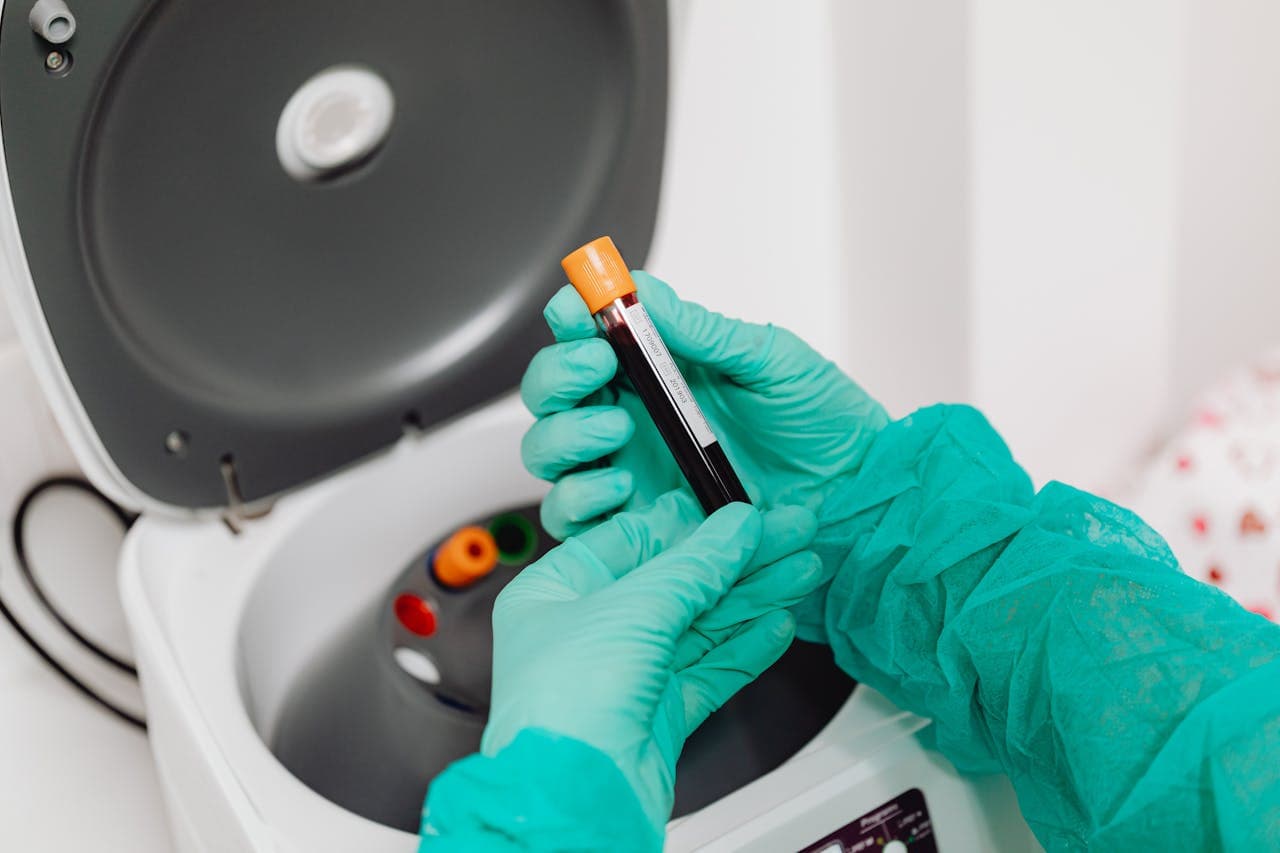
The EDTA Blood Test is widely used in hematology for accurate blood sample analysis.
EDTA full form in blood tests is Ethylenediamine tetraacetic acid (EDTA). It is an anticoagulant used in research and clinical settings, particularly in haematology. This polyprotic acid—with four carboxylic acid groups and two amine groups capable of chelating calcium ions—has been a trusted agent for stabilising blood samples and preserving cellular morphology. But the role of EDTA in haematology is much broader.
Mechanism of Action
Calcium plays an integral role in the coagulation cascade, functioning as a cofactor for various enzymatic reactions. EDTA effectively halts the cascade by chelating calcium ions, irreversibly preventing blood clot formation within the collection tube. This property facilitates the stabilisation of blood samples for testing. EDTA blood tests are usually collected in lavender or purple-top tubes.
Types of EDTA Blood Tests
| Test Name | Purpose | EDTA Role |
|---|---|---|
| Cyclosporine EDTA Blood Test | Monitors levels of cyclosporine for transplant patients. | Ensures sample stability for accurate drug level measurement. |
| EDTA Test for Kidney Function | Evaluates glomerular filtration rate (GFR) using radioactive tracer. | Stabilizes sample for detailed renal function analysis. |
| Platelet Count | Routine platelet counts; citrate used for EDTA-induced platelet satellitism. | Prevents clumping during routine platelet counts. |
| Haemoglobin HPLC EDTA Test | Detects hemoglobin variants and disorders like thalassemia or sickle cell anemia. | Stabilizes sample for high-performance liquid chromatography (HPLC). |
| Erythrocyte Sedimentation Rate (ESR) | Measures ESR, traditionally with citrate; increasingly automated with EDTA. | Provides comparable results in automated systems. |
Advantages of EDTA in Hematology
Historically, EDTA has been the anticoagulant of choice for haematological testing due to its ability to preserve blood cell morphology and maintain the integrity of cellular components.
- Complete Blood Counts (CBC): EDTA’s ability to prevent platelet clumping and maintain cell morphology ensures accurate measurements of red and white blood cells and platelets.
- Microscopic Evaluations: Blood smears prepared from EDTA-treated samples display optimal cell preservation, enabling pathologists to identify morphological abnormalities with precision.
- Stability: EDTA-treated samples remain viable for longer periods, allowing for delayed processing when necessary.
Other Applications of EDTA
The remarkable versatility of EDTA has extended its use beyond traditional haematological tests into areas like cytokine measurement, proteomics, and clinical chemistry. Here’s a closer look at its broader applications:
| Area | Description |
|---|---|
| Cytokine and Biomarker Analysis | EDTA prevents the degradation of cytokines, proteins, and peptides, ensuring reliable measurements of biomarkers such as inflammatory markers and cardiac markers like troponins. |
| Proteomics | EDTA minimises unwanted proteolytic activity by chelating metal ions, supporting accurate protein profiling in advanced proteomics studies. |
| Clinical Chemistry | EDTA-treated plasma offers advantages for tests requiring rapid plasma separation and high precision, such as glucose and lactate assays. |
EDTA Blood Test Results
EDTA blood test results depend on the type of test performed. Accordingly, ETDA blood test normal range also changes.
| Test | Normal Range |
|---|---|
| Cyclosporine | 100–400 ng/mL |
| Platelet Count | 150–400 x 10⁹/L |
| Erythrocyte Sedimentation Rate | 2–10 mm in 1 hour (males), 5–15 mm in 1 hour (females) |
Patient health and clinical context also decide the EDTA blood test normal range. For instance, therapeutic ranges for immunosuppressants like cyclosporine or tacrolimus may differ based on the transplant type, procedure, and concurrent therapies.
EDTA blood tests require no special preparation. Fasting is not required unless specifically indicated for a concurrent test.
EDTA Blood Test Price
The cost of EDTA blood tests in India varies based on the type of test and the laboratory. Prices range from ₹449 for specific tests like the Direct Coombs Test to ₹3,539 for profile tests.
Limitations and Pitfalls
Despite its wide utility, EDTA is not without challenges.
- Interference in Assays: EDTA’s chelating properties can interfere with certain assays. Particularly those reliant on calcium-dependent reactions. For example, coagulation studies requiring functional clotting pathways are unsuitable for EDTA-treated samples.
- Dilution Effects: Overfilling or underfilling collection tubes can lead to an incorrect anticoagulant-to-blood ratio, affecting test results.
- Platelet Satellitism: A phenomenon where platelets adhere to white blood cells. It leads to false low platelet counts.
EDTA vs. Other Anticoagulants
Several anticoagulants are used in diagnostic testing, each with advantages and drawbacks.
- Citrate: Used primarily in coagulation studies due to its reversible calcium binding. However, its performance in preserving cellular morphology is inferior to EDTA.
- Heparin: Preferred in certain clinical chemistry and enzymatic assays, but its tendency to cause white blood cell aggregation limits its utility in haematology.
- Oxalate: Effective in glucose testing but less commonly used due to its poor performance in preserving blood cell morphology.
Final Word
While EDTA’s role in hematology is well-established, its potential in emerging fields like molecular biology and genomics is worth noting. EDTA-treated blood samples are increasingly used for DNA and RNA preservation as they help with high-quality nucleic acid extraction. Pathologists must also explore knowledge of the latest trends in EDTA usage.
Related read: Importance of Calcium Blood Test
Get Started at ₹1!
Try Flabs for a full month for just ₹1.
Follow us on