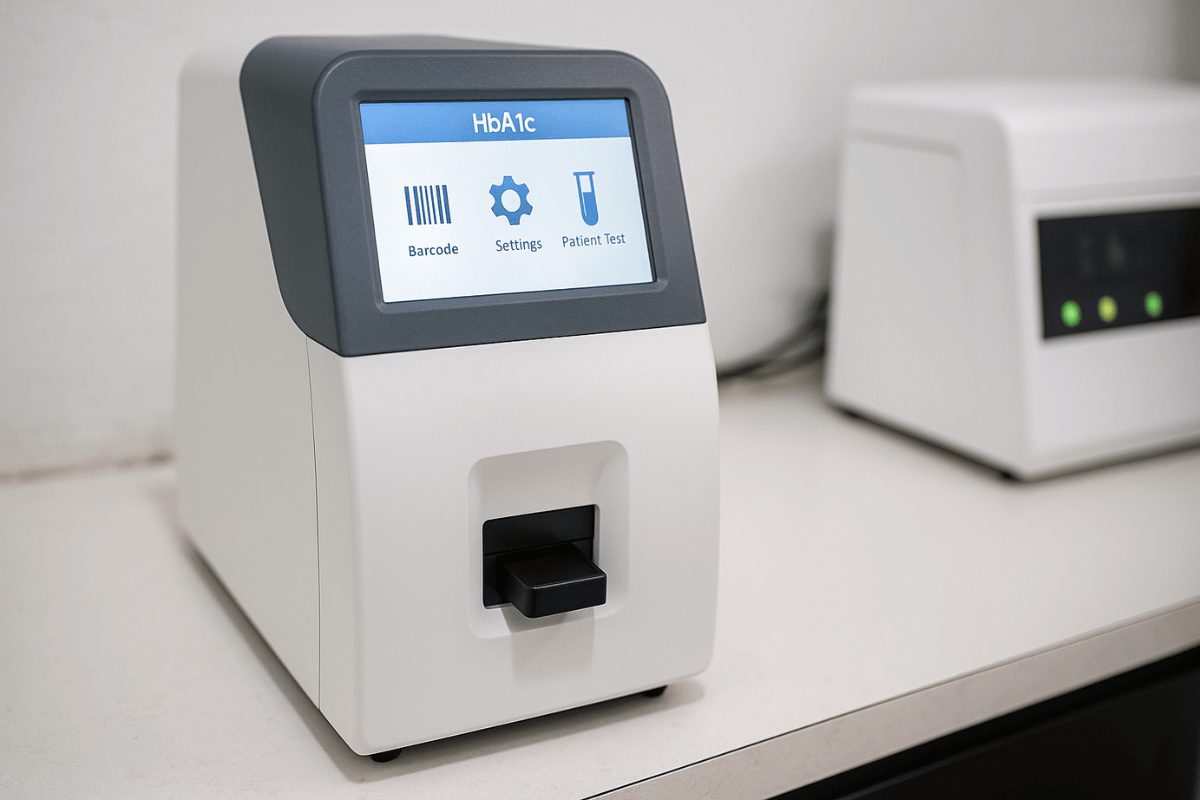
An HbA1c machine is used to measure glycated haemoglobin levels in blood. It provides the level of average blood glucose in a patient over the past two to three months. The measurement is used in diagnosing and managing diabetes. In modern lab settings, HbA1c analysers have empowered diabetes management by delivering precise, rapid, and consistent results.
The best HbA1c machines support high testing volumes, integrate with health record systems, and can detect haemoglobin variants and other diabetes-related markers. As a result, they enhance both clinical decision-making in endocrinology and general pathology labs.
What is an HbA1c Machine?
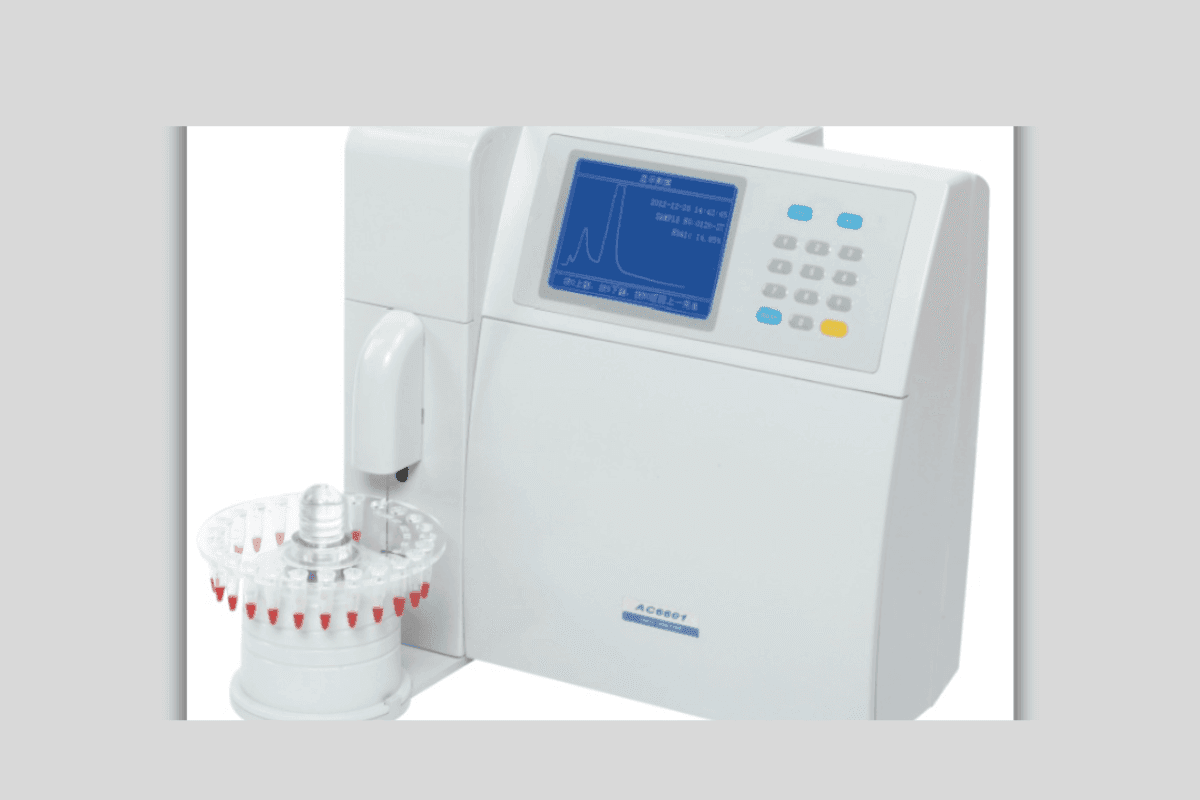
The HbA1c machine is a pathology lab equipment that measures glycated haemoglobin levels in blood samples. These devices operate on several core technologies, including high-performance liquid chromatography (HPLC), boronate affinity chromatography, immunoassay, and enzymatic methods.
Most analysers feature automated sample handling systems, separation components, optical detection units, and integrated software. Sample volumes, analysis times, and measurement ranges of HbA1c and the level of precision rate them.
Modern HbA1c analysers come with various throughput capacities—from 5-10 samples per hour for compact systems to 200+ for high-volume laboratories. They also include user-friendly interfaces, data storage capabilities, and connectivity options for laboratory information system integration.
.
HbA1c Machine Principle
Modern machines operate on four main principles:
- High-Performance Liquid Chromatography (HPLC), which separates haemoglobin fractions based on molecular charge differences.
- Boronate Affinity Chromatography, utilising the specific binding of cis-diol groups in glycated haemoglobin to boronic acid.
- Immunoassay Methods, employing antibodies that recognise glycated hemoglobin.
- Enzymatic Methods, using specialised enzymes to cleave glycated hemoglobin components.
HPLC represents the gold standard for many laboratories. Boronate affinity technology provides resistance to haemoglobin variant interference. Immunoassay systems offer rapid testing on existing clinical chemistry platforms, while enzymatic methods enable integration with standard chemistry analysers.
Each principle presents distinct advantages for different laboratory settings depending on throughput needs, patient population characteristics, and integration requirements with existing systems.
Applications of the HbA1c Test Machine
- Diagnosis of diabetes mellitus and monitoring long-term glycemic control.
- Screening for prediabetes in at-risk populations.
- Evaluation of treatment effectiveness in diabetic patients over time.
- Detection of haemoglobin variants that may affect glycemic interpretation.
- Supporting epidemiological studies on diabetes prevalence and management.
- Assisting in patient risk stratification for diabetes-related complications.
- Providing data for personalised diabetes care and medication adjustments.
- Integration into chronic disease management programs in hospitals and clinics.
- Enabling quality assurance and clinical audit processes in pathology labs.
HbA1c Testing and Its Importance
HbA1c test measures the percentage of haemoglobin proteins in the blood that have glucose attached to them. Unlike standard blood glucose tests that provide a snapshot of glucose levels at a single moment, HbA1c test report reflects average blood glucose levels over approximately 2-3 months.
When glucose circulates in the bloodstream, it naturally attaches to haemoglobin in red blood cells through a non-enzymatic process called glycation. Since red blood cells live for around 120 days, the percentage of glycated haemoglobin provides insights into a patient's average blood glucose control over the preceding 8-12 weeks.
The American Diabetes Association recommends the HbA1c test as a standard method for:
- Diagnosing diabetes (HbA1c ≥ 6.5%).
- Identifying prediabetes (HbA1c between 5.7% and 6.4%).
- Monitoring diabetes treatment.
- Assessing long-term glucose control.
- Predicting risk for diabetes complications
Benefits of Advanced HbA1c Test Machines
- Modern HbA1c analysers deliver high precision and accuracy. Many achieve coefficient of variation (CV) values below 2%, meeting NGSP and IFCC standards.
- They reduce testing times, with some producing results in 3–5 minutes. High-throughput models process hundreds of samples per hour.
- Advanced machines support automated calibration verification, internal quality control monitoring, interference detection algorithms, traceability to reference methods, and audit trail documentation.
- They integrate with LIS and EHR systems for automated result transmission.
- Many analysers can detect and measure haemoglobin variants. They also assess glycated albumin and other diabetes-related markers. Some are capable of screening for hemoglobinopathies.
Practical Considerations for Laboratory Implementation
When choosing an HbA1c analyser for laboratory use, pathologists should consider:
- Expected testing volume and throughput requirements.
- Available laboratory space and infrastructure.
- Staff training and expertise.
- Budget constraints and cost per test.
- Integration with existing laboratory systems.
- Local patient population glycated characteristics.
Cost Factors
The total cost of implementing and maintaining an HbA1c analyser includes:
- Initial equipment purchase or lease expenses
- Reagent and consumable costs
- Calibration and quality control materials
- Service contract and maintenance fees
- Training requirements for laboratory personnel
- Information technology integration expenses
HbA1c machine prices vary widely based on technology, throughput capacity, and additional features. In India, for example, HbA1c analyser prices range from approximately ₹30,000 for basic point-of-care systems to ₹700,000 for advanced laboratory analysers with comprehensive capabilities.
Optimising Workflow Integration
For maximum efficiency, laboratories should:
- Design sample collection and processing protocols specifically for HbA1c testing
- Establish clear result reporting pathways
- Implement appropriate quality control procedures
- Train personnel on proper machine operation and maintenance
- Develop troubleshooting protocols for common issues
Ensuring Reliable Results
To maximise HbA1c testing accuracy, laboratories should:
- Follow manufacturer recommendations for sample handling.
- Be aware of potential interferences from haemoglobin variants.
- Implement regular calibration verification procedures.
- Participate in external quality assessment programs.
- Monitor analytical performance through statistical quality control.
How to Use HbA1c Machine Effectively
| Step | What to Do |
|---|---|
| Sample Collection | Use EDTA whole blood; mix properly after collection. |
| Sample Preparation | Follow analyser-specific steps (e.g., hemolysis, dilution if needed). |
| Instrument Operation | Power on, warm up, check calibration, run QC samples, process patient tests, shut down properly. |
| Interpretation | Review results, check for flags/interferences, apply reference ranges and document findings. |
| Maintenance | Perform scheduled maintenance, replace consumables, log activities and resolve errors. |
Conclusion
As the need for diabetes care increases, HbA1c testing is no longer limited to traditional laboratories. A growing shift toward point-of-care (POC) devices makes HbA1c testing more accessible. These compact analysers deliver reliable results.
Their portability and ease of use also make them suitable for decentralised screening programs and home care. As patient-centred care and telemedicine gain traction, POC and home-based HbA1c machines are expected to see rapid adoption, taking diabetes monitoring beyond pathology labs.
Get Started at ₹1!
Try Flabs for a full month for just ₹1.
Follow us on