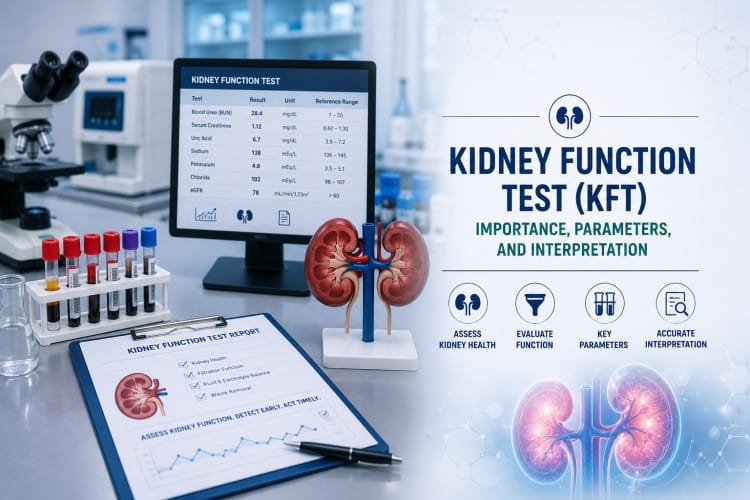
The Kidney Function Test (KFT), also known as a renal function test, is a vital medical examination used to evaluate the health and functionality of the kidneys. The test is crucial for diagnosing kidney disorders, monitoring kidney disease progression, and assessing overall kidney health. KFT provides valuable insights into how effectively the kidneys filter waste products and maintain essential electrolyte balance in the body.
Why We Perform Kidney Function Tests (KFTs):
KFTs are conducted for various essential reasons, including:
- Detecting Kidney Diseases: KFTs are the frontline tools for detecting kidney diseases and disorders in their early stages, often before symptoms manifest. Timely diagnosis is crucial for effective treatment.
- Monitoring Chronic Kidney Conditions: Patients with chronic kidney conditions like Chronic Kidney Disease (CKD) require regular KFTs to monitor disease progression and adjust treatment plans accordingly.
- Assessing Kidney Function: These tests provide insights into the Glomerular Filtration Rate (GFR), a key indicator of overall kidney function. A decreased GFR may suggest kidney dysfunction.
- Evaluating Medication Impact: KFTs help assess the impact of medications on kidney function, guiding medication management for patients.
- Diagnosing Acute Kidney Injury (AKI): KFTs aid in diagnosing sudden kidney dysfunction, known as acute kidney injury (AKI), which can result from various causes.
- Managing Health Conditions: Routine KFTs are often part of health check-ups, especially for individuals with diabetes, hypertension, or other conditions that increase the risk of kidney problems.
- Pre-operative Assessment: KFTs are essential before surgical procedures, particularly those that may affect kidney blood flow, to assess baseline kidney function and tailor care accordingly.
Parameters Measured in Kidney Function Tests and Normal Ranges:
Here is a table presenting the parameters measured in KFTs, along with their respective normal ranges:
| KFT Parameter | Normal Range |
|---|---|
| Serum Creatinine | 0.6 - 1.3 mg/dL (varies by laboratory) |
| Blood Urea Nitrogen (BUN) | 7 - 20 mg/dL |
| Glomerular Filtration Rate (GFR) | > 90 mL/min/1.73 m² |
| Serum Uric Acid | 2.5 - 7.5 mg/dL |
| Urine Albumin | < 30 mg/g creatinine |
| Urine Protein | < 150 mg/g creatinine (varies by laboratory) |
Suggested read: Renal Function Test List
Understanding Kidney Function Test Reports and Results
Kidney function tests provide important insights into how well your kidneys are working, but interpreting the values requires understanding the context behind each parameter, reference range, and report section. A clear pathology report format helps patients and healthcare professionals understand test details, including result values, normal ranges, and interpretation notes.
With advancements in healthcare technology, AI Smart Reports can further simplify complex laboratory results by providing clearer explanations, visual insights, and easier-to-understand summaries, helping users better understand their kidney health reports.
Explore these resources to improve your understanding of laboratory results and make test interpretation easier:
Learn about pathology report format to understand how diagnostic reports are structured.
Discover AI Smart Reports for clearer and more accessible lab report interpretation.
Formulas Used in Kidney Function Tests:
- Estimated Glomerular Filtration Rate (eGFR):
- eGFR (mL/min/1.73 m²) = 175 × (Scr)^(-1.154) × (Age)^(-0.203) × (0.742 for females)
(Note: Scr represents serum creatinine concentration in mg/dL)
- eGFR (mL/min/1.73 m²) = 175 × (Scr)^(-1.154) × (Age)^(-0.203) × (0.742 for females)
Interpretation of Kidney Function Test Results:
Now, let's interpret the results of Kidney Function Tests:
| KFT Parameter | Interpretation |
|---|---|
| Serum Creatinine | - Elevated levels may indicate reduced kidney function or kidney disease. Lower levels are generally desirable. |
| Blood Urea Nitrogen (BUN) | - Elevated BUN levels can suggest kidney dysfunction or dehydration. Lower levels are usually better. |
| Glomerular Filtration Rate (GFR) | - A decreased GFR is an indicator of reduced kidney function. A GFR greater than 90 is typically considered normal. |
| Serum Uric Acid | - High uric acid levels can be linked to kidney disease or gout. Lower levels are preferred. |
| Urine Albumin | - Increased albumin levels in urine may signal kidney damage or disease. Lower levels are healthier. |
| Urine Protein | - Elevated protein levels in urine can be indicative of kidney problems. Lower levels are generally better. |
KFT(Kidney function test) sample report : Download
Conclusion
Understanding kidney function test normal ranges helps you stay aware of your kidney health and make sense of your test results. Since values can vary based on several factors, it’s important to interpret them with the right medical guidance. Regular testing and timely follow-ups can help support better kidney health management.
Also Read: Thyroid Test
Get Started at ₹1!
Try Flabs for a full month for just ₹1.
Follow us on