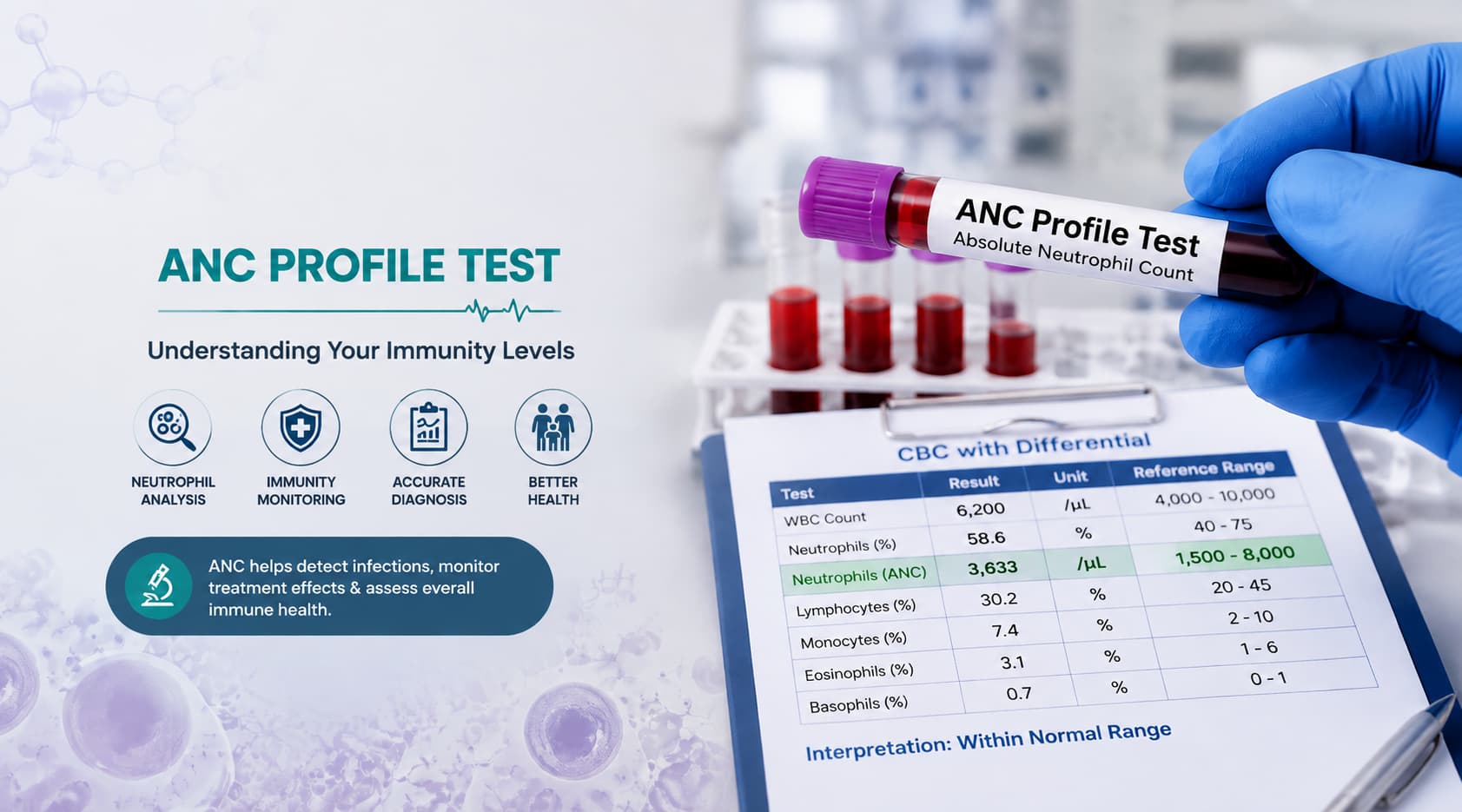
Neutrophils are relentless defenders in the bloodstream, scanning for microbial threats before symptoms arise. For pathologists and clinicians, no immune marker provides a clearer real-time insight into acute inflammation, bacterial invasion, marrow dynamics, or treatment-related cytopenias.
A neutrophil's blood test condenses this entire defensive story into measurable data points, i.e., percentages, absolute counts, flags, and trends that influence clinical decisions every day in the lab.
This piece distils what matters: how neutrophils function, how their counts are interpreted, why values shift, and how Flabs LIS streamlines reporting, flagging, and turnaround time (TAT) for precision-driven laboratory operations.
Understanding the Neutrophils Blood Test
The neutrophil blood test is part of the CBC and quantifies two parameters: the percentage of neutrophils among total leukocytes and the absolute neutrophil count (ANC). For pathologists, the ANC carries higher diagnostic weight in infection surveillance, chemotherapy, and marrow pathology assessment.
Neutrophils dominate the leukocyte pool (around 50–70%) and form the backbone of the innate immune response. Produced in the bone marrow, they are engineered for rapid deployment, short life cycles, and aggressive antimicrobial action.
The meaning of neutrophils in blood test interpretation revolves around their role: they act as the earliest responders whenever microbial signals appear, especially in bacterial and fungal exposures.
How Neutrophils Combat Infection
Neutrophils execute microbial clearance with a multi-layered defence strategy.
Chemotaxis
They migrate toward infection signals released by injured tissues, pathogens, or resident immune cells. This directional movement is precise and fast. It enables immediate deployment to affected regions.
Phagocytosis
Once they reach the threat, neutrophils engulf pathogens. They isolate them inside specialised vesicles before neutralisation.
Degranulation
Inside the phagosome, or directly into extracellular spaces, they release cytotoxic enzymes, reactive oxygen species, and antimicrobial peptides that dismantle microbial structures.
NETosis
When overwhelmed, they discharge web-like DNA structures called neutrophil extracellular traps (NETs), capturing and killing microbes at the cost of cellular integrity.
Each pathway influences inflammatory markers and is reflected downstream in neutrophils blood test results. Especially in conditions with sustained activation or marrow stress.
Neutrophil %, ANC, and Clinical Interpretation
CBC systems quantify neut percentage and absolute counts automatically, yet accurate interpretation demands clinical context.
Neut Percent Blood Test
Expressed as a percentage of total WBCs. Useful but incomplete without ANC.
Absolute Neutrophil Count (ANC)
ANC reflects actual neutrophil availability in microliters of blood and guides clinical judgment.
ANC Formula: WBC × (Neutrophils % + Bands %) × 10
Approximate Normal ANC Ranges
| Age Group | Normal ANC (per mcL) |
|---|---|
| Adults | 2,500–7,000 |
| Children >1 year | 1,500–8,500 |
| Infants <1 year | 1,000–9,000 |
These values represent the neutrophil blood test normal range used in routine interpretation.
Blood test for neutrophil count review should always incorporate trends rather than isolated values. Neutrophils fluctuate throughout the day under physiological pressures.
High Neutrophils in Blood Test (Neutrophilia)
A high neutrophils in blood test suggests heightened marrow activity or demargination triggered by acute or chronic stimuli. Neutrophilia aligns with the following conditions.
- Bacterial infections.
- Inflammatory diseases, including rheumatoid arthritis and inflammatory bowel disease.
- Physical or emotional stress.
- Smoking.
- Corticosteroid exposure.
- Bone marrow proliferative conditions such as CML.
High absolute neutrophils in blood test assessments gain additional weight when paired with clinical red flags such as high-grade fever or localised inflammatory signs.
Symptoms
Elevated counts do not produce symptoms by themselves. Any discomfort originates from the underlying driver, e.g., swelling, fever, pain, or fatigue.
High Neutrophils in Blood Test During Pregnancy
Pregnancy introduces physiologic leukocytosis. Hormonal and immunologic shifts push neutrophils upward, so values that look high in non-pregnant adults may fall inside expected ranges during gestation. Interpretation must align with trimester-specific norms.
High Neutrophils Count in Blood Test
For pathologists, persistent neutrophilia demands correlation with smears, differential counts, patient history, medications, and infectious markers.
Low Neutrophils Blood Test (Neutropenia)
Low neutrophils in a blood test reflect inadequate marrow production, accelerated destruction, or marrow suppression. Defined as ANC below 1,500/mcL, neutropenia becomes severe when counts fall under 500/mcL.
Common Drivers
- Viral infections including influenza, HIV, EBV, and hepatitis.
- Chemotherapy or radiation exposure.
- Vitamin B12 or folate deficiency.
- Autoimmune activity, e.g., lupus or rheumatoid arthritis.
- Bone marrow suppression from leukaemia or aplastic anaemia.
- Drug-related reactions.
Risks and Symptoms
- Pronounced vulnerability to bacterial and fungal infections.
- Recurrent fevers.
- Mouth ulcers.
- Sore throat.
- Skin infections or delayed wound recovery.
Fever in a severely neutropenic patient requires immediate attention.
Neutrophils in blood test report reviews must scrutinise trends closely because decline patterns forecast clinical risk sooner than symptom onset.
When to Take Clinical Action
- Neutrophils blood test results show sustained neutrophilia without an identifiable trigger.
- Repeated low ANC appears alongside recurrent infections.
- Fever emerges in a neutropenic patient.
- Blood count fluctuations occur during chemotherapy cycles.
Single, mild deviations often normalise with hydration, circadian variations, or transient stressors. Persistent abnormalities indicate the need for targeted investigation.
Supporting Immune Strength and Neutrophil Function
- Balanced nutrient intake emphasising protein, zinc, selenium, vitamins B12, C, and D.
- Adequate sleep cycles.
- Structured stress control.
- Hygiene discipline.
- Adherence to prescribed therapies and disease-management plans.
These fundamentals create a stable baseline for interpreting neutrophil blood test range trends with confidence.
Operationalising Reporting in the Laboratory: The Flabs LIS
Accurate neutrophil assessment is only the starting point. For diagnostic labs, precision, speed, and standardisation transform raw values into clinically actionable reports. Flabs LIS brings this operational clarity into daily workflows.
AI-Driven Interpretation
Automated flagging, condition-linked insights, and AI-suggested tests refine how a neut blood test or ANC-based report is delivered. The AI engine evaluates values, patterns, and deltas to streamline validation.
Real-Time Tracking
Flabs enables continuous visibility on test progress.
- Track within TAT and out of TAT indicators.
- Trigger alerts to maintain consistent scheduling.
- View real-time countdowns.
This gives laboratories tighter control over neutrophils blood test report release cycles.
Quality Control (QC)
Automated QC ensures every neutrophils blood test output meets regulatory benchmarks before it reaches clinicians. This is especially vital for NABL labs that operate under strict audit structures.
AI Voice Reporting
Pathologists can dictate findings naturally and receive structured, polished output instantly. This accelerates neutrophils blood test interpretation during high-volume days.
Customisable Reporting
- Patient details
- Test result formatting
- Notes/comments
- Interpretation styles
- Dynamic QR codes for secure downloads
- Barcodes for tracking
- Multi-doctor digital signatures assigned by the department
Bulk actions (registration, approval, sharing, invoicing, report downloads) lighten administrative load.
Lab Finance and Referral Management
End-to-end billing automation, payment tracking, referral source insights, and commission automation deliver operational efficiency that scales cleanly as test volumes rise.
Together, these capabilities support clinical accuracy and streamlined workflows for every neutrophils blood test processed in the lab.
Final Takeaways
- Neutrophils are central to rapid immune defence and reflect infection and inflammation dynamics.
- ANC is the most clinically meaningful metric in neutrophils blood test interpretation.
- High and low values require context-based review supplemented by differential counts, clinical history, and ongoing trends.
- Pregnancy introduces physiologic shifts that can alter neutrophil expectations.
- Laboratories seeking precision, fast turnaround times, and consistent quality can strengthen operations with AI-powered systems such as Flabs LIS.
- Neutrophils tell a compelling story with every sample. Accurate interpretation, standardised reporting, and reliable TAT systems ensure that this story reaches clinicians clearly and on schedule.
Ready to upgrade your lab operations?
Start with a 5-day free trial of Flabs.
Get Started at ₹1!
Try Flabs for a full month for just ₹1.
Follow us on