Infectious mononucleosis (IM) is a common viral illness primarily caused by the Epstein-Barr virus (EBV). Diagnosing the condition is essential, as its symptoms—fatigue, fever, sore throat, and swollen lymph nodes—overlap with other illnesses. The Paul Bunnell test identifies EBV infections by detecting specific heterophile antibodies in the blood.
Our article explores the Paul Bunnell test, detailing its procedure, interpretation, and role in managing EBV-related conditions. Learn how this diagnostic tool ensures timely intervention and supports accurate differentiation from similar health issues.
What is the Paul Bunnell Test?
The Paul Bunnell test is a blood test used to detect heterophile antibodies, helping diagnose conditions like infectious mononucleosis. It is also known as the Heterophile Antibody Test, Heterophile Agglutination Test and Monospot Test. The test identifies immune responses related to specific infections.
Known as "mono" or the "kissing disease," infectious mononucleosis is a viral infection commonly caused by the Epstein-Barr virus (EBV). It spreads through saliva and presents symptoms such as fatigue, fever, an enlarged spleen, etc. While typically self-limiting, severe cases may require medical intervention.
Why and When Do You Need It
The Paul Bunnell test is primarily used to diagnose infectious mononucleosis, confirm Epstein-Barr virus (EBV) infections, and rule out other conditions with similar symptoms. It is also helpful in monitoring treatment effectiveness and assessing complications or transmission risks.
Situations when the test may be recommended include,
- Ongoing symptoms such as fatigue, fever, sore throat, swollen lymph nodes, or an enlarged spleen.
- A potential Epstein-Barr virus (EBV) infection.
- History of close contact with someone diagnosed with infectious mononucleosis.
- A family history or inherited susceptibility to EBV infections.
- Assessing EBV's role in chronic conditions like chronic fatigue syndrome or certain cancers.
- Signs similar to other conditions that need to be distinguished.
Paul Bunnell Test Principle
The Paul Bunnell test detects heterophile antibodies produced in response to Epstein-Barr virus (EBV) infection, primarily linked to infectious mononucleosis. The principle involves the agglutination of sheep red blood cells (RBCs) when mixed with a patient’s serum containing these antibodies. If agglutination occurs, it indicates a positive result. Paul Bunnell's test relies on the cross-reactivity of heterophile antibodies with animal RBCs, making it a diagnostic tool for EBV infections.
Paul Bunnell Test Procedure
The procedure for the Paul Bunnell test/Heterophile antibody test is simple and quick. As it is a blood test, a phlebotomist collects the blood sample required for lab testing.
- The phlebotomist or lab personnel will sterilise your forearm at the puncture site, to prepare for venipuncture.
- A sterile needle will be inserted into a vein in the arm to draw blood. Usually, 1mL of blood sample is required.
- The blood sample is collected into an EDTA test tube with a purple top, as preventing blood clotting is necessary.
- The labelled test tube will be transferred to a pathology laboratory for testing.
The blood sample should be processed within 24 hours. Otherwise, it will be rejected. Blood samples with insufficient volume and have undergone haemolysis will also be discarded from testing.
How to Prepare for the Test
There is no special preparation required for the test, such as fasting. Inform your healthcare provider about the medications you’re taking to let you know if you should stop any of them. Inform your lifestyle and diet habits also to clarify things further.
Paul Bunnell Test Results
The turnaround time for Paul Bunnell test results is usually 24 hours when you will get results in the form of a Paul Bunnell test report. If there is urgency, your healthcare provider will see to get the results immediately, in which case, the report may not be available immediately.
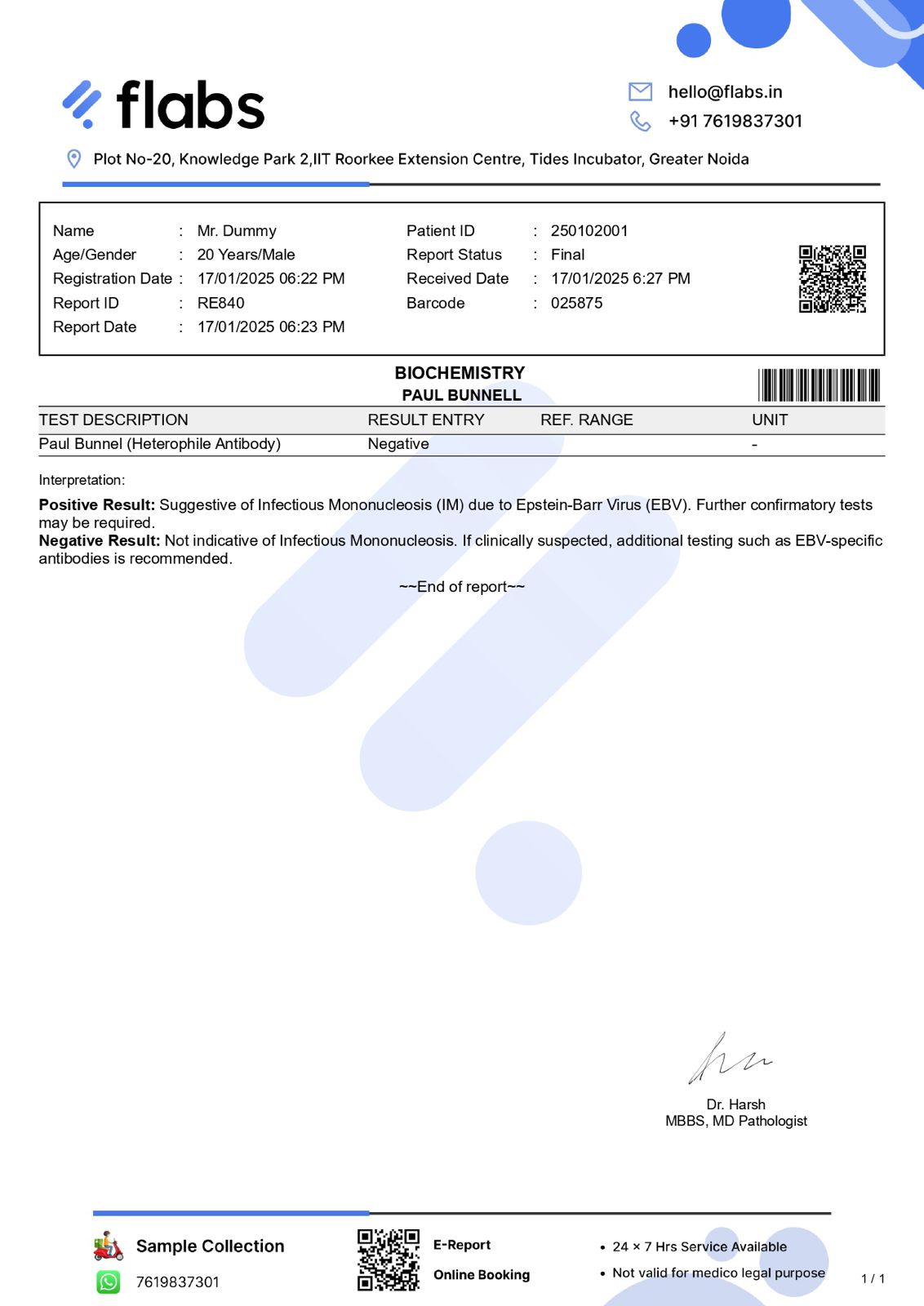
The results detect the heterophile antibodies in the blood to diagnose infectious mononucleosis. Elevated levels of antibodies indicate a current or past EBV infection. A negative result indicates that the antibodies are not present in your blood. However, it can also mean the early stage of the infection, when antibodies are not detectable.
Paul Bunnell Test Interpretation
| Result | Meaning |
|---|---|
| Positive | Likely acute or past EBV infection |
| Negative | No EBV infection or early stage |
Your healthcare provider will interpret the results of the Paul Bunnell test, by considering your medical condition, health history, ongoing medications, etc., for the right diagnosis.
However, false positives can occur due to other conditions like hepatitis, leukaemia, or autoimmune diseases. Negative results might require further testing if clinical symptoms persist. Additional tests, such as the Monospot or Epstein-Barr virus-specific antibody tests, can confirm the diagnosis.
Once the results are out, you can request your Paul Bunnell test report to keep for future reference.
Factors that Can Affect Test Results
Presence of autoimmune diseases, other viral infections (e.g., hepatitis), Medications affecting the immune system, Age, Immunocompromised conditions, Sample quality, testing method, etc.
Paul Bunnell Test Sample Report
What More to Know
Cross-Reactivity with Animal Cells: The heterophile agglutination test relies on heterophile antibodies reacting with sheep or horse red blood cells, which are not related to human cells, making it a special diagnostic tool.
Limitations in Early Stages: The antibodies detected may not appear in the early stages of Epstein-Barr virus infections, necessitating additional tests for confirmation.
Age Sensitivity: Younger children may not produce heterophile antibodies, reducing the test's reliability in pediatric cases compared to adults.
Replacement in Modern Diagnostics: Despite the Paul Bunnell test’s utility, more precise methods, like the Monospot test and EBV-specific antibody tests, are now often preferred for quicker and more reliable results.
Conclusion
While the Paul Bunnell test is valuable in diagnosing infectious mononucleosis, the results should be interpreted in the context of clinical symptoms and additional tests.
Newer diagnostic methods, such as PCR for EBV, provide greater accuracy and can help detect the virus earlier. Regular monitoring and early intervention are key to managing potential complications of EBV infections, including chronic fatigue syndrome or other related conditions.
Get Started at ₹1!
Try Flabs for a full month for just ₹1.
Follow us on